Sustainable Women’s Weight Loss Strategies: Hormones, Nutrition, and the Strength Advantage
If you have been working hard and the scale barely moves, the problem is usually the plan, not your willpower. Fat loss follows the same rules for everyone, yet women often meet more friction along the way, and that friction is workable once the plan fits your physiology and your real life.
That friction is real, not imagined. Monthly hormone shifts can influence water retention and appetite. Midlife hormone changes can affect where body fat tends to settle. A long history of dieting can make hunger louder and maintenance calories feel unfairly low. None of that means you are broken. It means your plan needs to match your physiology and your life.
This is an informational guide, not long-term personal training. You will learn:
- What never changes about weight loss
- What tends to change for women, and why
- Why strength and muscle matter more than most plans admit
- Dietetics-level nutrition principles that make weight loss feel more doable
- First steps that move you forward without turning your life into a full-time project
If you have been looking for a sustainable women’s weight loss plan that actually fits a woman's body and a real schedule, this is meant to give you confident direction and a strong reason to stop guessing.
The fundamentals that do not change (for men or women)
Energy balance is real, but it is not simple
Fat loss requires a sustained energy deficit over time. That is not trendy, but it is true. What is often misunderstood is how the deficit is created and why it can feel harder than "eat less, move more."
The CDC's healthy weight overview frames healthy weight management as a lifestyle pattern that encompasses nutrition, movement, sleep, and stress, rather than quick-fix dieting.
When calories drop or body weight drops, your body adapts. This is why the math you started with often stops working later.
The "invisible" parts of energy expenditure matter a lot
Most people think energy expenditure means workouts. Workouts help, but they are only one piece. Day-to-day movement, known as NEAT (non-exercise activity thermogenesis), is huge, and it can quietly downshift when you diet: fewer steps, less fidgeting, more sitting, and less spontaneous movement.
This is one of the reasons many people feel like they are doing "the same plan" but getting different results over time. Their daily movement has changed without them noticing.
Metabolic adaptation exists, and it is variable
Beyond "you weigh less so you burn less," there can be an additional drop in energy expenditure, often called adaptive thermogenesis. A review in Current Obesity Reports describes how energy expenditure can change with weight loss in ways that go beyond what is predicted by changes in body weight and composition.
This is a key coaching truth: when progress stalls, the answer is rarely "try harder." The answer is usually "adjust smarter."
Midlife adds friction for women, not different rules
Midlife is not a single switch. It is a phase where physiology and lifestyle collide. The Menopause Society's patient resource on maintaining a healthy weight emphasizes that aging is a major driver of weight gain, while menopause can meaningfully influence fat distribution, often toward the abdomen.
That is why many women say, "My habits didn't change, but my body did."
Estrogen changes can shift where fat is stored
Harvard Health explains that as estrogen levels drop, women's bodies tend to store more fat around the abdomen, and it highlights protein intake and strength training as practical levers.
Important nuance: this does not mean menopause "causes" weight gain by itself. It means the midlife environment (sleep, stress, lower movement, muscle loss) plus hormonal shifts can change how weight shows up.
Muscle is the lever most women were never taught to pull
If you want a sustainable plan, you need to understand one of the most underappreciated facts in weight management: muscle makes weight loss easier to maintain.
Not because muscle is "magic," but because it supports:
- Higher daily energy needs compared to having less lean mass
- Better glucose handling and metabolic health
- Higher capacity to train, recover, and stay consistent
- A better body composition outcome (fat loss without feeling smaller and weaker)
A systematic review and meta-analysis in BMJ Open Sport and Exercise Medicine found that combining dietary restriction with resistance training can help preserve fat-free mass while improving strength.
This is why strength is not a side quest in women's fat loss. It is the backbone of a plan you can live with for years.
The scale runs noisier in women
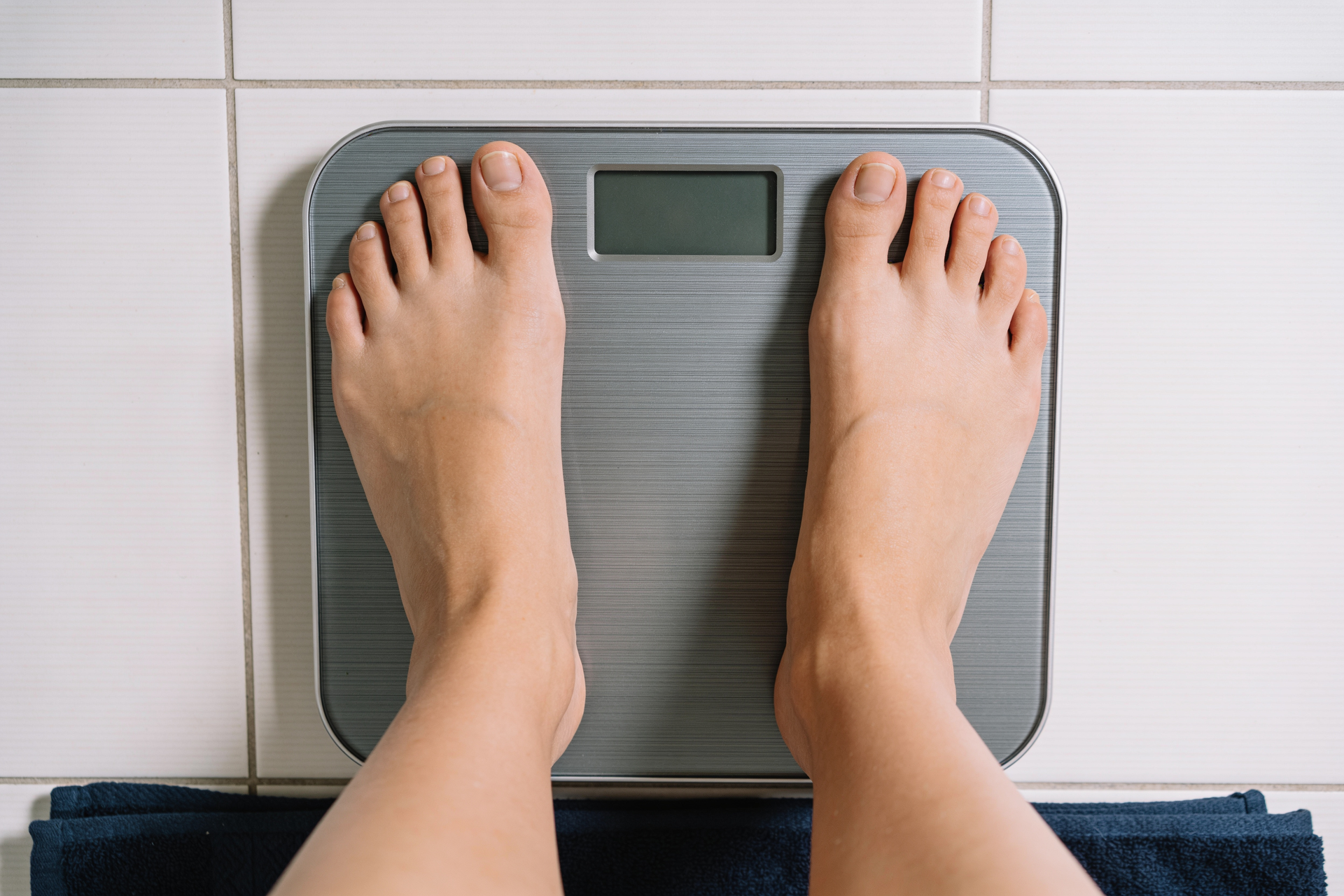
If you menstruate, the scale can fluctuate from hormones and fluid shifts, even when fat loss is happening. Cleveland Clinic notes that small, temporary fluctuations are common, and they are typically related to hormones, bloating, and water retention.
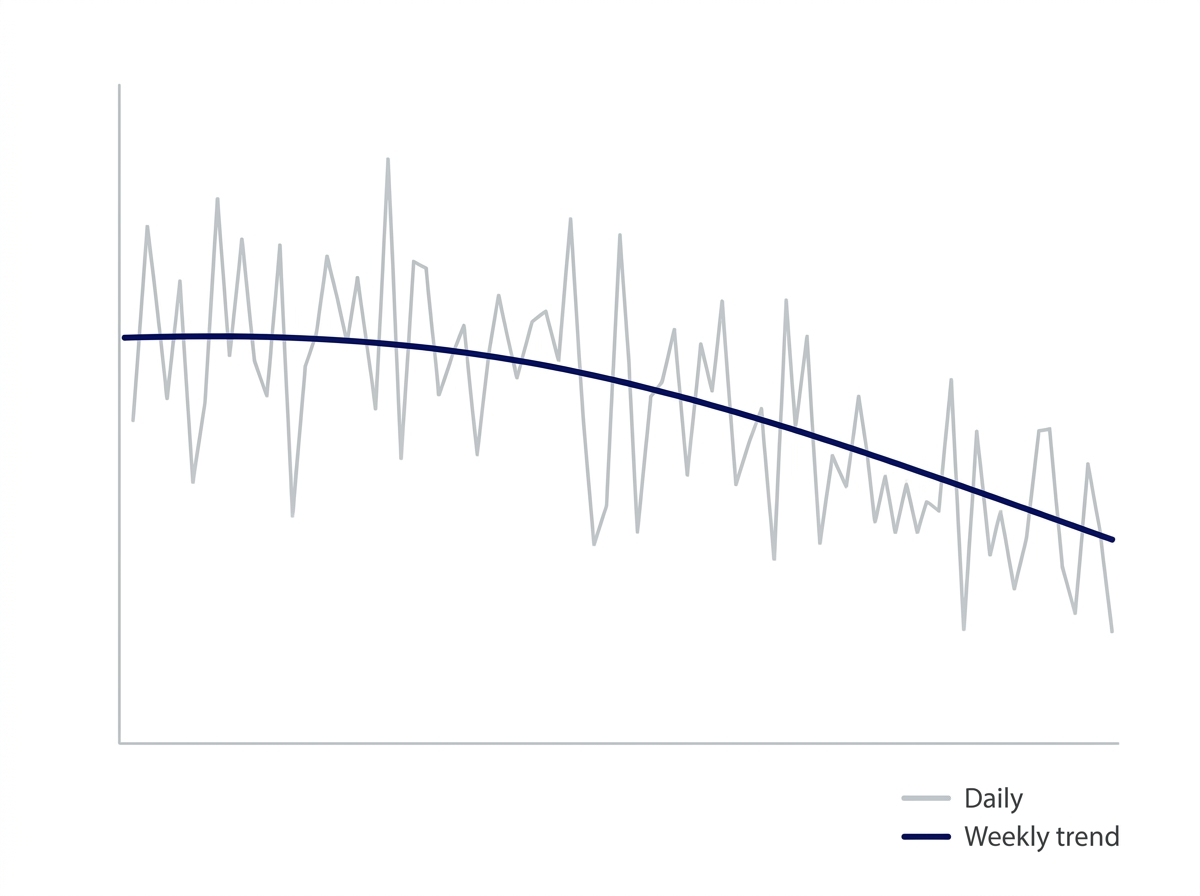
A practical takeaway to protect your mindset: use trend thinking (weekly averages, consistent weigh-in conditions), not daily emotions.
Men vs. women weight loss: same rules, different friction
If you have ever watched a male partner "cut back a little" and lose weight quickly, you are not imagining it. On average, men often have more lean mass and higher baseline energy expenditure, which can create a larger deficit with fewer lifestyle changes.
Women can lose fat extremely effectively, but they often experience different constraints:
- More pronounced appetite variability across the cycle
- More water retention masks fat loss
- More life-stage transitions that affect recovery and sleep
- A larger penalty for under-eating and over-training
A recent review in Sports Medicine discusses sex differences in energy metabolism and highlights why women's responses to energy restriction and training can differ across life stages.
That does not mean women are "at a disadvantage." It means women often benefit from plans that prioritize muscle retention, appetite stability, recovery and sleep, and a moderate deficit that you can sustain.
Where common strategies fall short (and how to improve your odds)
This section matters because many women are not failing. Many women are working incredibly hard on a strategy that produces predictable problems.
So if you have been disciplined and frustrated, consider this your reframe: it is not you, it is the approach.
The "too low, too long" deficit
If your plan relies on being hungry most of the day, you are not doing "discipline." You are doing a strategy that pushes your biology into pushback mode.
Signs the deficit is too aggressive for too long:
- You are thinking about food constantly
- You are "good" all day and unravel at night
- Your workouts feel worse, not better
- Your step count drops without you noticing
- Your mood and sleep worsen
A sustainable deficit should feel like "I can do this again tomorrow," not "I am surviving."
Cardio-only plans that reduce capacity instead of building it
Cardio is valuable. The trap is using cardio as the only tool while keeping calories too low. That combination often increases fatigue and makes consistency harder.
A strength-forward approach does not require complicated programming. It requires a consistent signal to maintain muscle mass while dieting.
Protein and fiber gaps that quietly sabotage satiety
A diet can look "clean" and still be low in satiety. If you are under-eating protein or fiber, hunger tends to be louder, cravings tend to be stronger, and adherence becomes a grind.
A classic review describes how higher protein intake can support fat loss by improving satiety and preserving lean mass.
For fiber, the Mayo Clinic explains how fiber supports fullness and healthy weight, and it gives practical ways to increase fiber intake.
If you want hormone-friendly weight loss without gimmicks, start here: stable meals that keep you full.
Ultra-processed foods that make "moderation" feel impossible
This is not about moralizing food. It is about understanding your food environment and your appetite.
In a tightly controlled inpatient randomized trial, participants ate about 500 more calories per day on an ultra-processed diet compared to an unprocessed diet, even when diets were matched for presented calories, sugar, fat, sodium, fiber, and macronutrients, as Hall and colleagues reported in Cell Metabolism.
Translation: Some foods are engineered to make you eat faster and more. So if your plan is "eat anything, just eat less," you may be fighting your environment every single day.
Practical application: you do not need to ban everything. You do need a default pattern that is mostly minimally processed, and then you layer in flexibility.
Sleep loss that turns appetite up and willpower down
Sleep is not just recovery. It is an appetite regulator.
A PLOS Medicine study linked short sleep with lower leptin and higher ghrelin, hormone patterns that tend to increase appetite.
If your plan ignores sleep, it often becomes a plan that requires heroic willpower. Most people do not need heroics. They need a strategy.
Supplements and hormone marketing that distract from what works
If a product promises it will "balance hormones for weight loss," treat it as marketing until proven otherwise.
The NIH Office of Dietary Supplements summarizes research on common weight-loss supplement ingredients and notes that evidence is often limited, mixed, and sometimes linked to safety concerns.
A good plan starts with food structure, movement, sleep, and strength. Then you decide what extras are worth considering.
Nutrition principles that move the needle (without a full meal plan)
Here are the nutrition principles that consistently matter for real people on real schedules.
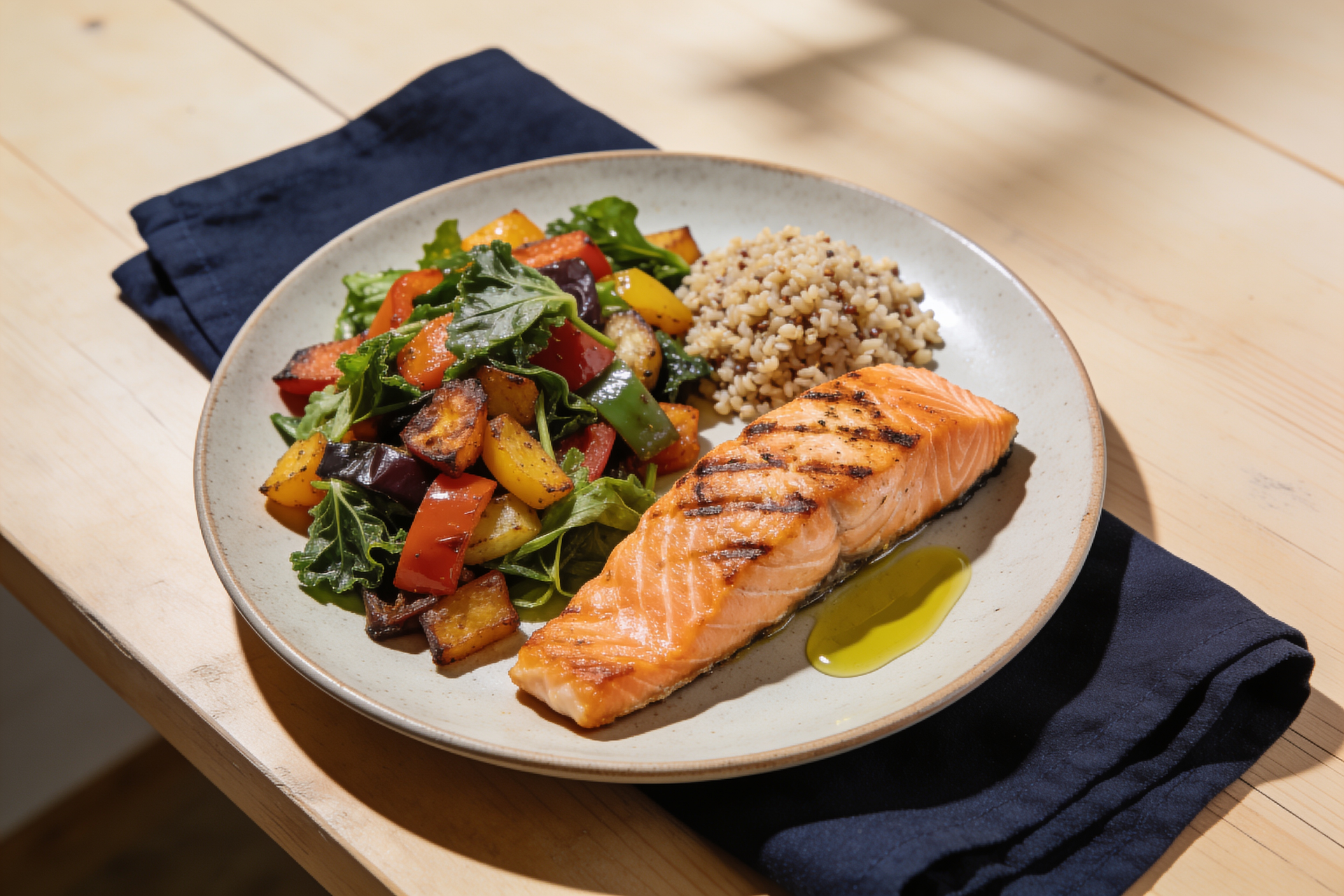
1) Build meals around "satiety architecture."
When hunger is stable, consistency becomes easier. When hunger is chaotic, consistency becomes a daily battle.
Satiety architecture is the structure that makes a meal last:
- Protein anchor: the most reliable hunger stabilizer for many people
- Fiber-rich plants: volume plus fullness plus micronutrients
- Enough fat to feel satisfied: not "fat bombs," just adequacy
- Carbs in context: choose quality and timing that support your life, training, and energy
This can look different for each woman. The goal is not one perfect macro ratio. The goal is fewer hunger emergencies.
2) Understand energy density and food speed
A big hidden factor in weight gain is not just what you eat, but how quickly calories arrive.
Ultra-processed foods often require less chewing, go down faster, and deliver more calories before fullness sets in. That is one reason the inpatient feeding trial above matters. It is not a willpower story. It is a physiology story.
3) Protein is not just for athletes: it is for muscle preservation
Midlife weight loss that ignores muscle is a short-term win with a long-term cost.
Harvard Health notes that increasing protein intake and doing strength training can help counter menopause-related shifts in abdominal fat by supporting muscle mass and metabolism.
For adults 65-plus, expert groups have proposed higher protein ranges than the basic RDA, often around 1.0 to 1.2 g/kg/day, to support lean mass and function.
You do not need to turn this into a math problem. You can use it as a direction: most women feel better and do better when protein is a deliberate priority.
4) Fiber is the quiet MVP for weight loss and metabolic health
Fiber supports fullness, digestion, and cardiometabolic health.
A practical coaching note: if you increase fiber, increase fluids, and do it gradually. Comfort matters. Consistency depends on comfort.
5) Alcohol is often the most underestimated variable
Set judgment aside; this is simply physics and physiology. Alcohol can add calories quickly, reduce sleep quality, lower inhibition around food, and increase appetite for salty, high-reward foods.
The American Heart Association includes limiting alcohol as part of heart-healthy dietary guidance.
6) "Hormone-friendly" is usually behavior-friendly
A science-based definition of hormone-friendly weight loss looks like:
- Stable meals that reduce hunger swings
- A deficit that does not wreck sleep
- Strength training to preserve muscle
- Enough recovery to keep stress hormones from running the show
- A food environment that reduces friction from ultra-processed foods
This is not a cleanse. It is a system.
Women-specific considerations that deserve respectful clarity
This is where a lot of online content becomes either too simplistic ("it's all hormones") or too complicated ("track every symptom and biohack everything"). Let's stay grounded.
Menstrual cycle: expect normal fluid shifts
If you menstruate, you will likely see predictable scale noise. A coaching strategy that protects your sanity:
- Compare the same week of your cycle month to month
- Use a two to four-week trend, not a two-day trend
- Track one non-scale marker (waist, strength progress, hunger stability, clothing fit)
Perimenopause and menopause: the rules do not change, but priorities do
What often works better in midlife:
- Smaller, steadier deficits
- Higher protein and fiber consistency
- Strength training is a non-negotiable
- More respect for sleep and recovery

Pregnancy and postpartum: a different chapter, not a different worth
If you are postpartum, your body may still be recovering for longer than you were told. Stress, sleep disruption, and tissue recovery can influence appetite and training tolerance.
ACOG supports physical activity during pregnancy and postpartum for most women, with appropriate modifications and clinical guidance when needed.
First steps that build real momentum
The plan at a glance, in one place. Save or screenshot this:
| Lever | The move | Why it works |
|---|---|---|
| Strength | Two or more sessions a week covering the main lifts | Preserves muscle in a deficit, which keeps maintenance calories higher |
| Protein | A deliberate priority, especially at breakfast and lunch | Steadies hunger and protects lean mass |
| Fiber | Build meals around plants; increase gradually with fluids | Adds fullness and supports metabolic health |
| Deficit size | Moderate enough to repeat tomorrow, not survive | Avoids the biology pushback of too-low, too-long |
| Sleep | Protect it like part of the plan | Regulates the appetite hormones leptin and ghrelin |
| Food environment | Default to mostly minimally processed; cut food friction | Counters the roughly 500-calorie ultra-processed effect |
| Tracking | Pick one: trend weight, waist, protein yes or no, or steps | Feedback, not punishment; use trends, not daily emotion |
These first steps create momentum without demanding a complete life overhaul.
Step 1: Choose one "anchor habit" for 14 days
Pick one:
- Upgrade breakfast to be protein-forward
- Add a consistent lunchtime fiber source
- Add a daily walk
- Set a sleep boundary (a real one)
Step 2: Make strength the consistent signal
You do not need a complicated split routine. You need a repeatable strength habit because resistance training supports lean mass and performance, which improves long-term outcomes when you are in a calorie deficit.
Step 3: Use one tracking method that supports you
Options:
- Trend weight two to four times per week, same conditions
- Track waist monthly
- Track protein consistency (yes or no)
- Track steps
Tracking is not for punishment. It is for feedback.
Step 4: Reduce "food friction" in your environment
Practical examples:
- Put high-friction foods out of sight
- Keep the easy protein visible
- Make your default snack a structured option, not a scavenger hunt
Step 5: Protect sleep like it is part of the plan
Because it is.
Women's weight loss in Pleasant Hill: how Royal Blue Fitness helps
Most women do not need more motivation. They need a system that fits their physiology and their actual life.
At Royal Blue Fitness, we start with a Strength and Range of Motion Assessment so your plan is built around reality: your current capacity, your joint tolerance, your strength baseline, and the nutrition priorities that will give you the biggest return without turning food into a second job.
And if you suspect a medical issue, such as a thyroid or hormone disorder, or you are weighing hormone therapy or a weight-loss medication, start with your physician. Coaching complements medical care; it does not replace it.
If you want sustainable weight loss that holds up when life gets busy, the goal is not to white-knuckle a diet. It is to build a structure that keeps working for you.
A good first step is small: pick one anchor habit today, hold it for fourteen days, and add strength twice a week. If you want it built around your body and your schedule,
book an assessment and we will map your starting point and the two or three levers worth pulling first.
Mini FAQ
Are hormones the reason I cannot lose weight?
Hormones influence appetite, water retention, sleep, and fat distribution. They do not remove the fundamentals. A smarter strategy usually solves what "hormones" gets blamed for.
What does "hormone-friendly weight loss" actually mean?
In practice: stable meals, strength training, a moderate deficit, good sleep, and less friction from ultra-processed foods. It is behavior-friendly and physiology-aware, not supplement-driven.
Why does the scale jump even when I am doing everything right?
Fluid shifts, digestion changes, sodium, muscle soreness, and menstrual cycle changes can mask fat loss in the short term. Use trends, not panic.
Do I need to cut carbs to lose weight?
Not inherently. Many women do better choosing higher-quality carbs and placing them where they support energy and training. The goal is adherence and satiety, not carb fear.
Do I need to track calories?
Some women benefit from short-term tracking for education; others do better with structured meal patterns. If tracking increases stress or disordered thoughts, it is not the right tool.
How much protein do I need?
Needs vary, but the consistent pattern is that women often under-shoot protein, especially at breakfast and lunch. Protein supports satiety and lean mass retention.
Are weight-loss supplements worth it?
Most are not a strong starting point. The NIH Office of Dietary Supplements reviews evidence and safety concerns for many common ingredients.
What if I am in perimenopause or menopause?
Expect more focus on strength, protein, sleep, and trend-based progress tracking. Midlife shifts are real, and the plan should match them.
Sustainable weight loss for women is built, not forced
If you want weight loss that lasts, you need two truths in the same sentence:
- The fundamentals matter.
- Women's physiology and life stages change the friction, so the strategy matters too.
Build stable meals. Preserve muscle. Respect recovery. Use trends, not panic. Make your environment easier. That is how you create real momentum without living on willpower.
Here are our latest articles! Click to read more.