Functional Movement Checklist: Which Patterns Feel Strong, Limited, or Unstable Right Now?
You can usually tell when something in your body is not quite right, even if you cannot put a name to it. Maybe getting off the floor takes a little plotting now, or carrying groceries leaves one shoulder complaining, or you have quietly started avoiding the bottom shelf. That vague sense of something feeling off is useful information, but only if you can turn it into something specific. This checklist helps you do exactly that. It walks you through the six basic movement patterns and helps you notice which ones feel strong, which feel limited, and which feel unstable, so a fuzzy hunch becomes a clear starting point.
A quick and important note before you begin: this is a self-awareness tool, not a medical test. It does not diagnose anything, and it is not a measure of your independence or your worth. It is simply a way to pay closer attention to how you move, so you know where to focus. Think of it the way you might glance over your car before a road trip: not because you expect something to be wrong, but because a quick look now saves trouble later.

Six patterns behind everyday movement
Functional movement is just the set of basic patterns your body uses to handle daily life: squatting, hinging, pushing, pulling, carrying, and rotating. Keeping those patterns working is closely tied to staying independent as you age, the kind of payoff
McMaster University researchers link to community exercise that slows age-related decline. Checking in on these patterns matters because they are the movements behind almost everything you do without thinking, from standing up to reaching a high shelf.
When one of them quietly weakens, daily life does not announce it. You simply start working around it, and the workaround becomes a habit before you notice. A quick check brings those blind spots into view while they are still easy to address. The patterns you stop using are the ones that fade quietest, precisely because you are no longer asking anything of them. Noticing early, while a pattern is merely limited rather than lost, is what makes the difference manageable.
The goal here is not a score or a grade. It is awareness. Knowing that your hinge feels solid but your single-leg balance feels shaky tells you far more than any general sense of being out of shape, because it points you toward something specific you can actually work on. General goals are easy to abandon. Specific ones, like steadier balance or an easier time getting off the floor, give you something concrete to aim at and a clear way to know when you have made progress.
Using this checklist, in three labels
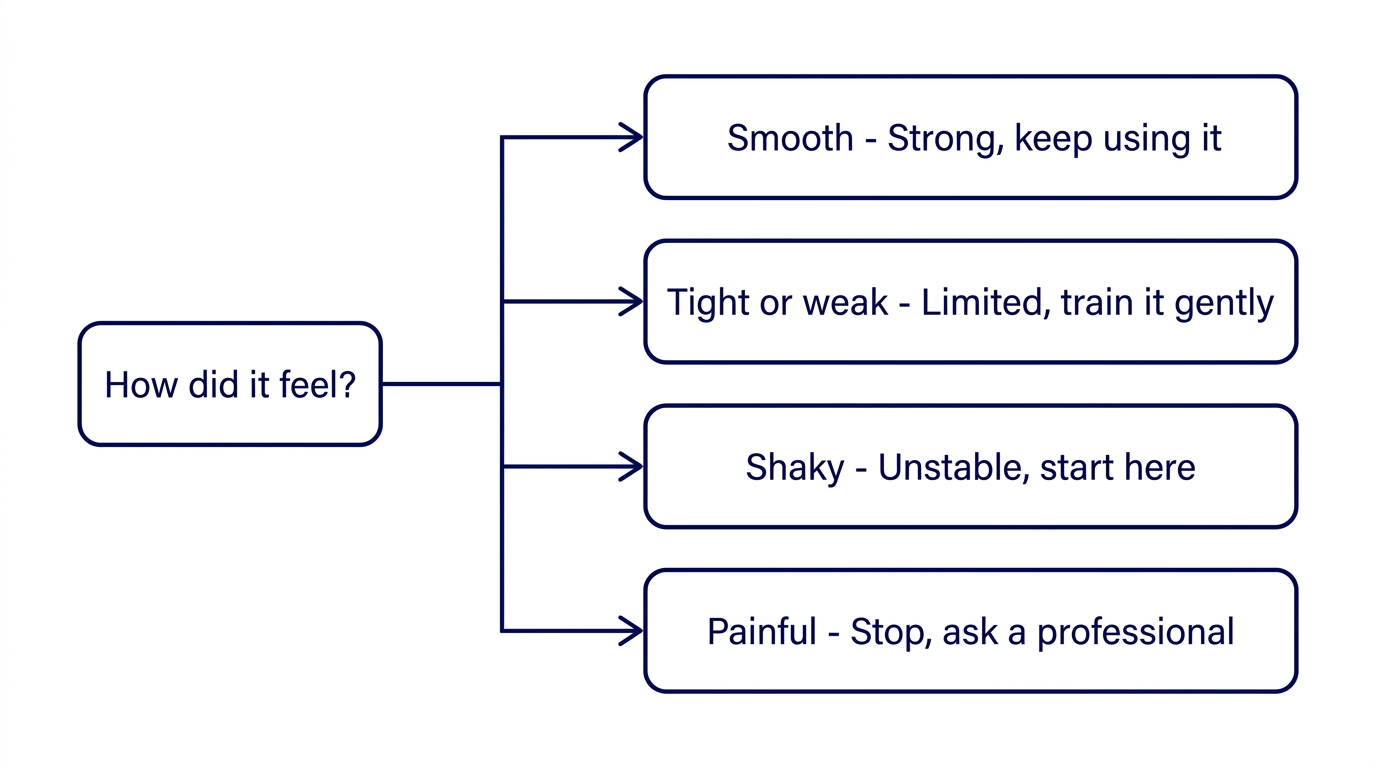
For each pattern below, you will try a simple, everyday version of the movement and notice how it feels. Use the same three plain labels we use with clients as you go.
- Strong means the movement feels stable, controlled, and comfortable, with no strain and no wobble.
- Limited means you can do it, but it feels tight, weak, effortful, or restricted in range.
- Unstable means it feels shaky, uncertain, or like you might lose your balance or control partway through.
Move slowly, stay within a comfortable range, and hold onto something sturdy whenever balance is involved. If any movement causes pain rather than simple difficulty, skip it, make a note, and treat that as a reason to check in with a professional rather than something to push through. The difference between difficulty and pain matters: difficulty is the honest feedback you are looking for, while pain is a signal to stop. There are no wrong answers here, only useful ones, and being honest with yourself about a limited or unstable pattern is far more valuable than talking yourself into a generous score.
The functional movement checklist
Work through these one at a time. There is no need to do them all in one sitting, and you can revisit any of them as often as you like.
Squat pattern
Try lowering yourself to sit in a chair and standing back up without using your hands. Notice whether you can control the descent smoothly or whether you drop the last few inches, and whether you can rise without pushing off your knees or the armrests. A strong squat feels balanced and controlled in both directions. If it feels effortful or you rely on your hands, call it limited. If your knees wobble or you feel unsteady on the way down, call it unstable. The simplest next step for a limited or unstable squat is to practice controlled sit-to-stands from a higher, sturdy surface until the movement feels smooth, then gradually lower the surface. Because you squat dozens of times a day already, small improvements here tend to show up quickly in ordinary moments like standing up from the couch.
Hinge pattern
Stand tall and reach down as if to pick up a light object from the floor, pushing your hips back and keeping your back long rather than rounding. Pay attention to whether the movement comes from your hips or whether your lower back does most of the bending. A strong hinge lets you fold at the hips comfortably and stand back up with ease. Tightness in the backs of your legs, or a sense that you must round your back to reach down, points to limited mobility. Feeling unsteady or unsure as you fold forward points to instability. Gentle practice hinging to a higher target, like a countertop, is a safe way to rebuild this one. The hinge protects your back during everyday lifting, and learning to lead with your hips rather than your spine often eases the small aches people associate with bending and lifting.
Push pattern
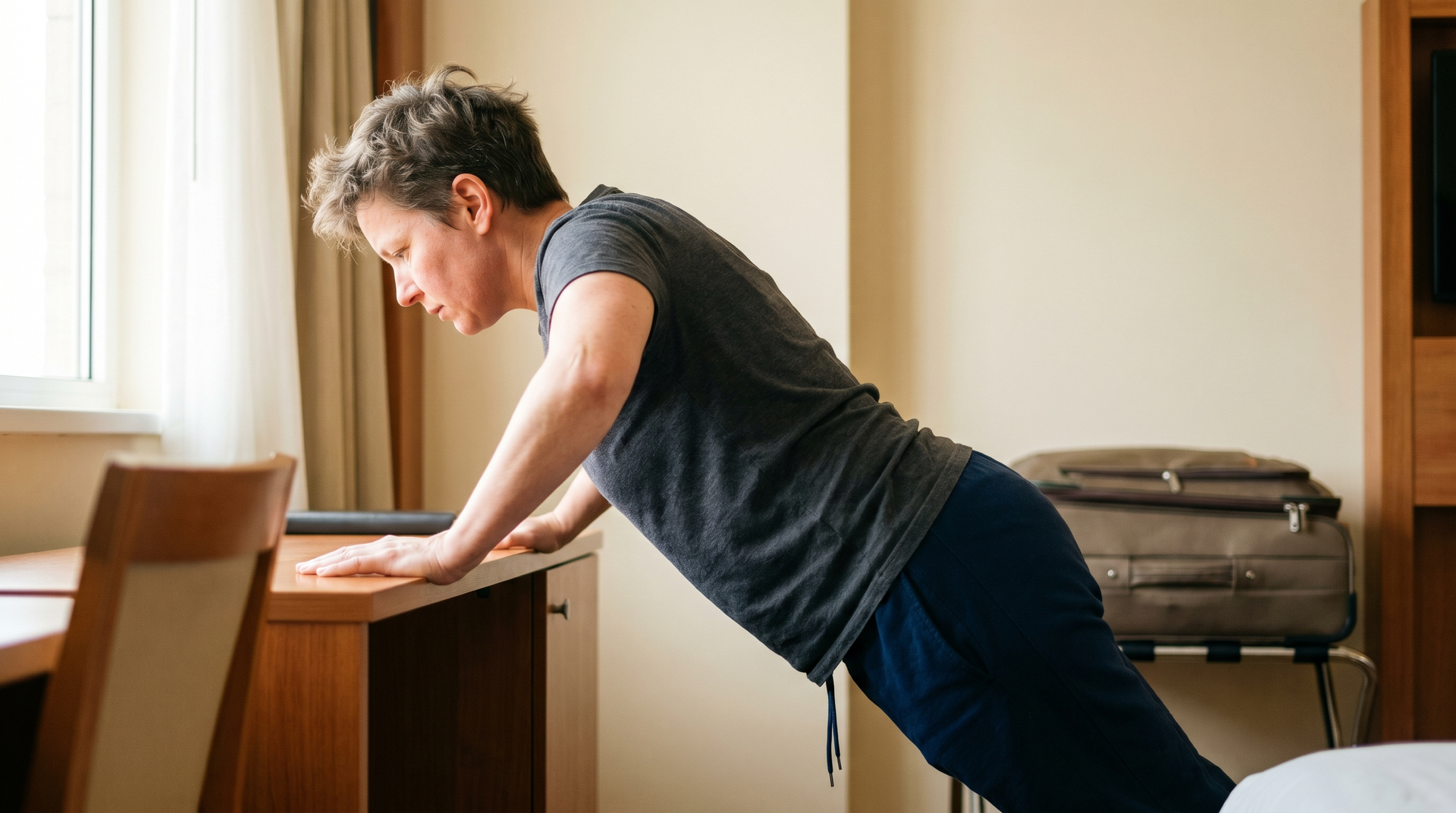
Press your hands firmly against a wall and lean in, then push yourself back to standing tall, or simply notice how it feels to push a heavy door open. Watch whether your shoulders feel supported and your body stays in one line. Comfortable, controlled pushing with no shoulder complaint is strong. Weakness, fatigue, or having to throw your body weight into it suggests limited. Shoulder discomfort or a feeling that the joint is not quite in control suggests instability, and that is one worth treating gently. Wall pushes are an easy place to practice and rebuild confidence, and from there you can progress to pushing from a counter or table before anything more demanding, letting your shoulders build trust at each step.

Pull pattern
Pulling is harder to test at home without something to grip, so use what you have: notice how it feels to pull a heavy door toward you, haul a bag across a table, or pull firmly on a sturdy, fixed handle. The question is whether your upper back engages and your shoulders feel stable as you pull. Easy, controlled pulling is strong. If pulling feels weak or your arms give out quickly, that is limited, which is extremely common because daily life rarely trains pulling. A shaky or uncertain feeling in the shoulder is unstable. Pulling tends to improve quickly once you practice it on purpose, and improving your pull also tends to help your posture, since a stronger upper back counteracts the forward-rounded position that so much of daily life encourages.
Carry pattern
Pick up a manageable weight in each hand, two grocery bags or water jugs will do, and walk a short, comfortable distance while standing tall. Notice your grip, your posture, and your balance. Walking steadily and staying upright without your grip failing is a strong sign. A grip that fades fast or a posture that starts to slump is limited. Feeling wobbly or having to widen your steps to stay balanced is unstable. Short, light carries practiced regularly are one of the easiest ways to move this from limited to strong. Carrying trains grip, posture, and balance together, so progress here tends to ripple outward into several other patterns at once.
Rotation pattern
Sitting or standing tall, gently turn your torso to look behind you on each side, then notice how it feels to stay steady while you hold a light weight at your chest and shift your feet. The two things to watch are how comfortably you can turn and how steadily you can resist turning. Easy, comfortable rotation with good steadiness is strong. Stiffness or a restricted range when you turn is limited. Feeling like your trunk cannot stay controlled, or a sense of instability in the middle, is unstable. Gentle, controlled turning within a comfortable range is the safest way to keep this pattern healthy. The aim is smooth, comfortable rotation and a trunk that can stay steady when you ask it to, not forceful twisting, which is best avoided whether a pattern feels strong or not.
Making sense of your results
Once you have been through the six, resist the urge to turn your notes into a verdict about yourself. A few limited or unstable patterns are completely normal and not a judgment. They are just a map of where your attention would pay off most. Look for the patterns you marked unstable first, since stability tends to matter most for everyday confidence and safety, which is why public-health guidance for adults as they age treats
balance activities as their own priority.
Think of the result as a simple movement map: three labels across six patterns, showing the two or three spots where your attention will pay off most. After that, the limited patterns are your best opportunities for quick, satisfying progress. The strong patterns are worth keeping, not ignoring, because the simplest way to stay strong in a pattern is to keep using it. Most people find that two or three patterns stand out as worth focusing on, which is a far more useful place to start than a vague resolution to get in shape. Working on a small number of patterns at a time is also more sustainable, because it keeps the effort focused and the progress visible rather than spreading you thin across everything at once.
Signs it is worth a closer look
This checklist is meant to inform you, not to replace a trained set of eyes. There are a few moments when it makes sense to get a closer look from a professional. Any pattern that causes pain rather than simple difficulty is worth a conversation with a qualified provider. The same goes for a movement that felt genuinely unsafe or that you could not do at all, and for anyone returning after an injury, surgery, or a long break, where a professional starting point is the wiser route. And when you simply want to understand what you noticed and turn it into a plan, that is exactly what a structured assessment is for. None of this means anything is wrong. It just means you do not have to interpret everything on your own.
Common Questions About Checking Your Movement
Is this checklist a fitness test or a medical screen?
Neither. It is a self-awareness tool to help you notice how your basic movement patterns feel, so you know where to focus. It does not diagnose anything, and it is not a pass-or-fail test. If you have pain or a medical concern, that is a question for a qualified professional, not a checklist.
What if I mark several patterns as limited or unstable?
That is more common than you might think and is not a cause for alarm. It simply gives you a clear list of where to start. Pick one or two patterns, work on them gently and consistently, and recheck in a few weeks. Progress in one pattern often makes daily tasks feel easier, the kind of everyday carryover research on progressive resistance training has documented for things like rising from a chair and climbing stairs. There is no need to fix everything at once, and trying to usually backfires.
How often should I run through this checklist?
Every few weeks is plenty if you are actively working on a pattern, or every couple of months as a general check-in. Movement changes slowly, so checking too often will not show much. The value is in noticing trends over time, not daily fluctuations. How you feel on any single day can be swayed by sleep, stress, or yesterday’s activity, so a longer view gives you a truer read.
Should I keep going if a movement hurts?
No. There is a clear line between a movement that feels difficult and one that causes pain. Difficulty is useful information you can work with. Pain is a signal to stop, make a note, and check in with a qualified professional before continuing with that pattern.
I marked everything strong. Do I still need to train?
Strong patterns are good news, and the way you keep them strong is to keep using them. Even if everything feels solid today, continuing to practice the movement patterns regularly is how you hold onto that capability as the years go on. The American College of Sports Medicine’s resistance-training review highlights that regular resistance training improves and helps maintain physical function, and strength is far easier to maintain than to rebuild, so the small ongoing effort of using your patterns is well worth it.
Turning what you noticed into a plan
A checklist like this turns a vague feeling into a clear, workable picture. You now know which of your movement patterns feel solid, which feel limited, and which feel unsteady, and that is genuinely useful information you did not have an hour ago. Pick the one or two patterns that stood out, work on them gently and consistently, and let the rest follow. If you would like help making sense of what you noticed and turning it into a plan built around your body, a
Strength and Range of Motion Assessment is a calm, practical way to do that, with no pressure and no judgment about where you are starting from.
Here are our latest articles! Click to read more.