Grip Strength and Longevity: Why Strong Hands Matter After 40
If you care about staying independent, active, and sharp as you age, your hands tell a bigger story than most people realize.
Grip strength is not just about opening jars or holding onto a barbell. Large research reviews link lower grip strength with a higher risk of disability, fractures, chronic disease, and early death, even after other health factors are accounted for. One clinical review on
grip strength as an indispensable biomarker of healthy aging summarizes evidence linking weak grip strength to poorer mobility, higher fall risk, lower bone density, more chronic conditions, and higher mortality.
Recently, grip strength has moved into mainstream conversations about healthy aging. Large international cohort studies, including the
Prospective Urban Rural Epidemiology (PURE) study, show that people with stronger grip tend to live longer, with lower rates of death from any cause and from cardiovascular disease.
At Royal Blue Fitness, we take grip strength seriously. Weak grip shows up over and over in adults 40-plus who want to lift, carry, travel, and play with grandkids, but feel limited by their hands, elbows, or shoulders. We do not treat grip as an afterthought. We train it systematically, alongside your overall strength and mobility.
This guide walks you through:
- Why grip strength is such a powerful signal for healthy aging
- What your numbers actually mean at different ages
- Why simple grippers are not enough
- How we train the entire hand and forearm complex at Royal Blue Fitness for real-world, long-term results
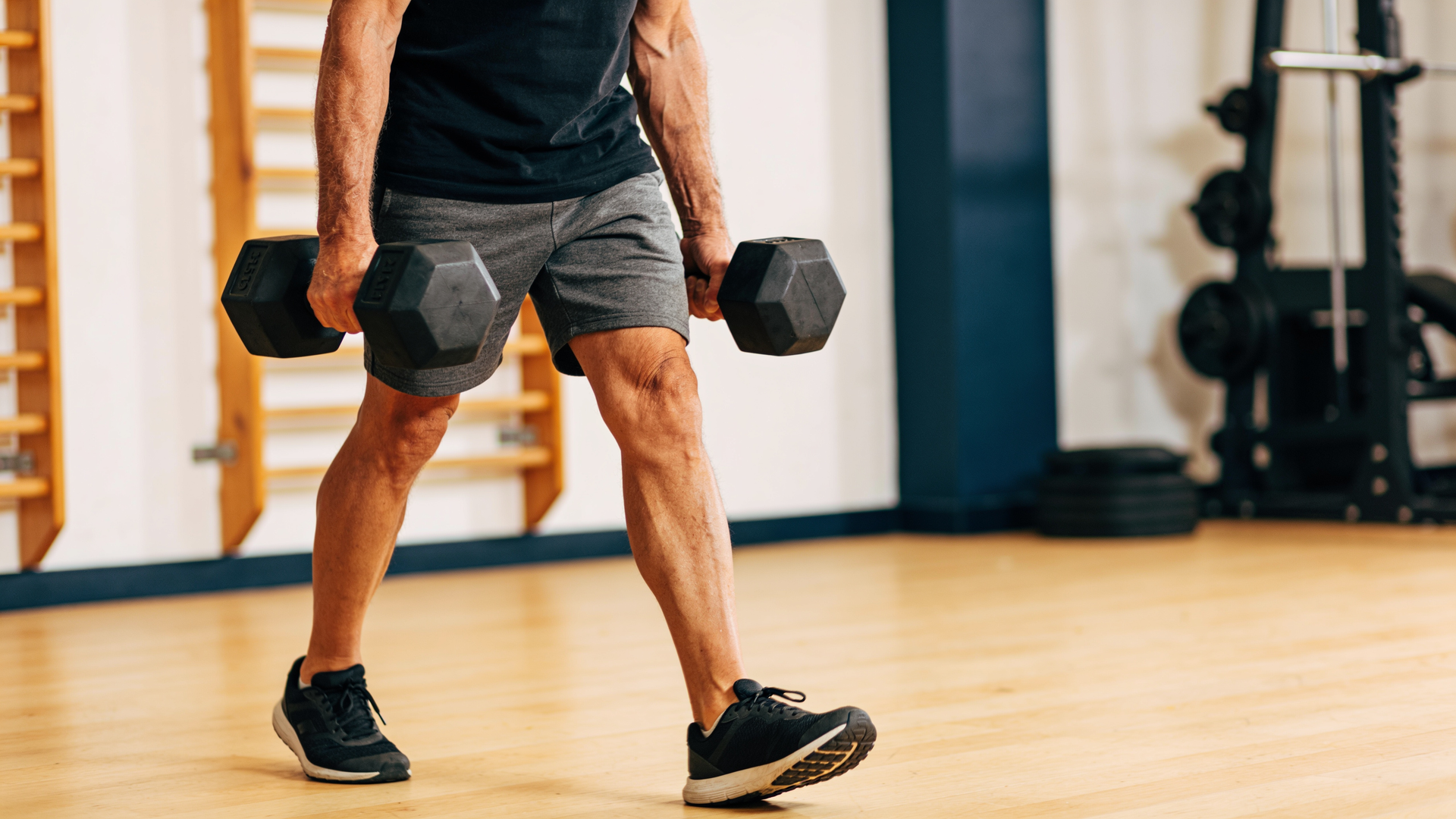
Why Grip Strength Is a Longevity Signal, Not Just a Gym Metric
The biomarker review mentioned above found that grip strength correlates with many aspects of health that matter in later life: muscle mass, walking speed, balance, bone density, fall risk, fracture risk, number of chronic conditions, hospital outcomes, and survival. In other words, when grip goes down, a lot of different things tend to go down with it.
Large population studies tell the same story at scale. A
study of roughly half a million adults in the UK Biobank found that lower grip strength was associated with higher rates of cardiovascular disease, respiratory disease, certain cancers, and all-cause mortality, which is why researchers increasingly treat grip as a window into total-body strength and resilience rather than a hand-only measure.
Cleveland Clinic geriatric specialist Ardeshir Hashmi, MD, adds another layer in his
explanation of how weak grip strength plays a role in aging. He explains that a stronger grip appears to track with a slower decline in the immune system, while a weaker grip is linked to faster biological aging, a higher risk of chronic disease, and a shorter life expectancy.
Some of the patterns that show up repeatedly across large studies:
- Lower grip strength is linked with higher all-cause mortality
- A weaker grip is associated with more chronic disease and disability
- Higher grip in midlife is associated with better odds of reaching advanced ages
Grip strength is not magic. It is a practical, measurable snapshot of how well your muscles, nervous system, bones, and metabolism are holding up under the load of life.
Why Simple Hand Grippers Are Not Enough
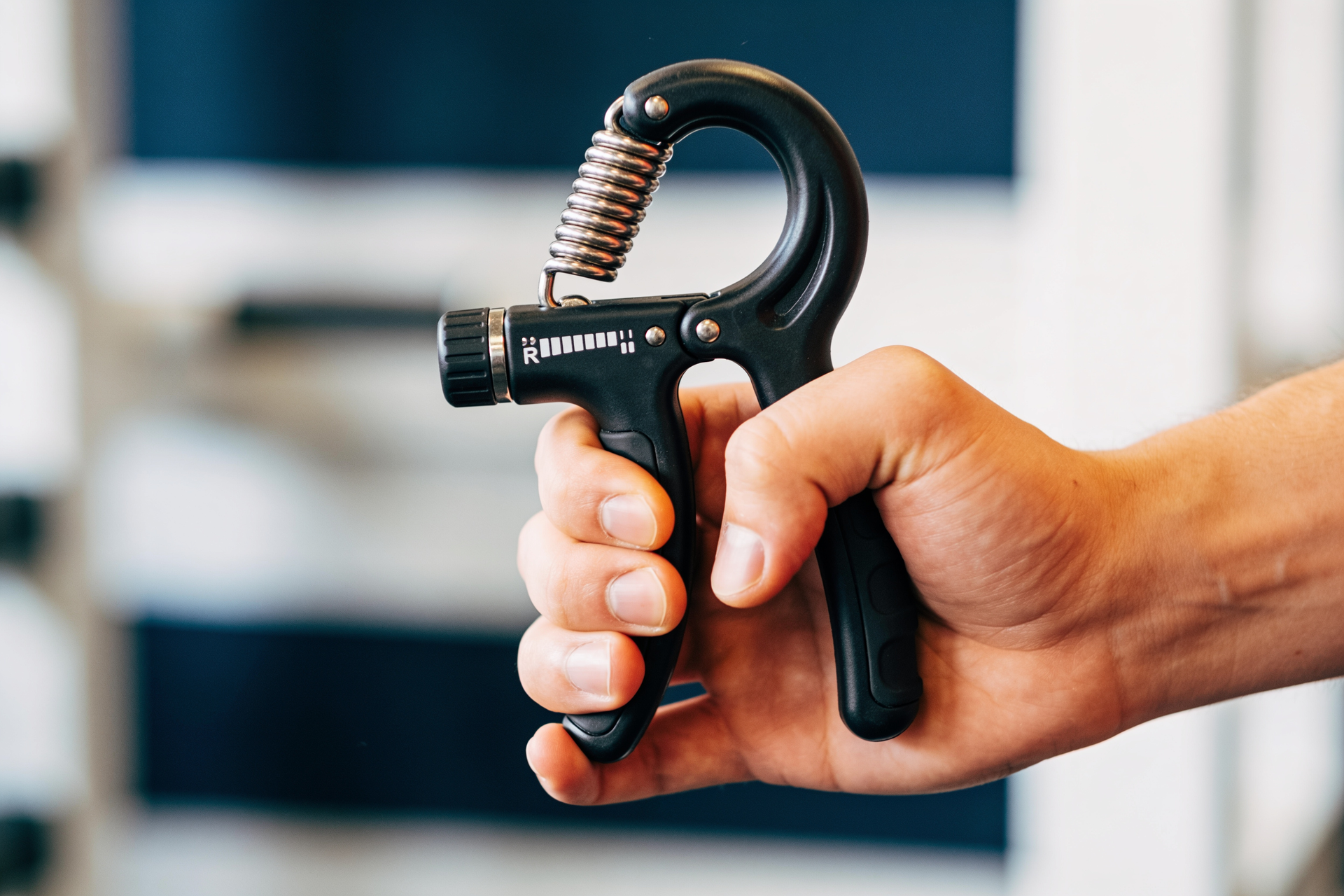
When people first hear about grip strength and longevity, they often buy a spring-loaded hand gripper and start crushing reps while watching TV. Hand grippers can be useful, but they mostly target a single quality: short-duration, maximal crush grip in one fixed position.
Real-world hand function is far more complex:
- Holding objects for time, not just a brief squeeze
- Opening the hand against resistance, not only closing it
- Managing different diameters and shapes, from thin bag handles to thick bars and awkward luggage
- Coordinating fingers that move together and separately with control, not just clamping everything at once
If you use only one standard gripper, you train on a narrow slice of the system. You can overload a few flexor tendons and pulleys while leaving your extensors, intrinsic hand muscles, and wrist stabilizers undertrained. That is the opposite of what you want if your goal is long-term joint health and function. At Royal Blue Fitness, we treat grippers as one of many tools. They are never the whole plan.
Inside the Anatomy of Your Grip
Understanding why grip training needs to be more thoughtful starts with appreciating how complex your hand and forearm really are.
Bones and joints
Each hand contains 27 bones and multiple joints that allow the fingers and thumb to flex, extend, spread, close, and rotate. These joints are what make it possible to type, fasten buttons, turn a key, and maintain a firm but comfortable hold on awkward items like grocery bags or a dog leash.
Muscles: intrinsic and extrinsic
Around 34 muscles contribute to hand function, in two big groups. Intrinsic muscles inside the hand control fine movements, finger spreading and closing, thumb positioning, and subtle grip adjustments. Extrinsic muscles in the forearm send long tendons through the wrist to open and close the fingers and thumb. Heavy carries and rows challenge the extrinsic muscles. Precision pinches and lateral finger work challenge the intrinsic muscles. A robust program needs both.
Tendons, ligaments, and pulleys
The hand relies on tendons connecting muscle to bone, ligaments stabilizing joints, and pulley systems and synovial sheaths that guide tendons and reduce friction. Because so many tendons run through a small space, especially at the base of the fingers and in the carpal tunnel, the way you load them matters. High-repetition, high-tension closing work in a single position, with no opening or variation, can irritate the finger flexor tendons, pulley structures such as the A2 pulley, and nerves passing through tight tunnels around the wrist. That is why we vary angles, handle widths, and force directions. We want your tissues to adapt, not get hammered in exactly the same way every time.
The Different Types of Grip You Actually Use
In training and daily life, you rely on several grip modes:
| Grip type | What it is, and where it shows up |
|---|---|
| Crush grip | Full hand wrapped around a bar or handle, like holding a heavy suitcase |
| Support grip | Sustained holding under load, such as farmers' carries or hanging from a bar |
| Pinch grip | Thumb against fingers, like holding a plate, pinch block, or book |
| Hook-style grip | Fingers wrapped around a bar with minimal thumb contribution, common in pulling work |
| Precision and lateral grip | Holding keys, writing, using tools, or carrying flat or thin objects |
Your long-term goal is not just a big squeeze for one rep. You want a hand that can generate and sustain force across all of these patterns, at different loads, for different durations.
How Grip Strength Changes Across the Lifespan
Grip strength follows a predictable pattern. It increases through childhood and adolescence, peaks in early to mid-adulthood, then gradually declines, with steeper drops in later decades.
Data from the Canadian Health Measures Survey, summarized in a
Statistics Canada grip strength reference table, show that maximum grip strength tends to peak around age 40, then declines in both men and women across the later decades.
This echoes broader research on age-related muscle loss. Without regular resistance training, muscular strength often begins to decline slowly in midlife, then accelerates after about 60. The exact numbers vary by study, but the shape of the curve is consistent.
The practical takeaway is simple. You do not control your birth year, but you do have a lot of influence over how much strength you build before that decline starts, and how steep that decline becomes after 50 and 60. Good training flattens the slope.
Grip Strength Norms by Age and Sex
To put these ideas into context, it helps to see what typical values look like across adulthood. The table below summarizes approximate low, average, and above-average maximal grip strength values based on the Canadian reference equations for adults aged 20 to 79, rounded for clarity. For our American audience, these numbers have been converted from kilograms to approximate pounds. P25 is roughly the lower end of typical, P50 is the median, and P75 is the higher end of typical. All numbers are in pounds.
| Age (years) | Men P25 | Men P50 | Men P75 | Women P25 | Women P50 | Women P75 |
|---|---|---|---|---|---|---|
| 20-24 | 84 | 95 | 106 | 53 | 60 | 64 |
| 25-29 | 88 | 99 | 110 | 55 | 62 | 66 |
| 30-34 | 93 | 104 | 115 | 55 | 62 | 68 |
| 35-39 | 95 | 106 | 115 | 57 | 62 | 68 |
| 40-44 | 97 | 106 | 117 | 57 | 62 | 68 |
| 45-49 | 95 | 106 | 117 | 55 | 62 | 68 |
| 50-54 | 93 | 104 | 115 | 55 | 62 | 66 |
| 55-59 | 90 | 101 | 110 | 53 | 60 | 66 |
| 60-64 | 86 | 97 | 106 | 51 | 57 | 62 |
| 65-69 | 79 | 90 | 99 | 49 | 55 | 60 |
| 70-74 | 73 | 84 | 93 | 44 | 51 | 55 |
| 75-79 | 64 | 75 | 84 | 42 | 46 | 51 |
How to use this table
- Test your maximum grip with a dynamometer in pounds, or convert from kilograms if needed.
- Find your age band and sex.
- Compare your result to the P25, P50, and P75 values.
Roughly, near or below P25 means you are in a low-strength category for your age; around P50 is average; and at or above P75 means you are stronger than most people your age. You do not need to match your 20-year-old numbers later in life. The realistic goal is to stay near the upper end of your age group, not quietly drift into the bottom.
What Counts as Low Grip Strength?
Different research groups and clinical guidelines set slightly different cutoffs, but some shared themes show up. Grip values near the very bottom of your age and sex range, around the 5th percentile, are often considered abnormally low and associated with higher frailty and disability risk. Some sarcopenia criteria use thresholds in the region of the low twenties of kilograms for women and high twenties to around 30 kilograms for men to flag weakness that can affect walking, stair climbing, and daily independence.
In practice at Royal Blue Fitness, we interpret your number in context: your age, sex, height, and body weight; your leg strength, balance, and mobility; your pain history and health conditions; and how grip feels in real tasks, not just on the device. A low grip value combined with slow walking speed, trouble getting out of chairs, and frequent fatigue sends a louder signal than a low grip score in someone who is otherwise strong and mobile.
Grip Strength, Brain Health, and Biological Aging
Grip is not just a muscle metric. The biomarker review on grip strength and aging links a weaker grip with higher fracture risk, lower bone density, more chronic conditions, higher fall risk, poorer sleep quality, more depression, and lower reported quality of life. That same paper notes associations between low grip and cognitive decline and hospital complications in later life.
Emerging research is now connecting muscle strength to the pace of biological aging itself. One study found that lower grip strength was
associated with faster epigenetic aging measured by DNA methylation clocks, with weaker individuals showing biological aging up to a decade beyond their chronological age. Cleveland Clinic's perspective adds that a stronger grip is associated with slower immune decline and better resilience when you face illness or surgery.
The big idea: grip strength is a practical, non-invasive proxy for how well your body is holding up. Improving it is not about getting a stronger handshake. It is about nudging multiple systems in a healthier direction.
How We Train Grip Strength at Royal Blue Fitness
At Royal Blue Fitness, we build grip training into the Strong for Life pillar. We are not chasing party-trick grip records. We care about what your hands allow you to do in real life. We focus on three principles: train the full range of hand and forearm function, vary the time under tension and surface, and integrate grip into full-body patterns.
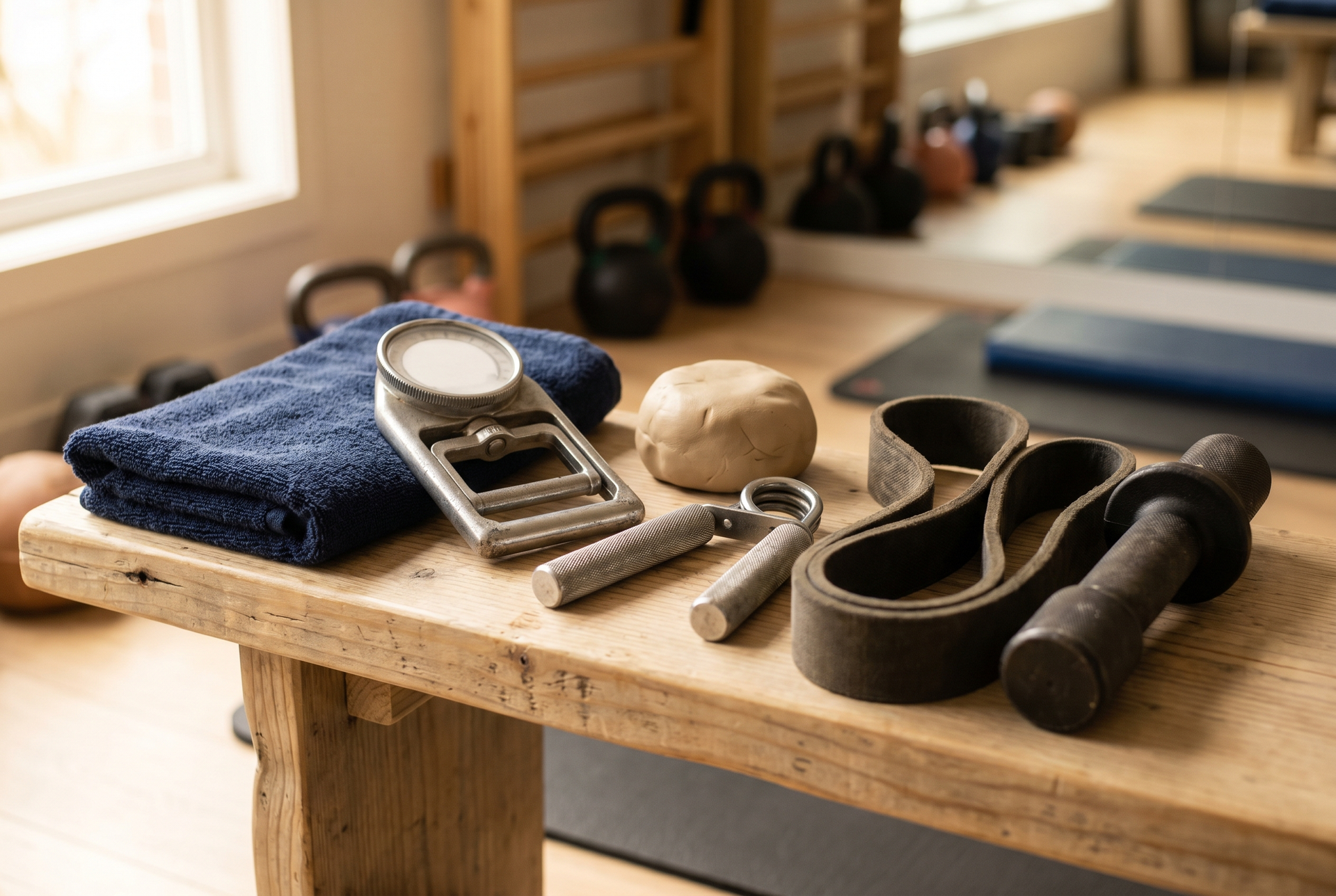
Tools we use
Depending on your assessment, you might see:
- Therapy putty for low-load, high-control flexion and extension, especially after injury or surgery
- Various hand grippers, from easy to heavy, programmed with clear volume and intensity limits
- Specialized cable and machine attachments that change handle thickness, angle, and texture
- Resistance bands for fingers and wrists to strengthen opening and extension, not only closing
- Roll-up pins for smooth, controlled wrist flexion and extension with gradually increasing load
- Weighted metal or wooden blocks and pinch tools to train the pinch grip and lateral grip
- Mace bells and Indian clubs to challenge rotational control in the wrist, forearm, and shoulder
- Carries and hangs, such as farmers' carries, suitcase carries, rack carries, and appropriate bar or ring hangs
All of this sits on top of foundational strength work, so your grip grows together with your back, hips, and legs.
How We Vary Range of Motion, Time Under Tension, and Grip Width
Instead of hammering the same pattern, we change the conditions so your tissues adapt safely. We might:
- Start with shorter ranges of motion for irritated tendons, then expand the range as they tolerate more load
- Rotate through narrow and thick grips so your fingers and forearms work at different joint angles
- Combine short, heavy sets, like 10 to 20 second heavy carries, with longer, submaximal holds, like 30 to 45 second light carries or hangs
- Pair closing work, such as rows, deadlifts, and grippers, with opening work, such as band finger extensions, reverse wrist work, and hand-opening drills in putty
The goal is strong, resilient hands, not hands that function only in a single exact pattern.
Building Grip Strength Safely After 40
Done right, grip training is joint-friendly and sustainable. When done poorly, it can quickly irritate small structures. Some guidelines we use with clients:
- Respect tissue tolerance. If you have arthritis, carpal tunnel symptoms, elbow tendinopathy, or a history of hand surgery, we start with low-load, high-frequency work and pay close attention to next-day soreness.
- Progress patiently. The nervous system and tendons adapt more slowly than muscles. We increase volume, load, or thickness incrementally, not all at once.
- Watch for warning signals. Numbness, burning, sharp pain, or swelling that worsens over the week are signs that the plan needs adjustment.
- Balance closing and opening. We deliberately train the extensor side so your hands do not become all clamp and no brakes.
- Integrate grip into bigger movements. Deadlifts, rows, loaded carries, sled work, and hangs all build grip in ways that matter for everyday tasks.
How We Test and Track Your Grip
For most Strong for Life clients, we:
- Test baseline grip strength using a calibrated dynamometer with standardized positioning, recording the best of several attempts per hand.
- Compare your values to norms using age- and sex-referenced values like those in the Statistics Canada table to place your result in context.
- Interpret in context by looking at your leg strength, balance, gait, pain, and daily function, so the number is part of a bigger picture, not a lonely metric.
- Re-test on a schedule, often every 6 to 8 weeks in line with training blocks. We care most about the trend: stable or improving grip over time is the goal.
As an illustrative composite of how this plays out: a client in his late fifties who could barely hold a dead hang for a few seconds spent a couple of months on varied carries, thick-grip rows, and band finger-extension work, and at re-test his dynamometer score had climbed out of the low-for-his-age range. The number mattered less than what came with it, since he carried his own bags through the airport without his forearms giving out.
You do not need to chase a specific kilogram target. What matters is that your grip moves away from frailty territory and toward the stronger end of your age range, while your joints feel equal or better than before.
Where Grip Fits in Strong for Life Training
Strong for Life training at Royal Blue Fitness is about giving you the capacity to live your life fully, for as many years as possible. Grip strength is one of the clearest bridges between lab data and real life. You need it to catch yourself when you slip, to carry groceries, luggage, and grandkids, for rows, deadlifts, and carries that keep your whole body strong, and for the small daily tasks that, when lost, chip away at independence.
That is why we build grip work into your overall program instead of treating it as a gimmick, use tools that train the whole hand and forearm, progress load and complexity at a pace your hands and nervous system can tolerate, and track how your grip changes over time, both on the dynamometer and in the way daily life feels. When we talk about Strong for Life, we mean the strength in your hands as much as in your hips and legs. Strong grip is not the only ingredient in longevity, but it is one you can train, measure, and improve in a very tangible way.
Find Out Where Your Grip Stands
You cannot train what you have never measured. If you are 40-plus and want hands and forearms that keep up with the life you want, the first step is knowing where your grip sits today and how it fits with your leg strength, balance, and mobility.
That is exactly what a
Strength and Range of Motion Assessment is built to capture: a clear, individualized baseline that turns "I should probably train my grip" into a specific plan you can follow and re-test over time. For anyone training around Pleasant Hill or the East Bay, it is a straightforward place to start. Strong hands are not the whole story of aging well, but they are one of the few longevity signals you can pick up, measure, and steadily improve.
Here are our latest articles! Click to read more.