Muscle Matters: Preventing Sarcopenia for Lifelong Vitality
Introduction: Sarcopenia Is Not Just Muscle Loss, It Is Capacity Loss
Sarcopenia is often described as age-related muscle loss, but that definition is too small.
The real issue is not only that muscle gets smaller. The deeper issue is that strength, power, balance, walking speed, and daily confidence can begin to decline with it.
That is why sarcopenia matters.
It can show up quietly at first. A flight of stairs feels harder. Getting out of a chair takes more effort. Carrying groceries feels less steady. Balance feels less reliable. Walks get shorter. The body starts avoiding activities it used to handle without much thought.
Over time, that pattern can shrink a person’s world.
Cleveland Clinic describes sarcopenia as the gradual loss of muscle mass, strength, and physical performance that happens with age, and notes that it can make everyday tasks like climbing stairs or getting out of a chair harder while raising the risk of falls, fractures, and loss of independence (Cleveland Clinic, 2026).
That is the heart of this article: sarcopenia is not only about muscle. It is about maintaining the physical capacity to live the life you still want to live.
At Royal Blue Fitness, we see this topic as one of the clearest examples of our broader philosophy: strength is not just something you build for the gym. Strength is something you build for daily life, independence, confidence, and longevity.
This guide will explain what sarcopenia is, why strength matters more than muscle size alone, why muscle loss happens, what early signs to watch for, how resistance training helps, how nutrition supports muscle maintenance, and how a structured plan can help you stay strong for the long term.
This is general education, not medical advice. If you have unexplained weight loss, sudden weakness, frequent falls, severe fatigue, neurological symptoms, uncontrolled medical conditions, or major changes in mobility, speak with a healthcare professional.
What Sarcopenia Actually Means
Sarcopenia is a muscle disease marked by declines in muscle strength, muscle quantity or quality, and physical performance.
In plain English: your muscles are not only smaller, they are less capable.
That distinction matters.
Someone can lose visible muscle size, but the more meaningful problem is often what happens to function:
- Can you get up from a chair without using your hands?
- Can you climb stairs without pulling yourself up?
- Can you walk at a steady pace?
- Can you catch yourself if you trip?
- Can you carry groceries, luggage, or a laundry basket?
- Can you get down to the floor and back up?
- Can you recover from an illness, surgery, or injury without losing major function?
The European Working Group on Sarcopenia in Older People 2, often referred to as EWGSOP2, updated the sarcopenia definition to place low muscle strength at the center. In that consensus paper, low muscle strength indicates probable sarcopenia, low muscle quantity or quality confirms the diagnosis, and poor physical performance indicates severe sarcopenia (Cruz-Jentoft et al., 2019).
That is a big conceptual shift.
It means the conversation is not just about how much muscle someone has. It is about how well that muscle performs.
For a fitness and movement setting, that matters because strength, balance, gait speed, power, and confidence are trainable qualities. They can be assessed, progressed, and supported through a plan.
Why Muscle Strength Matters More Than Muscle Size Alone
Muscle size matters, but strength is often the more important starting point.
A person can look relatively normal and still have poor strength. Another person can lose muscle slowly enough that they do not notice the change until daily life becomes harder.
That is why sarcopenia can sneak up on people.
Muscle strength supports:
- Standing from a chair
- Climbing stairs
- Walking uphill
- Catching balance
- Carrying objects
- Protecting joints
- Supporting posture
- Recovering from illness
- Reducing fall risk
- Staying active enough to keep conditioning
NIH News in Health has highlighted the relationship between strength loss, mobility limitations, and independence, noting that as muscle mass and strength decline, people can begin to struggle with walking, rising from a chair, climbing stairs, and eventually living independently (NIH News in Health, 2020).
This is why sarcopenia prevention should not wait until someone feels frail.
A better question is:
What strength do you want to keep 10, 20, or 30 years from now?
That question changes the purpose of training.
You are not lifting weights just to lift weights. You are training the abilities that make life feel manageable:
- Leg strength to get off the floor
- Hip strength to climb stairs and protect the back
- Grip strength to carry and control objects
- Trunk strength to move with stability
- Upper back strength for posture and pulling
- Power to react quickly
- Balance to stay confident on uneven ground
Sarcopenia prevention is really a form of future protection.
Why Sarcopenia Happens
Sarcopenia is influenced by several overlapping factors. Age is part of the story, but it is not the whole story.
Muscle changes with time, but inactivity accelerates the loss. Pain, illness, under-eating, poor protein intake, chronic inflammation, sleep disruption, hormonal changes, neurological changes, and reduced physical demand can all contribute.
Common contributors include:
- Reduced strength training
- Lower daily activity
- Less protein or total calorie intake
- Chronic disease
- Inflammation
- Hospitalization or bed rest
- Pain that reduces movement
- Balance fear
- Hormonal changes
- Neuromuscular slowing
- Poor sleep
- Social isolation
- Low confidence with exercise
Cleveland Clinic lists several risk factors for sarcopenia, including aging, decreased physical activity, poor nutrition, obesity, chronic disease, inflammation, and hormonal changes (Cleveland Clinic, 2026).
The important point is that sarcopenia is not only something that “happens” to the body. It is also shaped by the demands placed on the body.
Muscle responds to demand.
If the body is rarely asked to produce strength, it has less reason to keep strength. If the body is rarely asked to move quickly, it loses speed. If the body is rarely challenged to balance, balance becomes less reliable.
That can sound discouraging, but it is also empowering.
If the body adapts downward when demand disappears, it can also adapt upward when training is reintroduced safely.
Early Signs of Sarcopenia
Sarcopenia does not always begin with a dramatic change.
It often begins with subtle losses that people explain away.
You might notice:
- Stairs feel harder than they used to.
- You need your hands to stand from a chair.
- Walking speed has slowed.
- Carrying bags feels more difficult.
- Balance feels less reliable.
- You avoid uneven ground.
- You feel less steady stepping off curbs.
- You have lost weight without trying.
- Your arms or legs look smaller.
- Household chores feel more tiring.
- Recovery from illness or injury takes longer.
- You have less confidence getting up from the floor.
- Grip strength feels weaker when opening jars or carrying objects.
These signs do not automatically mean someone has sarcopenia. But they are worth paying attention to because they point toward declining physical capacity.
One reason grip strength, gait speed, chair rise ability, and balance show up often in sarcopenia research is that they connect to function. NIH Research Matters described a 2024 study in which grip strength, knee strength, and balance, especially single-leg standing ability, declined significantly across decades after age 50 and may help gauge aging-related physical status (National Institutes of Health, 2024).
From a coaching standpoint, these are not just tests. They are clues.
If someone struggles to stand from a chair, we need to train lower-body strength.
If someone cannot balance confidently, we need to train stability.
If grip strength is weak, we need to train carrying and pulling.
If walking speed is dropping, we need to train strength, power, endurance, and confidence.
The earlier the pattern is noticed, the more opportunity there is to intervene.
Why Resistance Training Is the Anchor
For sarcopenia prevention, resistance training is the anchor.
Walking is valuable. Stretching is useful. Balance work matters. Aerobic exercise supports health. But if the central problem is loss of muscle strength and function, the training plan needs to include progressive resistance.
Resistance training means the muscles work against a challenge.
That challenge can come from:
- Body weight
- Dumbbells
- Kettlebells
- Cable machines
- Weight machines
- Resistance bands
- Medicine balls
- Sleds
- Carries
- Tempo work
- Step-ups
- Squats
- Hinges
- Rows
- Presses
A 2023 systematic review and network meta-analysis in European Review of Aging and Physical Activity concluded that resistance training, with or without nutrition, and the combination of resistance exercise with aerobic and balance training were among the most effective interventions for improving quality of life in adults with sarcopenia (Hsu et al., 2023).
That evidence matches practical coaching experience.
Strength training gives the body a reason to keep and rebuild capacity.
But it has to be done correctly.
A sarcopenia prevention plan should not be random. It should be progressive. That means the body is gradually asked to do more over time.
Progress can come from:
- More control
- More range of motion
- More repetitions
- More sets
- More load
- More balance demand
- More speed, when appropriate
- Better technique
- Better recovery between sessions
- Better consistency across months
The goal is not to crush the body. The goal is to provide enough challenge to stimulate adaptation.
Muscle needs a reason to stay. Resistance training provides that reason.
What Sarcopenia Prevention Exercises Should Include
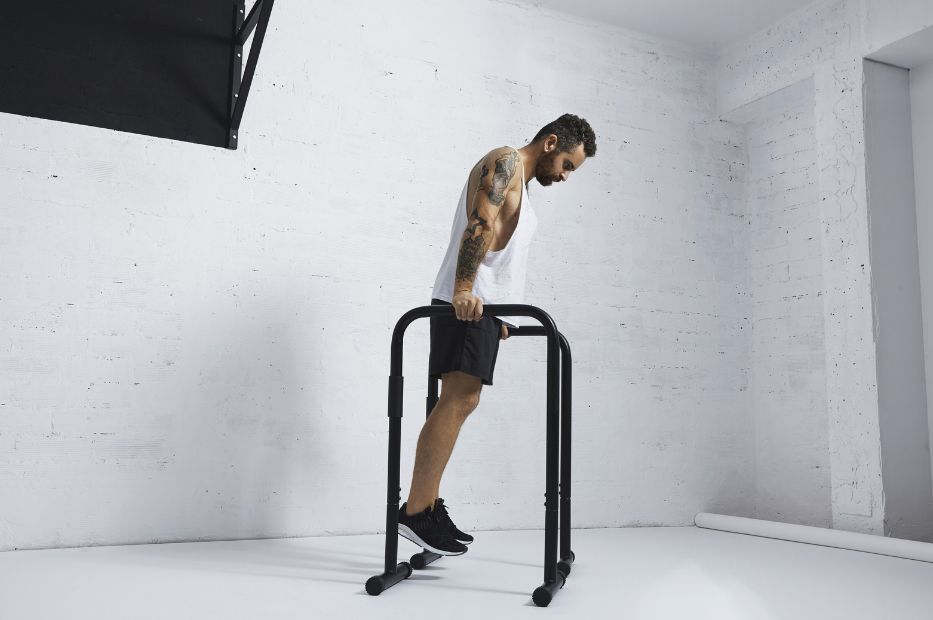
Sarcopenia prevention exercises should train the body for real life.
That means the program should not be limited to isolated machines or random exercises. Machines can be useful, especially for safety and confidence, but the full plan should build strength across the movement patterns people need every day.
A complete plan should include:
1. Squat or Sit-to-Stand Patterns
These train the ability to stand, lower, climb, sit, and rise.
Examples include:
- Sit-to-stand from a chair
- Box squats
- Goblet squats
- Assisted squats
- Leg press
- Split squats when appropriate
This pattern matters because chair rise ability is one of the clearest daily-life signs of lower-body strength.
2. Hip Hinge Patterns
These train the hips, glutes, hamstrings, and back-supporting muscles.
Examples include:
- Hip hinge to wall
- Romanian deadlift variations
- Cable pull-through
- Glute bridge
- Hip thrust
- Kettlebell deadlift from an elevated surface
Hinge strength helps with lifting, bending, carrying, and protecting the low back.
3. Step and Stair Patterns
These train single-leg strength, balance, and confidence.
Examples include:
- Step-ups
- Supported step-downs
- Split stance work
- Stair practice
- Lateral step work
Stairs are one of the first places people notice strength loss. Training this pattern keeps the skill alive.
4. Pulling Patterns
Pulling exercises strengthen the upper back, arms, grip, and posture muscles.
Examples include:
- Cable rows
- Band rows
- Dumbbell rows
- Lat pulldowns
- Seated row machines
- Assisted pulling variations
Pulling strength supports posture, carrying, lifting, and shoulder health.
5. Pressing Patterns
Pressing builds upper-body strength for reaching, pushing, and supporting the body.
Examples include:
- Wall pushups
- Incline pushups
- Machine chest press
- Dumbbell press
- Landmine press
- Overhead press, when appropriate
Pressing should be scaled carefully based on shoulder mobility and control.
6. Carrying Patterns
Carries are one of the most practical exercises for adults 50-plus.
Examples include:
- Farmer carries
- Suitcase carries
- Front carries
- Rack carries
- Light object carries
Carries train grip, posture, trunk control, shoulder stability, and walking confidence.
7. Core and Trunk Control
Core training should support real movement, not just abdominal fatigue.
Examples include:
- Dead bugs
- Bird dogs
- Pallof presses
- Carries
- Side planks
- Tall-kneeling presses
- Controlled breathing with bracing
The goal is to transfer force, maintain alignment, and move with control.
8. Power and Reaction, When Appropriate
Power is the ability to produce force quickly.
This matters because life does not always move slowly. Catching balance, stepping quickly, avoiding a trip, and reacting to the environment all require speed.
Power work can be gentle and safe when scaled well.
Examples include:
- Fast sit-to-stand with control
- Step-and-reach drills
- Medicine ball chest pass
- Light sled pushes
- Faster concentric lifting with slow lowering
- Low-impact agility patterns
Power training should be introduced carefully and only when strength, balance, and confidence are ready.
ACSM has emphasized that adults are never “too old” to strength train and describes strength training as a priority for aging adults because it supports strength, function, fall risk reduction, quality of life, and the ability to perform activities of daily living (American College of Sports Medicine [ACSM], 2023).
That is exactly the point. Sarcopenia prevention should not be passive. It should be trained.
Aerobic Exercise Still Matters, But It Is Not Enough by Itself
Aerobic exercise matters for health.
Walking, cycling, swimming, rowing, dancing, hiking, and other forms of cardio support the heart, lungs, circulation, metabolism, mood, and endurance.
For many people, walking is the easiest starting point. It builds routine, supports cardiovascular health, and helps maintain general activity.
But walking alone is often not enough to prevent sarcopenia.
Why?
Because walking does not usually provide enough resistance to build or preserve significant strength in the muscles most likely to decline. It helps keep you moving, but it may not challenge the body enough to maintain high levels of muscle strength, power, and balance.
That does not mean walking is unimportant.
It means walking should be part of a bigger structure.
A good sarcopenia prevention plan often includes:
- Resistance training for strength and muscle
- Aerobic exercise for cardiovascular health and endurance
- Balance training for fall prevention
- Power training for reaction and speed
- Mobility work for range of motion
- Nutrition support for recovery and muscle maintenance
The European Review of Aging and Physical Activity network meta-analysis found value in resistance exercise combined with aerobic and balance training for adults with sarcopenia, supporting the idea that strength is the anchor, but the full plan should be integrated (Hsu et al., 2023).
That is the same logic we use in coaching.
Walking helps you stay active. Strength training helps you stay capable. The combination is stronger than either one alone.

Balance, Power, and Fall Prevention
Sarcopenia is closely tied to fall risk because muscle weakness affects how the body responds to loss of balance.
Falls are not only about balance. They are also about strength, reaction time, power, vision, medications, footwear, environment, confidence, and health history.
But muscle matters.
If you trip, your body needs enough leg strength and reaction speed to catch you. If you stumble, your trunk needs enough control to recover. If you step onto uneven ground, your hips and ankles need to respond quickly.
That is why a sarcopenia prevention plan should eventually include balance and power, not only slow strength exercises.
Balance training may include:
- Supported single-leg stance
- Tandem stance
- Heel-to-toe walking
- Step taps
- Lateral stepping
- Marching drills
- Slow carries
- Controlled changes of direction
Power training may include:
- Faster sit-to-stand
- Step-up with intent
- Light medicine ball throws
- Low-impact agility drills
- Sled pushes
- Faster but controlled lifting phases
The International Osteoporosis Foundation’s sarcopenia and impaired mobility working group focuses on the relationship between sarcopenia, impaired mobility, falls, nutrition, and physical activity, reflecting the practical connection between muscle function and fall-related outcomes (International Osteoporosis Foundation, n.d.).
This is especially important for adults 50-plus because fall prevention is not just about avoiding injury. It is about preserving confidence.
After a fall, many people move less. When they move less, strength declines further. When strength declines further, fear increases. That cycle can become self-reinforcing.
Training can interrupt that cycle.
Strength gives you more options. Balance gives you more confidence. Power gives you more reaction capacity.

Protein, Nutrition, and Muscle Maintenance
Exercise provides the signal. Nutrition provides the materials.
To build or maintain muscle, the body needs enough total energy, enough protein, and enough key nutrients to support recovery and adaptation.
Protein is especially important because it provides amino acids, which are used to repair and build muscle tissue.
But protein should not be treated like magic. Protein works best when paired with progressive training.
The International Osteoporosis Foundation notes that protein is essential for preserving bone and muscle mass with aging, and that lack of protein can reduce muscle strength, increase fall risk, and contribute to poor recovery after fracture (International Osteoporosis Foundation [IOF], n.d.).
A 2024 systematic review and meta-analysis of randomized controlled trials found that whey protein supplementation improved several measures in adults with sarcopenia, including appendicular skeletal muscle mass index and gait speed, and that whey protein plus resistance training significantly improved handgrip strength compared with control conditions (Li et al., 2024).
That does not mean everyone needs whey protein. It means the broader principle matters:
Muscle needs both training stimulus and nutritional support.
Practical nutrition priorities for sarcopenia prevention include:
- Eat enough total calories to support training and recovery.
- Include protein at each meal when possible.
- Choose high-quality protein sources.
- Pair protein with strength training.
- Include fruits and vegetables for micronutrients.
- Stay hydrated.
- Address vitamin D, calcium, or other deficiencies with a healthcare provider.
- Avoid aggressive dieting that leads to muscle loss.
Protein sources may include:
- Eggs
- Greek yogurt
- Cottage cheese
- Fish
- Poultry
- Lean meats
- Tofu
- Tempeh
- Beans and lentils
- Protein powders when appropriate
- Nuts and seeds as supporting foods
For adults with kidney disease, digestive issues, appetite problems, diabetes, or complex medical concerns, protein targets should be discussed with a physician or registered dietitian.
For most people, the key question is not whether protein matters. It does.
The better question is:
Are you eating enough protein consistently enough to support the training you are doing?

Why Sarcopenia Prevention Should Start Before You Feel “Old”
One of the biggest mistakes is waiting too long.
People often begin thinking about muscle loss only after daily life becomes noticeably harder. But muscle strength can be trained long before a crisis appears.
That is the better approach.
You do not need to wait until:
- Stairs feel difficult.
- Falls become a concern.
- Your doctor warns you.
- You lose confidence.
- You feel frail.
- You need help with daily tasks.
Sarcopenia prevention is strongest when it begins as a proactive habit.
That is especially true because adults 40-plus and 50-plus often still have plenty of opportunity to build strength, improve movement quality, and create habits before major losses occur.
Strength training is not only a response to decline. It is a way to keep more of your ability for longer.
This is why the topic belongs under Chronic Diseases, but also connects naturally to lifelong strength, active aging, healthy aging, and functional fitness.
Sarcopenia is a medical and physiological concept, but the daily-life solution is very practical:
Train the body to keep doing the things you do not want to lose.
How to Start Safely If You Are Deconditioned
Starting strength training can feel intimidating, especially if you have not trained consistently in years.
That is normal.
The answer is not to jump into an aggressive program. The answer is to start with movements that match your current ability and gradually build.
A safe first phase might focus on:
- Sit-to-stand
- Supported squats
- Glute bridges
- Wall pushups
- Cable or band rows
- Step-ups to a low height
- Farmer carries with light weights
- Balance work near support
- Gentle mobility
- Easy walking
Start with moderate effort.
A good early session should leave you feeling like you worked, but not like you were punished.
Use these rules:
- Control comes before load.
- Consistency comes before intensity.
- Range of motion should match what you can control.
- Pain is not the goal.
- Progress should be earned, not forced.
- Recovery matters.
A 2023 systematic review and network meta-analysis on resistance training intensity in adults with sarcopenia found that resistance training and nutritional supplementation are recommended for sarcopenia management and examined how different intensities affect outcomes, reinforcing that resistance training can be structured and progressed rather than guessed (Chen et al., 2023).
The practical message is simple:
You do not need to start advanced. You need to start intelligently.
How Royal Blue Fitness Supports Sarcopenia Prevention
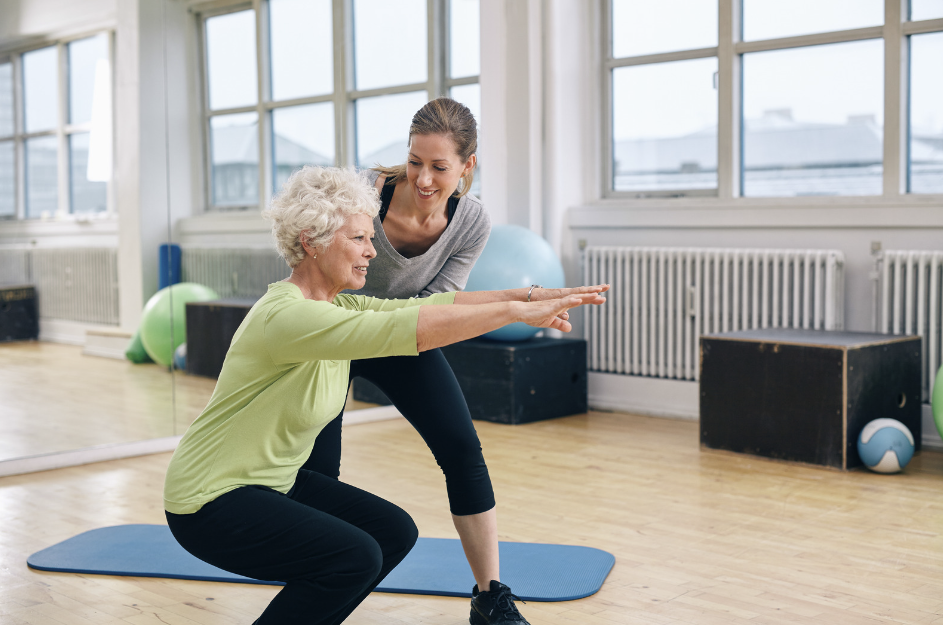
At Royal Blue Fitness, we see sarcopenia prevention as a strength-first mission.
We are not a medical clinic, and we do not diagnose sarcopenia or replace your physician, physical therapist, registered dietitian, or medical team.
Our role is to help you build a safe, structured, progressive fitness plan that supports strength, mobility, balance, confidence, and long-term physical capacity.
For many clients, the first step is a Strength and Range of Motion Assessment.
That helps us understand:
- How your joints move
- Where mobility is limited
- Where strength is lacking
- How well you control basic movement patterns
- What exercises feel safe
- What daily tasks feel harder than they used to
- Whether balance needs specific attention
- What your training history looks like
- What your goals are
- What barriers keep interrupting consistency
From there, a sarcopenia prevention plan may include:
- Progressive resistance training
- Functional strength patterns
- Balance and stability work
- Low-impact aerobic conditioning
- Mobility and flexibility training
- Carrying and grip-focused work
- Power development when appropriate
- Recovery-aware programming
- Habit support for consistency
The goal is not to turn everyone into an athlete.
The goal is to help each person keep, rebuild, and expand the physical capacity that supports real life.
That may mean getting stronger for hiking, travel, stairs, gardening, grandkids, work, independence, or simply the confidence of knowing your body can still adapt.
Sarcopenia prevention is not about chasing youth. It is about protecting your future.
FAQ: Sarcopenia Prevention and Strength Training
What is sarcopenia?
Sarcopenia is a progressive loss of muscle strength, quantity, or quality, and physical performance. It is often associated with aging, but inactivity, chronic disease, poor nutrition, and other factors can contribute.
Can sarcopenia be prevented?
Sarcopenia risk can often be reduced through progressive resistance training, adequate protein and nutrition, aerobic activity, balance work, and consistent movement. Medical conditions and nutrition concerns should be addressed with a healthcare team.
What are the best exercises for sarcopenia prevention?
The best sarcopenia prevention exercises usually include squats or sit-to-stands, hip hinges, step-ups, rows, presses, carries, balance drills, and core control. The exact plan should match the person’s ability and progress over time.
Is strength training good for sarcopenia?
Yes. Strength training is one of the most important tools for sarcopenia prevention because it challenges the muscles to maintain or build strength, function, and capacity.
Does walking prevent sarcopenia?
Walking is helpful for general health and endurance, but it is usually not enough by itself to prevent sarcopenia. A stronger plan includes resistance training, balance work, and nutrition support.
How much protein helps prevent muscle loss?
Protein needs vary by person, body size, health status, training level, and medical history. Many adults 50-plus benefit from paying closer attention to protein intake, but people with kidney disease or medical concerns should get personalized guidance from a healthcare professional or registered dietitian.
What are early signs of sarcopenia?
Early signs may include slower walking speed, difficulty rising from a chair, weaker grip, trouble climbing stairs, reduced balance confidence, smaller-looking muscles, and more fatigue during daily tasks.
Can muscle be rebuilt after loss?
Many people can improve strength, function, and muscle quality with progressive training and proper nutrition. The starting point matters, but the body can often adapt more than people expect.
Is sarcopenia the same as frailty?
No. Sarcopenia refers specifically to muscle strength, muscle quantity or quality, and physical performance. Frailty is broader and may include fatigue, weight loss, weakness, low activity, and reduced resilience. They can overlap.
How does Royal Blue Fitness help with sarcopenia prevention?
Royal Blue Fitness helps by assessing strength and range of motion, building progressive resistance training plans, improving movement quality, supporting balance and conditioning, and helping clients stay consistent with a structured plan.
Conclusion: Muscle Is the Foundation for Lifelong Vitality

Muscle matters because life demands strength.
It demands strength to stand, climb, walk, carry, balance, recover, travel, work, play, and stay independent.
Sarcopenia is not just a problem of aging. It is a problem of lost capacity. And while no one can stop time, the body can be trained to keep more of what matters.
The most effective approach is not complicated in theory, but it does require consistency:
- Progressive resistance training
- Adequate protein and nutrition
- Balance and power training
- Aerobic activity
- Mobility
- Assessment
- Recovery
- Long-term consistency
You do not need to wait until muscle loss becomes obvious. You can start building your foundation now.
At Royal Blue Fitness, we help clients train for the life they want to keep living: stronger, steadier, more capable, and more confident.
Power in Progress, Meaning in Motion.
Resources for Sarcopenia
- General Sarcopenia Information:
- Cleveland Clinic Sarcopenia Overview: Explains sarcopenia symptoms, causes, risk factors, diagnosis, and treatment in patient-friendly language.
- NCBI Bookshelf - Sarcopenia: Medical reference explaining sarcopenia, its causes, evaluation, treatment, and role in age-related decline.
- PubMed Central: Free full-text archive of biomedical and life sciences literature from the U.S. National Library of Medicine, offering access to studies and review articles on sarcopenia.
- Sarcopenia Definition and Clinical Framework:
- EWGSOP2 Sarcopenia Consensus Paper: Provides the updated European consensus definition and diagnostic framework for sarcopenia.
- Physiological Reviews - Sarcopenia: Aging-Related Loss of Muscle Mass and Function: Detailed academic review of age-related muscle loss, muscle function decline, and the biological mechanisms involved in sarcopenia.
- Strength Training and Exercise Research:
- Exercise for Sarcopenia Systematic Review and Network Meta-Analysis: Reviews exercise and nutrition interventions for adults with sarcopenia.
- European Review of Aging and Physical Activity Resistance Training Review: Examines resistance training intensity and outcomes in adults with sarcopenia.
- ACSM Strength Training for Aging Adults: Explains why strength training is important for aging adults and daily function.
- NIH News in Health Strength Training Interview: Discusses the connection between strength training, mobility, function, and independence.
- Nutrition and Protein Support:
- American Journal of Clinical Nutrition: Explains the role of nutrition, protein intake, and overall diet quality in helping adults preserve muscle mass, strength, and physical function as they age.
- International Osteoporosis Foundation Protein and Other Nutrients: Explains how protein supports bone and muscle health with aging.
- Whey Protein and Sarcopenia Systematic Review and Meta-Analysis: Reviews randomized controlled trials on whey protein supplementation with or without resistance training in adults with sarcopenia.
- Mobility, Falls, and Long-Term Function:
- International Osteoporosis Foundation Sarcopenia and Impaired Mobility Working Group: Reviews the relationship between sarcopenia, mobility, falls, nutrition, and exercise.
- International Osteoporosis Foundation - Sarcopenia and Impaired Mobility Working Group: Reviews the relationship between sarcopenia, impaired mobility, falls, nutrition, and exercise.
- NIH Research Matters on Grip Strength, Balance, and Aging: Summarizes research on grip strength, knee strength, balance, and physical aging after age 50.
- Specialized Sarcopenia Research Journals:
- Journal of Cachexia, Sarcopenia and Muscle: Specialized peer-reviewed journal that publishes research on sarcopenia, cachexia, muscle wasting, body composition, and related conditions.
Here are our latest articles! Click to read more.