Strength Training for Osteoporosis: The Beginner’s Plan After a DEXA Diagnosis
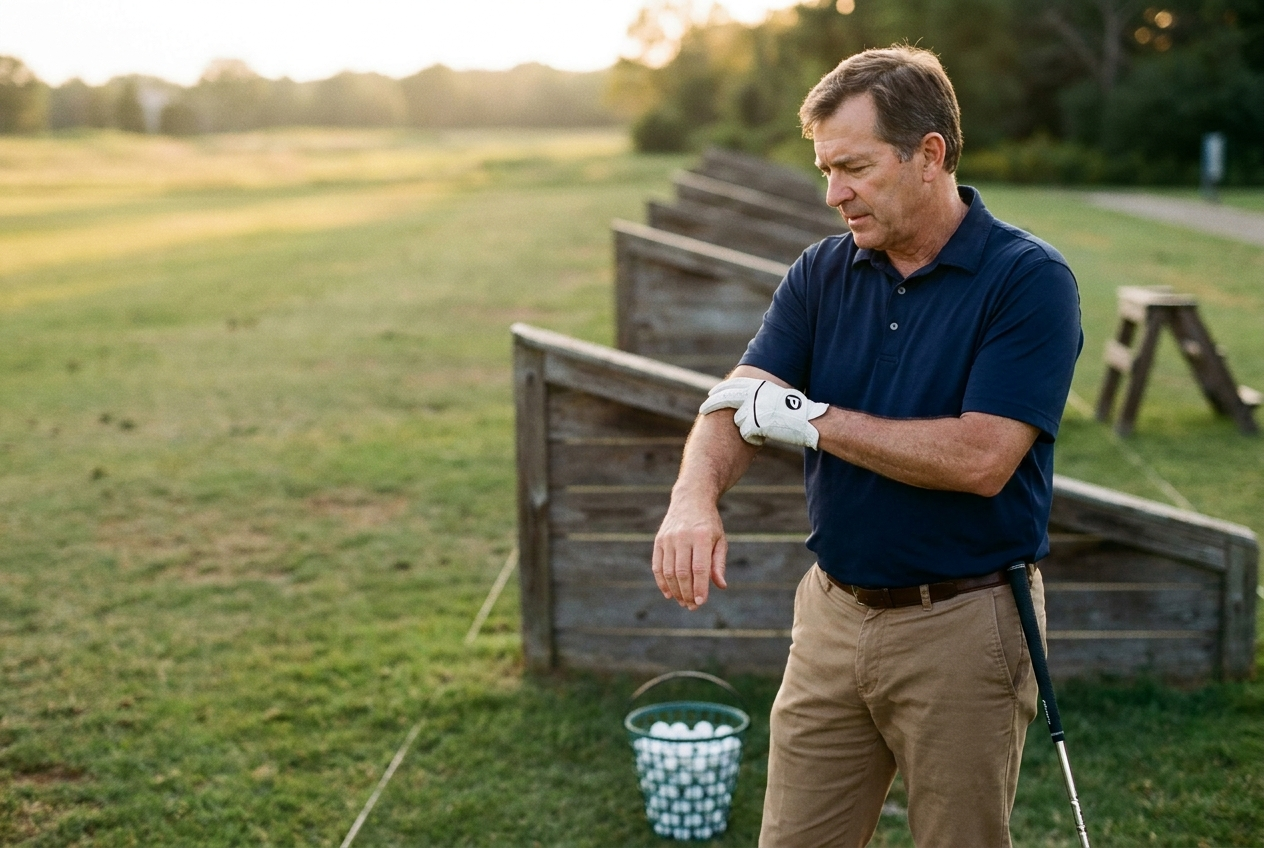
You went in for a routine checkup. Someone ordered a DEXA scan. You expected a quick “all good,” but the report came back with a word that hits hard: osteoporosis.
Then you did what most people do. You looked it up. Over and over, you saw the same advice: “Do weight training.” And instead of feeling relieved, you felt stuck.
Because nobody tells you what weight training actually means for bones, how it’s different than “getting exercise,” or how to start if you have never lifted. If that’s you, this article is for you.
By the end, you’ll understand what “weight-bearing” really means, why strength training differs from cardio and classes, what to do in your first 8 to 12 weeks, and what results you can realistically expect.
What a DEXA Scan Diagnosis Really Means
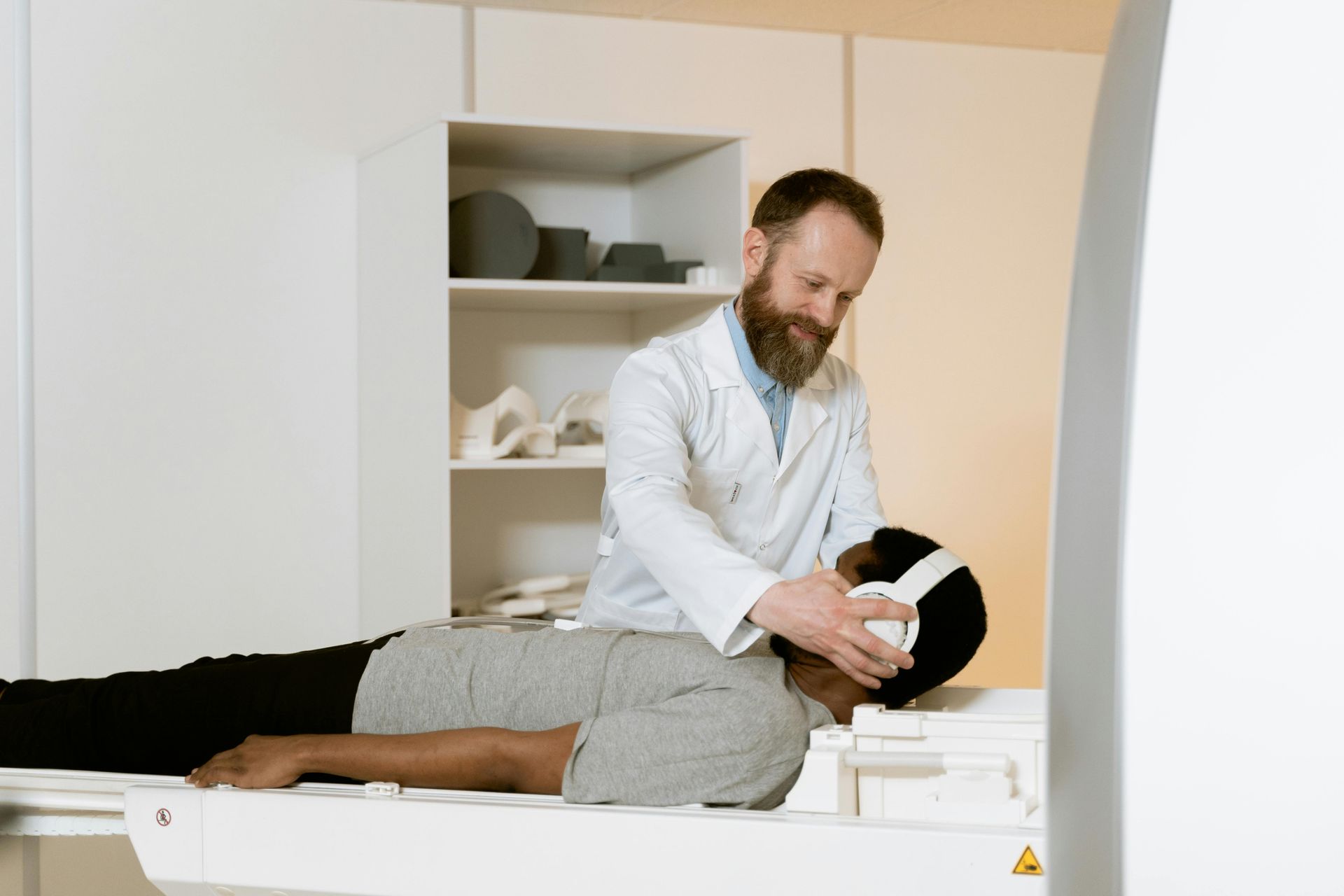
A DEXA scan measures bone mineral density and helps determine whether you have normal bone density, osteopenia, or osteoporosis. A diagnosis does not mean you should stop exercising; in fact, it helps guide how you should move next. For many people, a DEXA result signals the need for a structured strength training approach that focuses on bone-loading exercises, balance, and movement quality. Understanding your score provides a starting point for building a safe osteoporosis exercise plan that supports bone health, reduces fracture risk, and helps you regain confidence in movement.
First, a quick reality check: what osteoporosis means in real life
Osteopenia vs osteoporosis: the plain-language version
A DEXA scan gives you a T-score, which compares your bone density to that of a healthy young adult. Mayo Clinic explains the plain-language T-Score cutoffs: -1.0 or higher is generally normal, between -1.0 and -2.5 suggests osteopenia, and -2.5 or lower suggests osteoporosis.
For a more clinical reference, NCBI Bookshelf’s Endotext chapter summarizes the WHO DXA classification using the same T-score ranges.
Most scans focus on the hip and spine because those are common fracture sites and useful areas for tracking changes over time.
What success looks like (and what it does not)
Two things can be true at the same time:
- Bone change is slow. You do not “fix” osteoporosis in a month.
- Your body can improve fast. Strength, balance, posture control, and confidence often improve within weeks when training is well-designed.
That matters because fracture risk is not just about bone density. It’s also about falls, reaction time, and whether your legs, hips, and trunk can stabilize you when life surprises you. A practical, widely used framework is: build bone strength, build muscle strength, and build balance. The Royal Osteoporosis Society’s “Strong, Steady and Straight” quick guide summarizes those priorities in a way that’s easy to follow.
“Weight-bearing” isn’t a buzzword: it’s a specific training stimulus
What weight-bearing actually means
Weight-bearing exercise means your body is working against gravity while you’re upright, so your skeleton has to support load through your feet (and sometimes your hands). The Bone Health and Osteoporosis Foundation describes weight-bearing exercise as activities that make you move against gravity while staying upright, including lower-impact and higher-impact options.
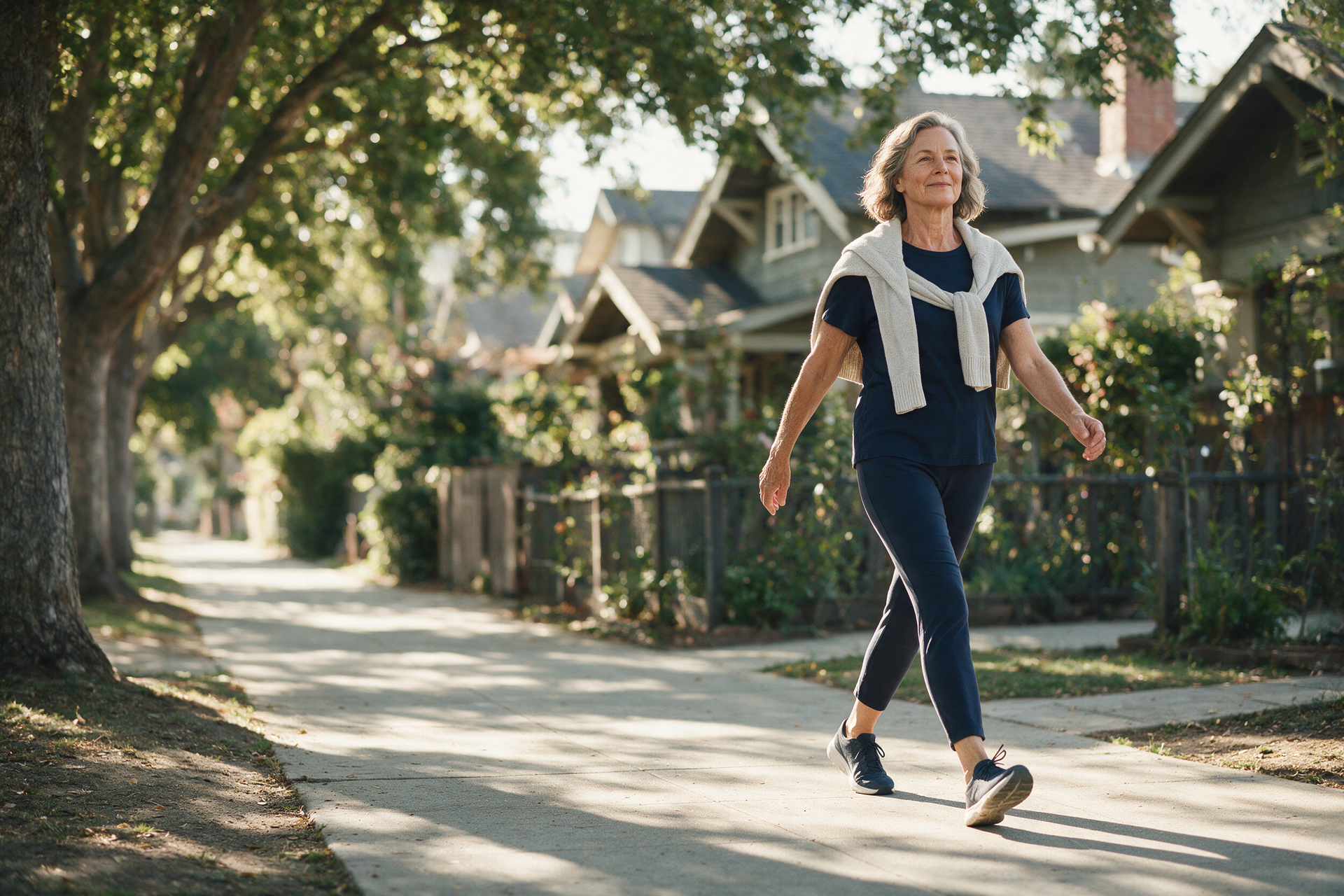
Examples that are often weight-bearing include brisk walking, hiking, stairs, and dancing. For some people, higher-impact options can be appropriate later; for others, they are not the right fit.
If you already have osteoporosis or you’ve had a fragility fracture, high-impact exercise may not be appropriate at first. Some people at higher fracture risk may need to avoid high-impact exercise and should check with their healthcare provider.
What counts as “loading” for bone
Here’s the part most articles skip: bone responds best when the stress is meaningful enough to require adaptation.
The International Osteoporosis Foundation emphasizes that bones and muscles respond when they’re stressed by weight-bearing or impact exercise, and that combining that with muscle-strengthening (resistance) exercise is key for bone health.
That resistance training piece is the game changer, because it’s where you create higher muscle force, higher joint loading, and a clear progression over time.
“More reps with tiny weights” can be great for conditioning, but it often underdoses the stimulus bones need to meaningfully adapt.
What doesn’t do much for bone (but still matters)
Some activities are excellent for your heart, mood, and stamina, but they are not your primary lever for bone density.
Non-weight-bearing cardio like cycling and swimming can be great for conditioning, but they do not load the skeleton the same way as upright weight-bearing activity. Think of them as support work. If your goal is stronger bones, the anchor is progressive strength training.
Why lifting changes bone: the simple science that helps you train smarter
Bone is living tissue, and it remodels based on demand
Your bones aren’t static. They remodel based on the demands you place on them. When mechanical stress is repeated in a meaningful way, your body gets a message: “We need more capacity here.”
The bone-building signal: intensity, direction, and progression
Evidence from resistance training research supports what coaches see in real life: training variables matter. A recent open-access systematic review and meta-analysis in the Journal of Orthopaedic Surgery and Research reviewed resistance training parameters for improving bone mineral density in postmenopausal women, reinforcing that factors like intensity, frequency, and duration affect outcomes.
Why “just exercising” doesn’t always solve it
Many classes are great for sweat, community, and general fitness. The mismatch is that many are not built around progressive loading, and progression is the point. If the weights don’t gradually get heavier, or the movements never become more challenging in a structured way, the bone stimulus is usually under-dosed.
Strength training vs cardio vs classes: where each fits if your goal is stronger bones
Strength training: your primary bone and muscle lever
Strength training supports bone health in a direct way: it creates the tugging and pushing forces on bone that stimulate adaptation. Harvard Health explains that strength training has bone benefits beyond those offered by aerobic weight-bearing exercise.
Strength training also improves the strength you use in daily life, like stairs, carrying groceries, and getting up from the floor, which matters for confidence and fall prevention.
Cardio: valuable, but not the main bone tool
Cardio supports heart health, energy, mood, sleep, and recovery. But if you’re searching “menopause weight gain exercise,” you’ve probably learned a frustrating lesson: cardio-only plans often plateau. During menopause, preserving and building muscle matters, and bone loss can accelerate. The Endocrine Society explains that menopause is a time of significant bone loss and increased osteoporosis risk. Cardio stays in the plan, but it should not replace progressive strength training.
Group classes: often helpful, sometimes mismatched
A class can be a great starting point if it gets you moving. The issue is when classes become your entire plan.
- Loads are often too light to progress meaningfully for bone.
- Movements are often rushed, and technique suffers.
- The plan changes every day, so progression is inconsistent.
-
The solution isn’t “never take a class.” The solution is: treat classes as bonus movement, and build your week around strength.
The foundation: the movement patterns that give the biggest return
If you’re new to lifting, you do not need 30 exercises. You need a small number of patterns trained consistently.
The “Big Five” patterns we build around
These patterns show up in daily life, and they load the areas we care about most:
- Squat pattern: sitting down and standing up, stairs.
- Hinge pattern: picking things up and protecting your back while lifting.
- Push pattern: pushing a door, getting up from the floor, bracing with your arms.
- Pull pattern: posture support, shoulder health, pulling things toward you safely.
- Carry pattern: groceries, laundry, and daily load tolerance.
The “sixth pattern” that protects bones: balance and stability
Balance training does not need to be fancy. It needs to be consistent and gradually more challenging. A practical goal is to build steadiness on one leg, confidence stepping up and down, and the ability to change direction under control.
Safety first: train hard enough to help, without being reckless
Your green lights and yellow lights
This isn’t medical care, but it is smart coaching guidance.
Green lights (training usually makes sense):
- You’ve been cleared for exercise.
- No recent fractures.
- You can walk comfortably and manage daily tasks.
Yellow lights (ask your clinician first, then train with extra structure):
- Recent fracture, especially spine or hip.
- Dizziness, fainting, or frequent falls.
- New or worsening neurological symptoms.
- Severe pain that escalates with basic movement.
The common mistake: avoiding load entirely
When people get an osteoporosis diagnosis, many get scared and respond by doing only “safe” movements forever. But “safe” can accidentally become “too little to matter.” The goal is not to avoid load. The goal is to apply the right load, at the right time, with the right progression. Mayo Clinic’s guidance highlights common exercise categories for osteoporosis, including strength training (especially for the upper back), weight-bearing aerobic activity, flexibility, and balance.
Practical technique priorities
- Controlled tempo, especially early on.
- Strong posture and trunk control.
- Strengthening hips and upper back to support alignment and daily movement.
- Avoiding sloppy twisting and repeated end-range spinal flexion under load early on.
The beginner roadmap: what to do in your first 8 to 12 weeks
You’re not trying to become a powerlifter. You’re building a foundation that helps your bones and your confidence.
Phase 1 (Weeks 1 to 4): learn the patterns, build consistency
Frequency: 2 strength sessions per week (3 if you recover well).
Goal: learn the movement patterns with excellent form and repeat them consistently.
Effort: finish sets thinking, “I could do 2 to 3 more reps if I had to.”
What progress looks like in Phase 1: you show up consistently, you learn positions that feel stable, and daily tasks feel less intimidating.
Phase 2 (Weeks 5 to 8): start loading with intent
Frequency: 2 to 3 strength sessions per week.
Progression: add 2.5 to 5 lb when form stays solid, or add 1 to 2 reps per set until you hit your target, then add weight.
Mindset: you are training, not just exercising.
Phase 3 (Weeks 9 to 12): build strength that looks like real life
- Add more carry work and more single-leg strength or balance work.
- Build intentional upper back strength for posture and spinal support.
- If appropriate, begin low-level impact progressions under guidance.
What a menopause fitness program should include if bone is the priority
If you want a true menopause fitness program, it should protect bones and build muscle, not just burn calories.
Menopause, estrogen, and bone loss: the key connection
The training conversation changes in midlife. Strength training for osteoporosis during menopause stops being optional. It becomes foundational.
Menopause weight gain exercise: why the answer is not “just do more cardio”
Cardio is excellent for heart health and stress relief. But muscle is metabolically active tissue, and strength training is your best tool for preserving and building it. That is one reason a strength-first plan often produces better long-term changes than a cardio-only plan for many women in menopause.
A weekly structure that works
- 2 to 3 strength days (progressive loading).
- 1 to 2 cardio days (supportive, not punishing).
- Balance and posture work is folded into warm-ups or finishers.
- Daily walking if your joints tolerate it.
Common myths that keep women stuck after an osteoporosis diagnosis
Myth 1: “I should only lift light weights forever.”
Light weights can be a starting point, but bones usually need a stronger stimulus over time. The goal is controlled progression, not staying “light” forever.
Myth 2: “If I feel pain, I’m damaging my bones.”
Pain is information, not a verdict. Many people have joint pain, tendon sensitivity, or back discomfort that improves with better programming. A good plan respects symptoms, modifies intelligently, and keeps moving forward.
Myth 3: “Walking is enough.”
Walking is valuable. It is also often not enough by itself for bone if it’s the same walk at the same pace forever. That’s why most bone-health guidance pairs weight-bearing activity with muscle-strengthening exercise.
Myth 4: “Classes are safer than lifting.”
Safety comes from good coaching, appropriate loading, and progression, not from avoiding weights.
Quick-start checklist: if you want to begin this week
If you want the simplest possible starting point:
- Pick two days for strength training.
- Choose 4 to 6 exercises built from the Big Five patterns.
- Keep the weights light enough to learn, then progress weekly.
- Add balance work for 3 to 5 minutes per session.
- Walk most days if it feels good.
The goal is not perfection. The goal is momentum.
When to Get Professional Guidance
Professional guidance becomes important when starting strength training after a DEXA diagnosis, especially if you have osteoporosis, osteopenia, a history of fractures, or uncertainty about which exercises are safe. Royal Blue Fitness can help assess movement patterns, identify risk factors, and create a progressive strength training plan that supports bone density without unnecessary strain. Working with strength training for osteoporosis in Pleasant Hill CA, helps ensure exercises are selected, loaded, and progressed appropriately, allowing you to train with clarity, confidence, and long-term safety.
Royal Blue Fitness osteoporosis strength training small group waitlist
If you’re reading this and thinking, “I want to do this right, but I don’t want to guess,” that’s exactly why we’re building this.
Royal Blue Fitness is opening a small-group strength training option for osteoporosis and osteopenia, capped at 3 to 4 people, so you get:
- Coaching on form and spine-friendly positioning.
- A plan that progresses week to week, not random workouts.
- Strength work that targets the hips, legs, trunk, and posture.
- Built-in balance progressions and confidence-building practice.
- A calm, supportive training environment in Pleasant Hill that meets you where you are.
If you want first access when spots open, join the Royal Blue Fitness waitlist for our osteoporosis strength training small group.
Power in Progress, Meaning in Motion.
Mini FAQ
Can I lift heavy with osteoporosis?
Yes, many people with osteoporosis can safely lift heavier weights over time with proper coaching and progression. “Heavy” is relative to your starting point. A well-designed strength training plan begins with loads you can control and gradually builds toward meaningful resistance that supports bone density, strength, and confidence while prioritizing safety.
How long until my DEXA improves?
Changes in bone density measured by a DEXA scan happen slowly, often over months or years. However, improvements in strength, balance, posture, and movement confidence usually occur much sooner. These early improvements play a critical role in reducing fall risk and supporting long-term bone health, even before DEXA scores change.
Should I use FRAX?
FRAX is a commonly used tool that estimates a person’s 10-year risk of hip fracture and major osteoporotic fractures based on bone density and other risk factors. It can be a helpful reference point, but it does not replace individualized movement assessment or strength training guidance. Exercise planning should always consider how your body moves, tolerates load, and responds to training—not risk scores alone.
Here are our latest articles! Click to read more.