Strength for a Lifetime: How Exercise Shields Against Osteoporosis
Introduction: Osteoporosis Is About More Than Bone Density
Osteoporosis can feel frightening because it often changes how people think about movement.
A DEXA scan comes back lower than expected. A doctor mentions osteopenia or osteoporosis. A friend breaks a hip. A parent loses independence after a fall. Suddenly, exercise feels complicated. You may wonder whether lifting weights is safe, whether walking is enough, or whether one wrong movement could cause a fracture.
That fear is understandable.
But osteoporosis is not a reason to stop moving. It is a reason to train smarter.
Mayo Clinic describes osteoporosis as a bone-weakening disorder that can lead to fractures, especially in areas such as the hip and spine, and notes that the right kinds of exercise can strengthen muscles and bones, improve balance, improve posture, and reduce fracture risk (Mayo Clinic Staff, 2025).
That is the frame for this article.
Osteoporosis is not only about a number on a bone density test. It is about bone strength, muscle strength, balance, posture, fall risk, confidence, and the ability to keep living actively.
At Royal Blue Fitness, we see osteoporosis-friendly exercise as a long-term resilience strategy. The goal is not reckless intensity. The goal is progressive, well-coached training that helps the body become stronger, steadier, and more prepared for the demands of daily life.
This guide will explain what osteoporosis is, what a DEXA scan measures, why exercise helps bone health, which types of exercise matter most, what movements may need modification, how nutrition supports bone health, and how Royal Blue Fitness approaches osteoporosis-friendly training.
This is general education, not medical advice. If you have osteoporosis, osteopenia, a prior fracture, spinal compression fracture, major balance issues, unexplained pain, or a recent DEXA diagnosis, talk with your healthcare provider before beginning or changing your exercise program.
What Osteoporosis Actually Means
Osteoporosis is a condition where bones become weaker, less dense, and more likely to break.
The word itself means “porous bone.” That does not mean bones become hollow overnight. It means bone tissue loses strength and structure over time, which can make fractures more likely from falls, awkward movements, or sometimes even minor stress.
The most common fracture sites include:
- Hip
- Spine
- Wrist
- Ribs
- Upper arm
- Pelvis
A fracture is not just a bone injury. It can affect mobility, independence, confidence, and quality of life.
That is why osteoporosis matters.
For many people, osteoporosis develops quietly. There may be no pain or obvious symptoms until a fracture occurs. Some people discover it through a DEXA scan. Others discover it after losing height, developing a curved upper back, or having a fracture after a relatively minor fall.
The National Institute of Arthritis and Musculoskeletal and Skin Diseases explains that osteoporosis makes bones weak and more likely to break, and that bone health can be influenced by nutrition, physical activity, age, sex, family history, medicines, and medical conditions (NIAMS, 2025).
The important point is this:
Osteoporosis is not only a bone density problem. It is a whole-body resilience problem.
Bone matters. Muscle matters. Balance matters. Posture matters. Strength matters. Movement confidence matters.
That is why exercise has such an important role.
Why Bone Strength Matters for Independence
Bone strength is not just a medical concept.
It affects the way people live.
Strong bones help protect the body when life becomes unpredictable. You trip on a curb. You miss a step. You slip in the kitchen. You stumble on a trail. You catch yourself while carrying groceries.
If bones are fragile, those ordinary moments become higher risk.
Osteoporosis-related fractures can create a difficult chain reaction:
- Pain
- Reduced mobility
- Fear of falling
- Less activity
- Muscle loss
- Lower confidence
- Greater fall risk
- More dependence on others
That cycle is exactly why osteoporosis exercise should not only focus on bone density. It should also focus on the qualities that help prevent falls and recover from mistakes.
Those qualities include:
- Leg strength
- Hip strength
- Grip strength
- Trunk control
- Balance
- Posture
- Walking confidence
- Reaction ability
- Safe lifting mechanics
- Confidence getting up and down
The International Osteoporosis Foundation notes that exercise can build and maintain bone and muscle strength, improve strength and balance to help prevent falls, and help people regain mobility and strength after fractures when tailored to the person’s needs and abilities (International Osteoporosis Foundation [IOF], n.d.).
That is why the phrase “strength for a lifetime” matters.
The goal is not simply to build stronger bones in isolation. The goal is to build a body that can keep participating in life.
DEXA Scans, Osteopenia, and Osteoporosis
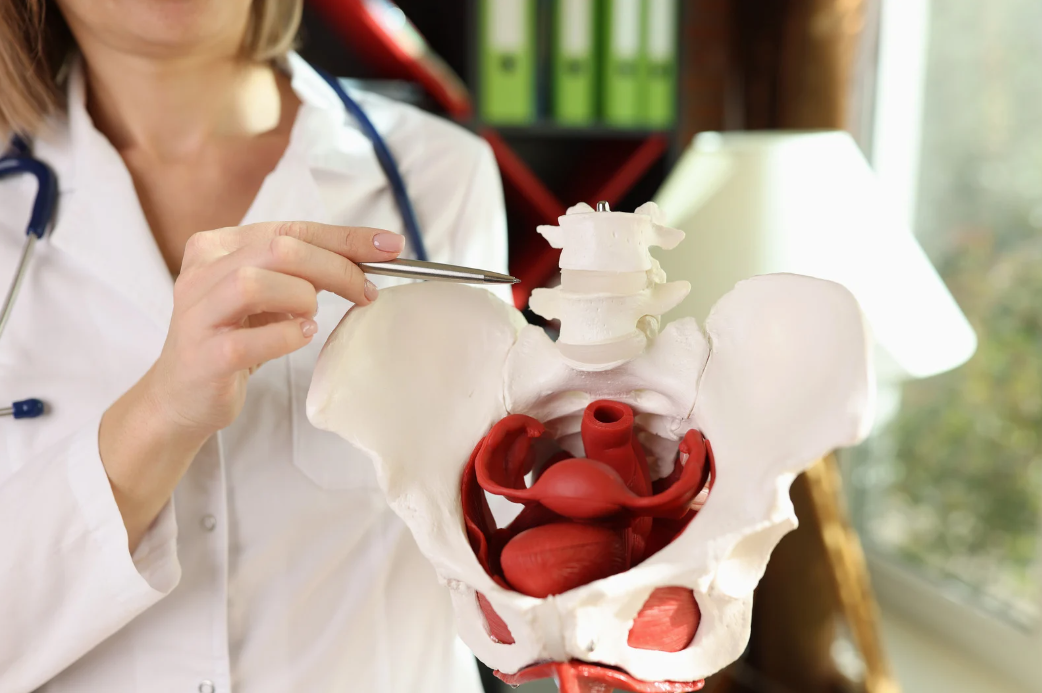
A DEXA scan, sometimes written as DXA, is a bone mineral density test. It helps estimate how dense your bones are and whether your fracture risk may be elevated.
DEXA results often include a T-score.
NIAMS explains that a T-score compares your bone mineral density to that of a healthy young adult. A T-score of -1 or higher is considered healthy, a T-score between -1 and -2.5 indicates osteopenia, and a T-score of -2.5 or lower may indicate osteoporosis (NIAMS, 2024).
Those numbers are important, but they are not the whole story.
A DEXA scan helps answer:
- How dense are your bones?
- Are you in the osteopenia range?
- Are you in the osteoporosis range?
- Has bone density changed over time?
- Should your provider recommend medication, lifestyle changes, or follow-up testing?
But a DEXA scan does not fully show:
- Your strength
- Your balance
- Your fall risk
- Your posture control
- Your walking confidence
- Your ability to lift safely
- Your ability to recover from a stumble
- Your daily activity level
That is why exercise planning should respect DEXA results without being limited to them.
A low bone density score matters, but the practical question becomes:
What can we build around that information to help you become safer, stronger, and more capable?
Risk Factors for Osteoporosis
Osteoporosis risk comes from a combination of factors.
Some cannot be changed. Others can be influenced.
Non-Modifiable Risk Factors
These include:
- Age
- Family history
- Sex
- Genetics
- Body frame size
- Menopause-related hormone changes
- Prior fracture history
- Certain medical conditions
Women after menopause are at higher risk because estrogen decline can accelerate bone loss. But osteoporosis does not only affect women. Men can develop osteoporosis too, especially with age, low testosterone, certain medications, chronic disease, or other risk factors.
Modifiable or Manageable Risk Factors
These include:
- Low physical activity
- Lack of strength training
- Low calcium intake
- Low vitamin D
- Smoking
- Excess alcohol
- Low body weight
- Poor nutrition
- Long-term steroid use, when medically necessary
- Poor balance and fall risk
- Sedentary habits
- Low muscle mass
The International Osteoporosis Foundation emphasizes that bone-healthy lifestyle habits include enough calcium and protein, enough vitamin D, maintaining a healthy body weight, regular weight-bearing and muscle-strengthening exercise, avoiding smoking and heavy drinking, and asking a doctor for a bone health assessment when risk factors are present (IOF, n.d.).
The goal is not to panic over every risk factor.
The goal is to identify which levers you can actually work on.
For many people, the most powerful levers are:
- Strength training
- Weight-bearing activity
- Balance training
- Fall prevention
- Nutrition
- Medical follow-up
- Consistency
Why Exercise Helps Bone Health
Bone is living tissue.
It responds to stress.
When bones experience safe, appropriate mechanical loading, the body receives a signal that those bones need to remain strong. That is one reason exercise matters for osteoporosis prevention and management.
But not all exercise affects bone the same way.
For bone health, the most important categories are:
- Strength training
- Weight-bearing activity
- Balance training
- Posture and spinal safety
- Functional movement training
The Bone Health & Osteoporosis Foundation explains that two major types of exercise are important for building and maintaining bone density: weight-bearing exercise and muscle-strengthening exercise. Weight-bearing exercise involves moving against gravity while upright, while muscle-strengthening exercise involves moving the body, a weight, or another resistance against gravity (Bone Health & Osteoporosis Foundation [BHOF], n.d.).
This distinction matters because people often assume that “exercise” is one category.
It is not.
Walking, lifting weights, stretching, balance drills, and Pilates all do different things. They can all have value, but they do not provide the same stimulus.
That is why an osteoporosis exercise plan should be organized around purpose:
- Strength training builds muscle and applies load through bone.
- Weight-bearing exercise helps bones experience gravity-based loading.
- Balance training helps reduce fall risk.
- Posture training helps reduce risky movement patterns.
- Mobility work helps you move better, but does not replace loading.
A strong plan uses the right tool for the right job.
Strength Training for Osteoporosis
Strength training is one of the most important tools in osteoporosis-friendly exercise.
It helps build muscle, improve posture, support joints, improve daily function, and apply loading forces that can help support bone health.
Strength training may include:
- Dumbbells
- Kettlebells
- Resistance bands
- Cable machines
- Weight machines
- Body-weight exercises
- Carries
- Step-ups
- Squats
- Hip hinges
- Rows
- Presses
Mayo Clinic describes strength training as using free weights, resistance bands, or body weight to strengthen muscles, tendons, and bones, and notes that it can be especially helpful for building back muscles important for posture and supporting bone density (Mayo Clinic Staff, 2025).
But strength training needs to be matched to the person.
A person who is strong, experienced, and medically cleared may tolerate different loading than someone newly diagnosed with osteoporosis, dealing with pain, or recovering from a fracture.
A good osteoporosis strength training plan should emphasize:
- Good technique
- Slow progression
- Controlled breathing
- Safe spinal positioning
- Appropriate load
- Balance support when needed
- Exercises matched to fracture risk
- Confidence before complexity
A 2022 systematic review and meta-analysis found that resistance training protocols in adults 55-plus produced small positive effects on bone mineral density at the hip and spine, with the authors framing the results as supporting a preventive effect against increasing bone frailty risk rather than a dramatic reversal of bone loss (Massini et al., 2022).
That is an important nuance.
Strength training can help, but it should not be sold as a magic cure. Bone changes are slow, individualized, and influenced by many factors, including medication, nutrition, hormones, age, training history, fracture history, and consistency.
The best message is this:
Strength training gives your bones and muscles a reason to stay strong.
That reason needs to be repeated over time.
Weight-Bearing Exercise: Useful, But Often Misunderstood
Weight-bearing exercise is important for bone health, but it is often misunderstood.
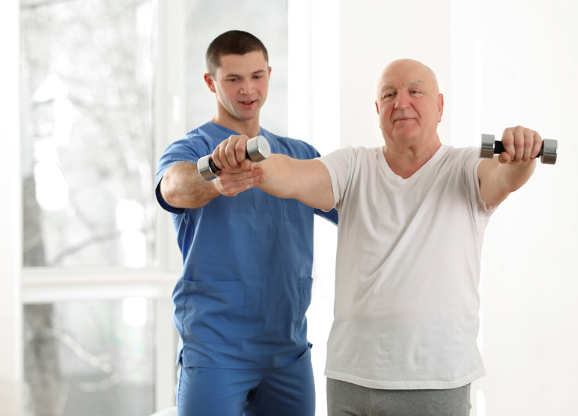
Weight-bearing exercise means you are on your feet and working against gravity.
Examples include:
- Walking
- Hiking
- Dancing
- Stair climbing
- Low-impact aerobics
- Elliptical training
- Gardening
- Jogging, when appropriate
- Tennis or similar activities, when appropriate
BHOF explains that weight-bearing exercises make you move against gravity while staying upright and can be high-impact or low-impact. They also note that high-impact exercise may need to be avoided if someone has broken a bone due to osteoporosis or is at risk of breaking a bone, and that low-impact weight-bearing exercise can be a safer alternative (BHOF, n.d.).
This is why walking is valuable, but not always enough.
Walking can support general health, endurance, circulation, mood, and lower-body loading. It is often one of the safest entry points for people who are deconditioned.
But walking usually does not build the same level of muscle strength as progressive resistance training.
So the question is not:
“Should I walk or lift?”
The better question is:
How do we combine walking, strength training, and balance work in a way that fits your body and fracture risk?
For many people, the answer may look like:
- Walk most days if tolerated.
- Strength train 2 to 3 days per week.
- Add balance work regularly.
- Practice safe movement mechanics.
- Modify higher-impact exercise based on medical guidance.
Weight-bearing exercise is useful.
Strength training is essential.
Balance training protects the outcome.
Balance Training and Fall Prevention
For osteoporosis, fall prevention is not optional.
A fracture often happens because of a fall, not just because bone density is low. That means the training plan should improve the body’s ability to stay upright, recover from stumbles, and move confidently in the real world.
Balance training can include:
- Supported single-leg stance
- Tandem stance
- Heel-to-toe walking
- Step taps
- Lateral stepping
- Slow marching
- Sit-to-stand practice
- Controlled step-ups
- Carries
- Tai chi
- Reactive stepping drills when appropriate
Mayo Clinic notes that stability and balance exercises help muscles work together in a way that makes falls less likely, and gives examples such as standing on one leg and movement-based exercise like tai chi (Mayo Clinic Staff, 2025).
Balance training should not be treated as something “extra” after the real workout. For someone with osteoporosis, balance may be one of the most important parts of the workout.
A strong balance plan should train:
- Foot and ankle control
- Hip stability
- Trunk control
- Stepping confidence
- Head turns
- Changes of direction
- Carrying while walking
- Confidence on uneven ground
The International Osteoporosis Foundation notes that osteoporosis exercise programs should target posture, balance, gait, coordination, and hip and trunk stabilization rather than only general aerobic fitness, especially for people with osteoporosis or fracture history (IOF, n.d.).
That is exactly the point.
Bone health is not just about the skeleton. It is about the whole system that keeps the skeleton safe.
Posture, Spinal Safety, and Movement Confidence
Osteoporosis often raises special concerns about the spine.
When bones are fragile, certain spinal movements may need to be modified, especially repeated or loaded bending and twisting. This is particularly important for people with spinal osteoporosis or prior compression fractures.
Mayo Clinic advises avoiding high-impact exercise and avoiding bending and twisting movements such as toe touches, sit-ups, and forceful waist twisting in people with osteoporosis, because these can increase fracture risk in weakened bones (Mayo Clinic Staff, 2025).
This does not mean your spine should never move.
It means movement should be trained with awareness, control, and context.
The goal is to build:
- Strong back muscles
- Good hip hinge mechanics
- Trunk control
- Postural endurance
- Safe lifting patterns
- Confidence with bending through the hips instead of collapsing through the spine
- Awareness of risky loaded flexion and twisting
The International Osteoporosis Foundation notes that people at increased fracture risk should avoid deep backbends and activities involving forward bending of the spine, especially while carrying an object, and that supervised, targeted programs with muscle strengthening, balance, and coordination are highly recommended (IOF, n.d.).
This is where coaching matters.
A person with osteoporosis does not need fear-based rules that make the body feel fragile. They need practical movement strategies that reduce unnecessary spinal stress while still preserving confidence, strength, and independence.
That may include learning how to hip hinge before lifting from the floor, turning the whole body rather than twisting quickly under load, replacing sit-ups with safer trunk-control drills, using elevated surfaces during early strength work, and progressing range of motion only when the body can control it well.
Spinal safety is not about becoming afraid of movement. It is about learning how to move with better mechanics, better strength, and better judgment.
What Exercises Should Be Modified or Avoided
Exercise selection should depend on the person, their fracture risk, their medical history, and their current capacity.
That said, some exercises often need caution or modification for people with osteoporosis, especially with spinal osteoporosis or prior compression fractures.
Exercises that may need modification include:
- Sit-ups
- Toe touches
- Deep forward folds
- Loaded spinal flexion
- Rapid twisting
- Heavy unsupported bending
- High-impact jumping
- Jerky or uncontrolled movements
- Certain yoga or Pilates positions involving loaded flexion or twisting
- Golf, tennis, or bowling motions if twisting force is high and fracture risk is elevated
BHOF notes that yoga and Pilates can improve strength, balance, and flexibility, but certain positions may not be safe for people with osteoporosis or higher fracture risk, especially exercises that involve forward bending, which may increase the chance of breaking a bone in the spine (BHOF, n.d.).
The key is not to create fear.
The key is to use better substitutions.
Instead of sit-ups, use:
- Dead bugs
- Bird dogs
- Pallof presses
- Carries
- Side planks, when appropriate
- Breathing and bracing drills
Instead of toe touches, use:
- Hip hinge drills
- Elevated hamstring mobility
- Supported range-of-motion work
- Chair-based movement
- Training that keeps the spine more neutral
Instead of fast twisting, use:
- Controlled rotation
- Step-and-turn patterns
- Whole-body turning
- Anti-rotation core training
Instead of high-impact jumping, use:
- Step-ups
- Stair climbing
- Low-impact weight-bearing cardio
- Progressive strength training
- Balance drills
Exercise should not make a person feel trapped.
Good programming gives people safer options instead of simply taking movement away.
Calcium, Vitamin D, Protein, and Bone Health
Exercise gives the body a loading signal.
Nutrition provides the materials.
Bone health depends on more than calcium alone, but calcium and vitamin D are still foundational nutrients.
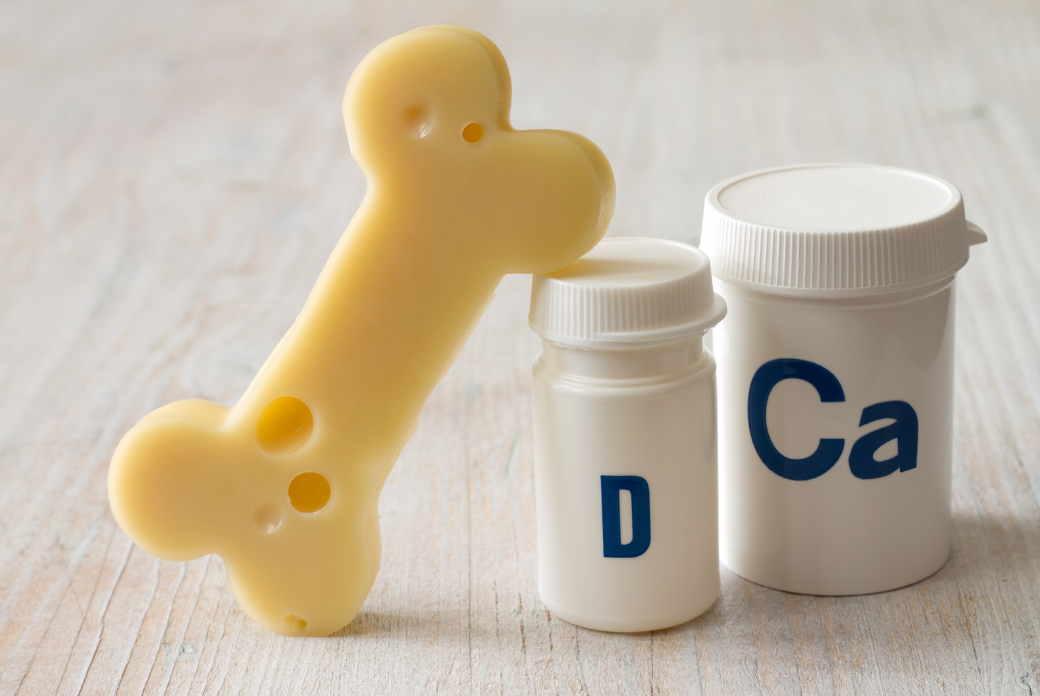
NIAMS explains that calcium helps harden and strengthen bone, while vitamin D helps the body absorb calcium and supports healthy muscle and immune function. NIAMS also notes that adults generally need calcium and vitamin D amounts that vary by age and sex, and that adults should talk with a healthcare provider before starting supplements (NIAMS, 2023).
Practical calcium sources include:
- Milk
- Yogurt
- Cheese
- Fortified plant milks
- Fortified juices
- Tofu set with calcium
- Sardines or canned salmon with bones
- Leafy greens
- Fortified cereals
Vitamin D sources may include:
- Sun exposure
- Fortified foods
- Fatty fish
- Eggs
- Supplements when recommended
Protein also matters because muscle supports bone.
If someone does not eat enough protein, it becomes harder to maintain muscle mass, recover from training, and support strength. That matters because muscle strength helps protect the skeleton.
The International Osteoporosis Foundation includes calcium, protein, vitamin D, exercise, and healthy body weight as part of osteoporosis prevention strategy, especially for adults at higher fracture risk (IOF, n.d.).
A practical bone-supportive nutrition pattern may include:
- Protein at each meal
- Calcium-rich foods daily
- Vitamin D support when needed
- Fruits and vegetables
- Adequate total calories
- Hydration
- Limited heavy alcohol use
- Avoiding smoking
- Medical guidance for supplements or deficiencies
Nutrition is not a replacement for exercise. Exercise is not a replacement for nutrition.
Bone health improves when loading, nutrition, recovery, and medical guidance work together.
How to Start Safely If You Are Deconditioned or Newly Diagnosed
If you are newly diagnosed with osteopenia or osteoporosis, the first step is not panic.
The first step is clarity.
Ask your healthcare provider:
- What does my DEXA scan show?
- Do I have osteopenia or osteoporosis?
- Where is my bone density lowest?
- Do I have a history of fractures?
- Do I need medication?
- Are there movements I should avoid?
- Am I cleared for strength training?
- Should I work with a physical therapist or qualified trainer?
- Should I take calcium or vitamin D?
- Do I need fall-risk screening?
Then build a starting plan that respects your current ability.
A safe first phase may include:
- Walking or low-impact weight-bearing activity
- Basic strength training
- Balance work near support
- Hip hinge education
- Posture and trunk control
- Gentle mobility
- Breathing and bracing practice
- Step-up progressions
- Carrying drills, when appropriate
Start with the goal of learning movement well.
Progress later.
A good early plan should feel:
- Clear
- Safe
- Controlled
- Repeatable
- Challenging but not frightening
- Matched to your body
A bad plan usually feels:
- Random
- Too aggressive
- Too easy forever
- Fear-based
- Pain-provoking
- Not connected to your actual goals
Progress matters, but it should be earned.
The goal is to build confidence and capacity, not rush into intensity before your body is ready.
How Royal Blue Fitness Supports Osteoporosis-Friendly Training
At Royal Blue Fitness, we help clients build strength, movement confidence, and long-term resilience through safe, structured training.
We do not diagnose osteoporosis. We do not replace your physician, endocrinologist, physical therapist, registered dietitian, or medical team. We do not prescribe medication or interpret DEXA scans as medical providers.
Our role is to help you build a fitness plan that supports your broader bone-health goals.
For clients with osteopenia, osteoporosis, fracture history, or concern about bone health, that may include:
- Progressive strength training
- Weight-bearing exercise
- Balance and fall-prevention work
- Posture and spinal safety coaching
- Hip and trunk strengthening
- Mobility and movement quality
- Safe lifting mechanics
- Low-impact conditioning
- Confidence-building progressions
- Programming that respects medical guidance
A strong plan starts by understanding the person in front of us.
That includes current strength, range of motion, movement confidence, balance, pain history, training experience, daily activity demands, and health limitations.
The goal is not to make every client train the same way. The goal is to match the challenge to the person.
Some clients need to begin with sit-to-stand mechanics, supported step-ups, balance work, and basic lifting patterns. Others are ready for progressive resistance training with dumbbells, machines, carries, and more demanding strength work. Some are rebuilding confidence after a fracture or after being told they are fragile. Others want to stay strong for travel, stairs, gardening, hiking, work, or playing with grandchildren.
Osteoporosis-friendly training should help people feel less afraid of movement, not more afraid of their body.
That is where Royal Blue Fitness fits best: helping clients train with structure, intelligence, and support.
FAQ: Osteoporosis Exercise and Strength Training
What is osteoporosis?
Osteoporosis is a condition where bones become weaker and more likely to break. It often develops silently and may not be discovered until a DEXA scan or fracture.
Can exercise help osteoporosis?
Yes. Exercise can help strengthen muscles, support bone health, improve balance, improve posture, reduce fall risk, and support daily function. The exercise plan should be matched to the person’s health status, fracture risk, and medical guidance.
What exercises are best for osteoporosis?
The best osteoporosis exercises usually include strength training, weight-bearing activity, balance training, posture work, and safe functional movement. The right mix depends on the person’s diagnosis, fracture history, and current ability.
Is strength training safe with osteoporosis?
Strength training can be safe and helpful when it is properly selected and progressed. The key is using good technique, appropriate loading, controlled movement, and modifications when fracture risk is high.
Is walking enough for osteoporosis?
Walking is useful, especially as weight-bearing activity, but it is often not enough by itself. Most people benefit from adding strength training, balance work, and posture-focused movement.
What exercises should be avoided with osteoporosis?
Many people with osteoporosis need to avoid or modify loaded spinal flexion, forceful twisting, sit-ups, toe touches, high-impact jumping, and jerky movements. The exact restrictions should be discussed with a healthcare provider based on fracture risk.
Can weight lifting improve bone density?
Resistance training can support bone health and may help slow bone loss or produce modest bone density improvements over time. Results vary, and bone changes are usually gradual.
What does a DEXA scan show?
A DEXA scan measures bone mineral density. It helps identify healthy bone density, osteopenia, or osteoporosis, usually using a T-score for women after menopause and men age 50 or above.
What role do calcium and vitamin D play?
Calcium helps build and maintain bone, while vitamin D helps the body absorb calcium. Both are important for bone health, but supplementation should be discussed with a healthcare provider.
How does balance training help osteoporosis?
Balance training helps reduce fall risk. Since many fractures happen because of falls, improving balance, stepping confidence, and reaction ability is an important part of osteoporosis-friendly exercise.
How does Royal Blue Fitness help with osteoporosis-friendly training?
Royal Blue Fitness helps clients build safe, structured fitness plans that include strength training, balance work, posture coaching, weight-bearing activity, mobility, and progressive programming within their medical guidance.
Conclusion: Osteoporosis Is a Reason to Train Smarter
Osteoporosis can feel intimidating, but it should not lead to fear-based inactivity.
Movement still matters. Strength still matters. Balance still matters. Confidence still matters.
The best osteoporosis exercise plan is not reckless, and it is not passive. It is structured, progressive, and respectful of fracture risk.
A strong plan should bring together:
- Strength training
- Weight-bearing activity
- Balance training
- Posture and spinal safety
- Safe movement mechanics
- Calcium, vitamin D, and protein support
- Medical guidance
- Long-term consistency
Osteoporosis is about more than bone density. It is about protecting the life that bone strength allows you to keep living.
At Royal Blue Fitness, we help clients build the strength, steadiness, and movement confidence that support lifelong vitality. If you are managing osteopenia, osteoporosis, or concern about bone health, the next step is not to avoid movement. It is to learn how to move and train with the right plan.
Power in Progress, Meaning in Motion.
Resources for Osteoporosis and Bone Health
To further explore osteoporosis, bone health, and exercise strategies, here are some reliable resources:
- General Osteoporosis Information:
- NIAMS Bone Health and Osteoporosis: Provides a broad overview of bone health, osteoporosis, risk factors, prevention, and living well with osteoporosis.
- Mayo Clinic Osteoporosis Exercise Guide: Explains safe exercise categories, movement precautions, balance training, and strength training considerations for osteoporosis.
- International Osteoporosis Foundation Prevention Resources: Offers patient-friendly guidance on osteoporosis prevention, nutrition, exercise, vitamin D, calcium, and fall awareness.
- DEXA Scans and Bone Density:
- NIAMS Bone Mineral Density Tests: Explains T-scores, Z-scores, osteopenia, osteoporosis, and what bone density results mean.
- Bone Health & Osteoporosis Foundation Bone Density Exam Information: Provides patient education on bone density testing and why it matters.
- Exercise and Movement Safety:
- Bone Health & Osteoporosis Foundation Exercise for Strong Bones: Explains weight-bearing exercise, muscle-strengthening exercise, and movement safety for people with osteoporosis.
- International Osteoporosis Foundation Exercise for Individuals With Osteoporosis: Reviews exercise recommendations, movement precautions, strength training, balance work, and fracture-risk considerations.
- International Osteoporosis Foundation Exercise Overview: Describes the role of exercise in bone health, muscle strength, balance, fall prevention, and post-fracture mobility.
- Research on Strength Training and Bone Density:
- Massini et al. Resistance Training and Bone Mineral Density Systematic Review: Reviews the effects of resistance training on bone mineral density in adults 55-plus.
- O’Bryan et al. Progressive Resistance Training Systematic Review and Meta-Analysis: Reviews progressive resistance training for muscle strength and bone mineral density in adults 50-plus.
- Too Fit To Fracture Consensus Priorities: Reviews research priorities and key considerations for osteoporosis, fracture risk, and exercise.
- Nutrition for Bone Health:
- NIAMS Calcium and Vitamin D: Explains how calcium and vitamin D support bone health and provides general intake guidance by age group.
- International Osteoporosis Foundation Protein and Other Nutrients: Explains the role of protein and other nutrients in supporting bone and muscle health.
Here are our latest articles! Click to read more.