Mastering Posture and Alignment for Optimal Health
Introduction: Posture Is Not a Pose, It Is a Pattern
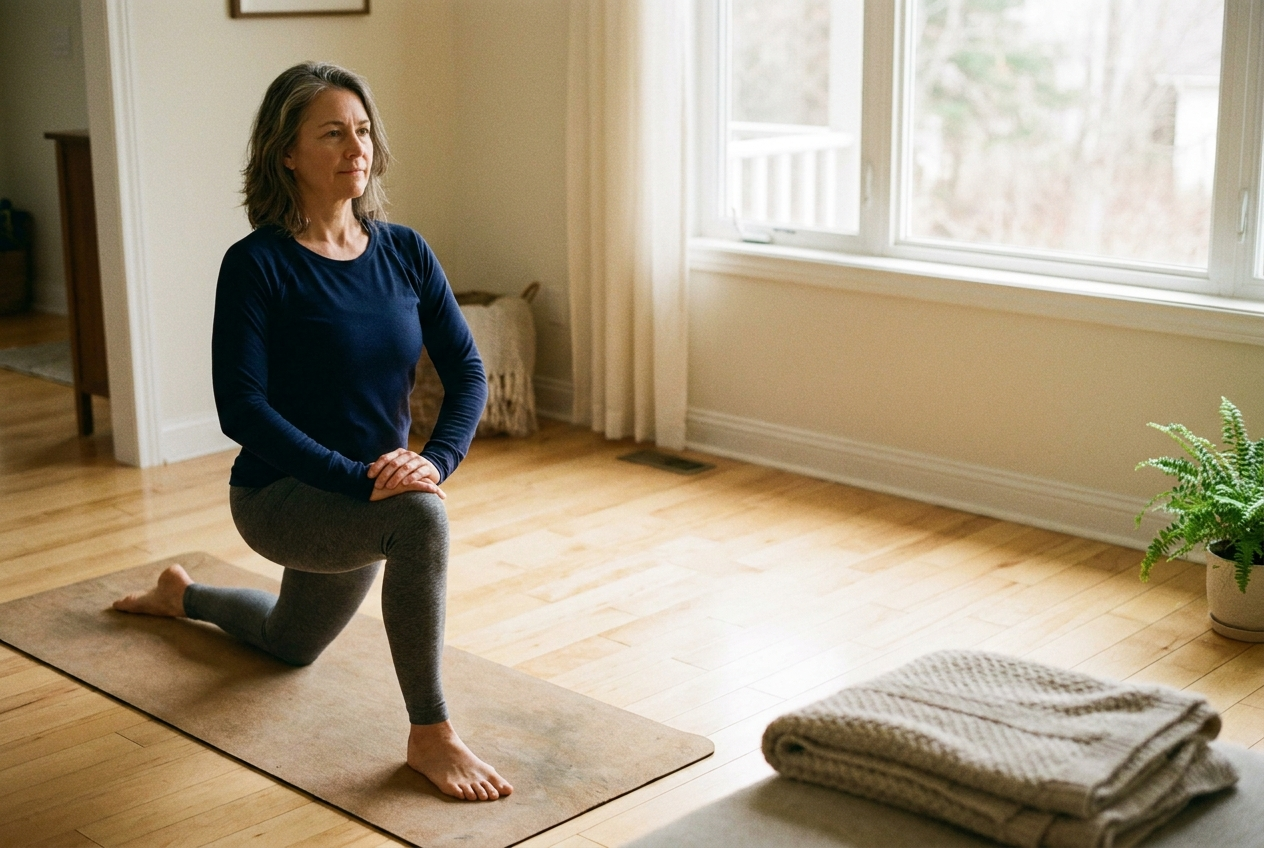
Posture is not just how you look when you stand still.
It is how your body manages load, tension, movement, fatigue, and repetition throughout the day. It shows up when you sit at a desk, carry groceries, drive, train, look down at your phone, sleep, walk, lift, and recover.
That is why posture matters.
Good posture is not about forcing yourself into a stiff, perfect position. It is about helping your body find positions that are strong enough, mobile enough, and efficient enough to repeat without constantly creating strain.
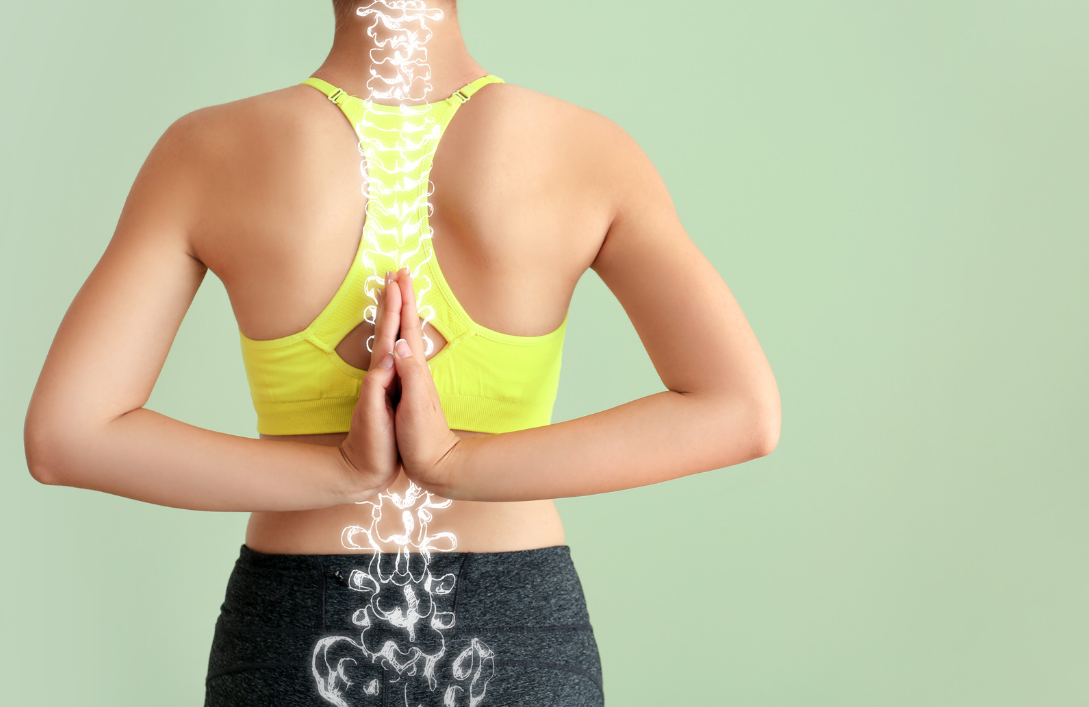
MedlinePlus describes posture as the way you hold your body, both when you are moving and when you are still. It also explains that good posture helps maintain the natural curves of the spine rather than exaggerating or flattening them (MedlinePlus, n.d.).
That is a useful starting point, but real life adds another layer: posture is not only alignment. It is capacity.
You can know what “good posture” looks like and still struggle to hold it because your body gets tired, your work setup pulls you forward, your hips feel stiff, your upper back lacks endurance, or your daily routine keeps reinforcing the same position.
This article will explain what posture and alignment really mean, why posture affects movement and comfort, why posture problems often come back, and how Royal Blue Fitness approaches posture training through assessment, strength, mobility, and real-world coaching.
This is general education, not medical advice. If you have sharp pain, numbness, tingling, weakness, dizziness, balance changes, unexplained symptoms, or pain that is worsening, consult a qualified healthcare professional.
What Posture and Alignment Actually Mean
Posture and alignment are related, but they are not exactly the same thing.
Posture is how you hold your body.
Alignment is how your joints, bones, and body segments stack and organize in relation to one another.
For example, when someone says they have “bad posture,” they may mean:
- Their head sits forward.
- Their shoulders round.
- Their upper back feels hunched.
- Their low back arches too much.
- Their hips feel tilted or uneven.
- They feel stiff after sitting.
- They cannot stand comfortably without tension.
- They feel like they are always forcing themselves upright.
But posture is not one frozen position. It changes based on what you are doing.
There is:
- Static posture, such as sitting, standing, or sleeping.
- Dynamic posture, such as walking, lifting, bending, reaching, training, or carrying.
This distinction matters because many people only think about posture when they are sitting at a desk or standing in front of a mirror. But your body also needs alignment when you move.
You need posture when you pick something up from the floor.
You need posture when you carry a child.
You need posture when you squat, row, press, walk uphill, turn your head while driving, or reach into a cabinet.
That is why the goal is not simply to “sit up straight.” The goal is to build
a body that can organize itself well under real-life demands.
Why Posture Matters for Pain, Movement, Breathing, and Confidence
Posture matters because your body is a connected system.
If your head drifts forward, your neck and upper back may work harder to support it. If your shoulders round forward, your upper back and shoulder blades may lose some control. If your pelvis tips too far forward or backward, your low back and hips may carry more strain than they need to.
This does not mean every postural variation is automatically a problem. Human bodies are not identical, and there is no single perfect posture that fits every person.
But when a repeated position becomes your only comfortable option, problems can begin.
MedlinePlus notes that poor posture may contribute to neck, shoulder, and back pain; decreased flexibility; changes in joint movement; balance issues; and even breathing difficulty (MedlinePlus, n.d.). Harvard Health also describes posture as a factor in back and neck comfort, especially when repetitive daily positions create muscle tension and strain (Harvard Health Publishing, 2014).
The practical takeaway is this:
Posture is not important because it makes you look “proper.” It is important because it affects how efficiently your body carries stress.
When posture is supported by strength and mobility, movement usually feels easier.
When posture is unsupported, your body may compensate.
That can show up as:
- Neck tension
- Headaches
- Upper back fatigue
- Shoulder tightness
- Low back discomfort
- Hip stiffness
- Shallow breathing
- Reduced balance
- Less confidence with lifting or training
- Feeling tired from sitting or standing
Posture also affects how people feel in their bodies. Standing taller and moving with control can change the way someone experiences strength, confidence, and readiness.
That does not mean posture fixes everything. But it does mean posture is worth training because it influences how you move through the day.
The Most Common Posture Problems
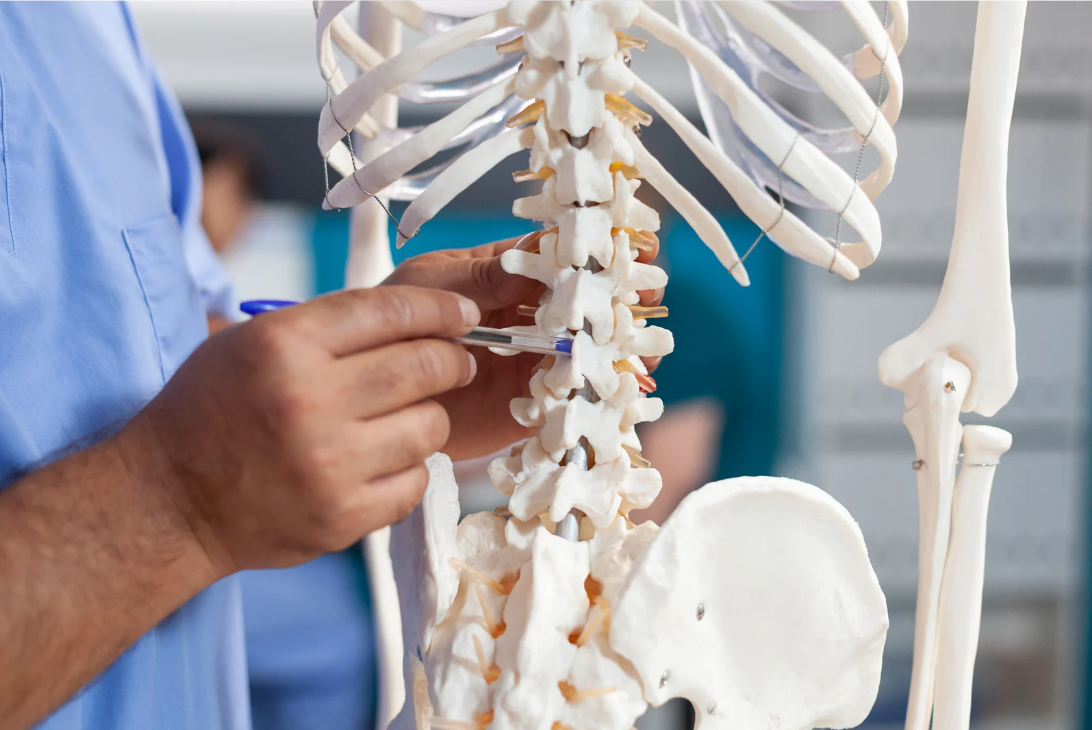
Many posture concerns fall into patterns. These patterns are not diagnoses by themselves, but they can help explain why certain areas feel tight, tired, or overworked.
Forward Head Posture
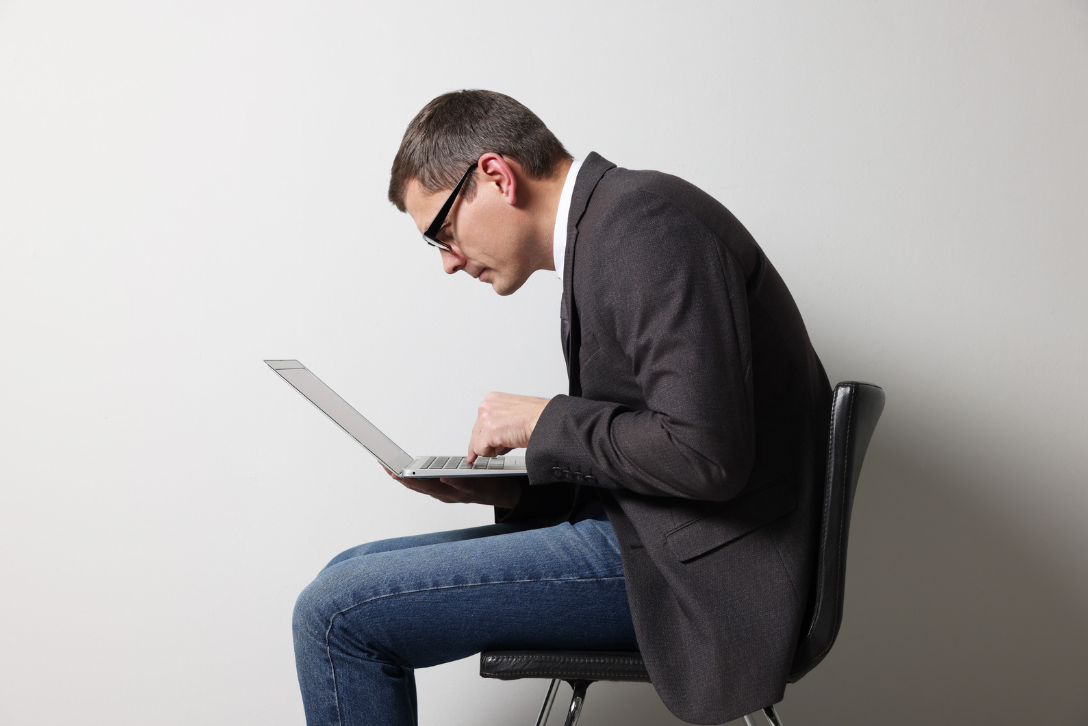
Forward head posture happens when the head sits in front of the body’s midline instead of staying more balanced over the shoulders.
This is common with:
- Phone use
- Laptop work
- Driving
- Reading
- Desk work
- Weak deep neck flexor endurance
- Upper back stiffness
- Poor screen setup
Forward head posture often feels like neck tightness, upper trap tension, headaches, or fatigue between the shoulder blades.
A systematic review and meta-analysis on forward head posture found that therapeutic exercise can improve postural variables and pain intensity in people with forward head posture (Sheikhhoseini et al., 2018). That supports the idea that posture is trainable, but it should be trained with a plan rather than random reminders to “stop slouching.”
Rounded Shoulders
Rounded shoulders happen when the shoulders rest forward, often paired with a rounded upper back or forward head position.
This can be influenced by:
- Desk work
- Driving
- Phone use
- Tight chest muscles
- Weak or undertrained upper back muscles
- Poor shoulder blade control
- Repetitive pushing without enough pulling
Rounded shoulders can make pressing, reaching, rowing, overhead movement, and posture endurance feel harder.
The goal is not to yank the shoulders back all day. That usually creates more tension. The goal is to improve upper back strength, shoulder blade control, chest mobility, and ribcage position so the shoulders can rest and move better.
Rounded Shoulders
Rounded shoulders happen when the shoulders rest forward, often paired with a rounded upper back or forward head position.
This can be influenced by:
- Desk work
- Driving
- Phone use
- Tight chest muscles
- Weak or undertrained upper back muscles
- Poor shoulder blade control
- Repetitive pushing without enough pulling
Rounded shoulders can make pressing, reaching, rowing, overhead movement, and posture endurance feel harder.
The goal is not to yank the shoulders back all day. That usually creates more tension. The goal is to improve upper back strength, shoulder blade control, chest mobility, and ribcage position so the shoulders can rest and move better.
Anterior Pelvic Tilt
Anterior pelvic tilt happens when the pelvis tips forward, often increasing the arch in the low back.
This can be associated with:
- Hip flexor stiffness
- Weak or underused glutes
- Poor trunk control
- Long periods of sitting
- Habitual standing positions
- Training patterns that overuse the low back
Some people with anterior pelvic tilt feel low back tightness, hip flexor tightness, or difficulty engaging the glutes during exercise.
Again, the goal is not to force the pelvis into one “perfect” position. The goal is to give the body better control over pelvic position during standing, walking, lifting, and training.
Excessive Stiffness or “Military Posture”
Not every posture issue looks like slouching.
Some people overcorrect by standing rigidly upright, squeezing their shoulder blades down and back, locking their knees, bracing their abs, and holding tension everywhere.
That can also create problems.
A rigid posture may feel controlled at first, but it often becomes tiring. It can reduce natural movement, limit breathing, and make training feel stiff.
Good posture should feel supported, not forced.

Why Poor Posture Happens
Poor posture usually does not come from laziness.
It comes from repetition, fatigue, environment, stress, weakness, stiffness, pain history, or a mismatch between what your body is asked to do and what it is trained to tolerate.
Common causes include:
- Sitting for long periods
- Working on laptops or phones
- Poor monitor height
- Driving posture
- Weak upper back endurance
- Limited hip mobility
- Low core or trunk endurance
- Lack of strength training
- Repetitive lifting or carrying on one side
- Stress-related muscle tension
- Pain avoidance patterns
- Poor sleep positions
- Training without enough mobility or control
The body adapts to what it repeats.
If you spend hours each day in one position, your body becomes very familiar with that position. That does not mean the position is evil. It means your body needs enough movement variety and strength to keep one repeated position from becoming the only position that feels natural.
This is especially important in desk work. OSHA explains that neutral body positioning at a computer workstation includes a level head, relaxed shoulders, elbows close to the body, supported feet, supported back, and straight wrists and forearms. OSHA also notes that even good working posture should be interrupted with position changes and movement breaks (Occupational Safety and Health Administration [OSHA], n.d.).
That last point is important.
Even a good posture becomes a problem if you never move out of it.
Why Posture Problems Come Back
This is where many people get frustrated.
They stretch. They sit up straighter. They buy a new chair. They do a few posture exercises. They feel better for a short time, then the same neck tension, rounded shoulders, or low back tightness returns.
That does not mean the effort failed. It means the solution may not have addressed the whole system.
Posture problems often come back for five reasons.
1. You Only Corrected the Position
If the solution is only “sit up straight,” it will not last.
Your body can hold a better position for a few minutes through attention and effort. But once you get tired, focused on work, stressed, or distracted, your body returns to the position it knows best.
Long-term change requires more than awareness. It requires
strength, endurance, mobility, and repetition.
2. You Stretched What Felt Tight, But Did Not Strengthen What Felt Weak
Stretching can help, but stretching alone often gives temporary relief.
If your chest feels tight, stretching may open the front of the body for a while. But if your upper back and shoulder blade muscles lack endurance, the shoulders may drift forward again.
If your hip flexors feel tight, stretching may help. But if your glutes and trunk do not control pelvic position well, the low back may continue to compensate.
A 2024 systematic review and meta-analysis in BMC Musculoskeletal Disorders found that therapeutic exercises, including strengthening, stretching, shoulder-based exercise, and comprehensive exercise approaches, were effective for improving forward head posture, rounded shoulders, and thoracic kyphosis angles in people with upper crossed syndrome (Sepehri et al., 2024).
That supports the coaching principle we use often:
Mobility gives you access. Strength gives you ownership. Endurance helps you keep it.
3. Your Environment Keeps Pulling You Back
If your monitor is too low, your chair does not support you, your laptop is always on your lap, or your keyboard setup forces your shoulders forward, your body has to fight your environment all day.
That is not a fair fight.
Mayo Clinic’s office ergonomics guide emphasizes adjusting chair height, foot support, arm position, keyboard and mouse placement, and monitor setup to reduce stress on the body during desk work (Mayo Clinic Staff, 2023).
Ergonomics do not replace strength training, but they reduce the number of “bad reps” your body performs every day.
Think of it this way:
- Ergonomics reduce strain.
- Movement breaks reduce stiffness.
- Strength training builds capacity.
- Mobility restores options.
You usually need more than one.
4. You Have Not Trained Posture Under Real-Life Load
It is one thing to stand tall in front of a mirror.
It is another thing to maintain alignment while carrying groceries, loading a suitcase, lifting a child, doing rows, performing a squat, or working at a desk for six hours.
Posture has to be trained under the types of demands you actually face.
That may include:
- Carrying
- Pulling
- Pressing
- Hinging
- Squatting
- Breathing under effort
- Rotating
- Sitting and standing transitions
- Reaching overhead
- Walking with load
If posture training never leaves the mirror, it rarely transfers well to real life.
5. You Are Trying to Fix Posture Without Assessment
Random posture advice can help sometimes, but it can also miss the reason your posture looks or feels the way it does.
Two people can both have rounded shoulders for different reasons.
One may need more upper back strength. Another may need better ribcage control. Another may need shoulder mobility. Another may be protecting a painful shoulder. Another may have a workstation problem. Another may simply be exhausted from daily stress and poor sleep.
That is why assessment matters.
The posture you see is often the result, not the root cause.
How to Assess Your Posture Without Over-Diagnosing Yourself
Self-checks can be useful, but they should not turn into self-diagnosis.
The goal is to notice patterns, not label yourself as broken.
Mirror Check
Stand naturally in front of a mirror.
Notice:
- Is your head level?
- Are your shoulders even?
- Do your shoulders rest far forward?
- Are your ribs flared?
- Are your hips level?
- Do your knees point forward?
- Do your feet collapse inward or turn out strongly?
Do not force anything. Just observe.
Wall Check
Stand with your back near a wall.
Notice:
- Can your head rest near the wall without forcing your chin up?
- Do your ribs flare when you try to stand tall?
- Is your low back arch very large or completely flattened?
- Do you feel relaxed or strained?
Harvard Health describes a wall-based posture check as one way to notice whether spinal curves may need more evaluation or adjustment (Harvard Health Publishing, 2014).
Again, this is not a diagnosis. It is information.
Movement Check
Posture is not only stillness.
Try noticing posture during simple movements:
- Can you squat without your heels lifting or back rounding excessively?
- Can you hinge without feeling everything in your low back?
- Can you row without shrugging?
- Can you press without arching your back?
- Can you carry a weight without leaning to one side?
- Can you breathe while bracing lightly?
These checks often reveal more than a standing photo.
Desk Check
Look at your work setup.
Ask:
- Is the screen at a height that lets your head stay level?
- Are your shoulders relaxed?
- Are your elbows close to your body?
- Are your feet supported?
- Is your back supported?
- Are you reaching for your mouse or keyboard?
- Do you change positions during the day?
OSHA notes that a properly adjusted workstation can help minimize awkward postures, and that monitor, keyboard, chair, and work surface setup can affect neck, shoulder, wrist, back, and arm strain (OSHA, n.d.).
When to Get Help
Get professional support if:
- Pain is persistent or worsening.
- You have numbness, tingling, or weakness.
- You feel unsteady or dizzy.
- You have pain after an injury.
- Your posture concern is linked to breathing difficulty.
- You cannot find a comfortable sitting or standing position.
- Exercises make symptoms worse.
- You feel stuck despite consistent effort.
A coach can help with movement, strength, mobility, and training structure. A medical or rehab provider may be needed for diagnosis, pain, nerve symptoms, injury, or medical concerns.
Desk Posture and Ergonomics
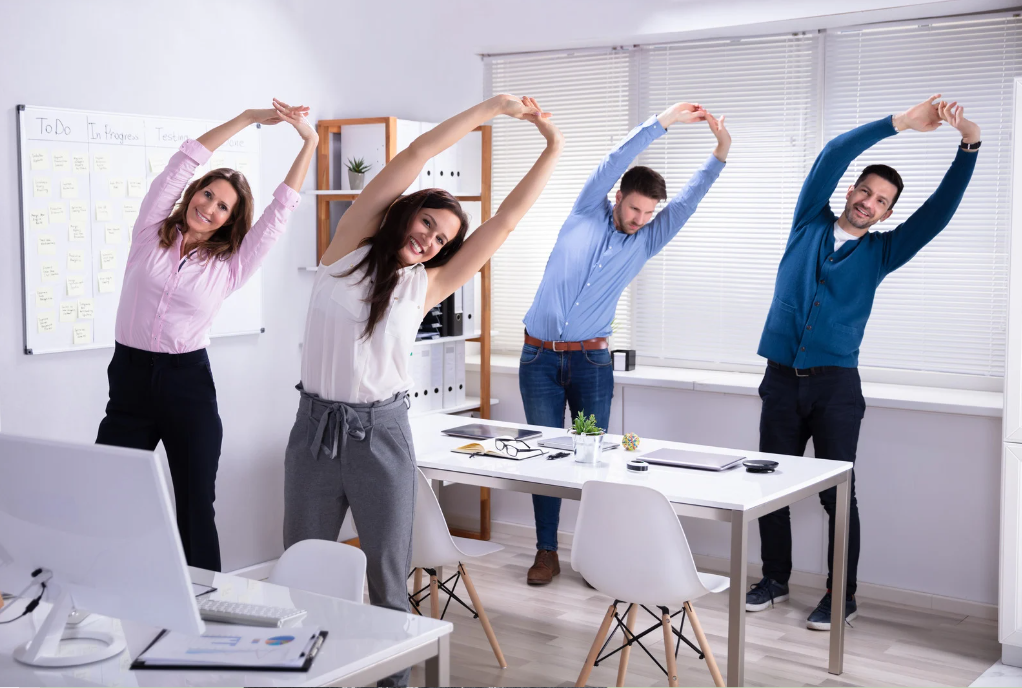
Desk posture deserves special attention because many people spend hours each day in front of a computer.
The goal is not to sit perfectly still. The goal is to reduce strain and create enough movement variety that your body does not get trapped in one position.
A better desk setup usually includes:
- Screen near eye level
- Feet supported
- Back supported
- Shoulders relaxed
- Elbows close to the body
- Wrists neutral
- Keyboard and mouse close enough to avoid reaching
- Chair height adjusted so hips and thighs are supported
- Frequent movement breaks
The best desk posture is not a single pose. It is a rhythm.
Sit well. Shift often. Stand sometimes. Walk briefly. Stretch lightly. Train your body outside of work.
If you only fix the chair but never build strength, posture may still collapse when fatigue sets in.
If you only build strength but keep working in a poor setup for eight hours, you are fighting unnecessary strain.
The best approach combines
ergonomics, movement breaks, strength, and mobility.
How Royal Blue Fitness Approaches Posture Training
At Royal Blue Fitness, we do not treat posture as a quick reminder to stand up straighter.
We treat posture as part of a larger movement system.
That means we look at how your body organizes itself during real tasks, not just how it looks in a still photo.
For many clients, the first step is a Strength and Range of Motion Assessment. This helps us understand:
- How your joints move
- Where mobility is limited
- Where strength is lacking
- How your trunk and hips control position
- How your shoulders and upper back function
- How posture changes during movement
- Which positions feel strong, stiff, unstable, or painful
- What your daily environment demands from your body
From there, posture training may include:
- Mobility work to restore useful range
- Strength training to build support
- Core and trunk control
- Upper back and shoulder blade training
- Hip and glute strengthening
- Breathing and ribcage awareness
- Carrying patterns
- Ergonomic coaching
- Progressive exercise programming
The goal is not perfect posture.
The goal is a body that can move well, tolerate life, and return to better positions without constant effort.
If you are in Pleasant Hill or nearby in the East Bay and you feel like stretching, reminders, or desk changes have not been enough, posture training at Royal Blue Fitness can help you build a more complete plan.
FAQ: Posture and Alignment
What is good posture?
Good posture means your body is organized in a way that supports movement, breathing, balance, and comfort. It does not mean standing stiffly or forcing your shoulders back all day. Good posture should feel supported, not rigid.
What is the difference between posture and alignment?
Posture is how you hold your body. Alignment is how your joints and body segments stack in relation to each other. Posture is the visible pattern. Alignment helps explain how the body is organizing that pattern.
Can poor posture cause back or neck pain?
Poor posture can contribute to neck, shoulder, and back discomfort, especially when repeated for long periods. It is usually one factor among many, including strength, mobility, sleep, stress, workload, injury history, and exercise habits.
Can posture be corrected with exercise?
Posture can often improve with the right combination of mobility, strengthening, endurance, awareness, and environmental changes. Research on forward head posture and upper crossed syndrome suggests therapeutic exercise can improve certain postural measurements and symptoms, but the approach should be matched to the person.
Why does my posture get worse when I am tired?
Posture requires endurance. When your muscles fatigue, your body looks for easier positions. That is why posture often gets worse later in the day or during long desk sessions. Strength and endurance training can help.
Does stretching fix posture?
Stretching can help if stiffness is part of the problem, but stretching alone is often incomplete. Long-term posture change usually requires strength, control, endurance, movement variety, and better daily positioning.
Does ergonomics fix posture?
Ergonomics can reduce strain, but it does not replace strength or movement. A good workstation helps your body avoid unnecessary stress, but you still need movement breaks, mobility, and strengthening to build capacity.
What are the most common posture problems?
Common patterns include forward head posture, rounded shoulders, excessive upper back rounding, anterior pelvic tilt, low back over-arching, and rigid overcorrection. These patterns can have different causes, so assessment matters.
How long does it take to improve posture?
Some people feel better within a few weeks when they add movement breaks, improve workstation setup, and start strength training. More durable changes usually take longer because the body needs time to build strength, mobility, and new habits.
When should I get help for posture problems?
Get help if posture issues are painful, worsening, linked with numbness or tingling, affecting daily function, or not improving with consistent effort. A coach can help with training and movement strategy, while a healthcare professional may be needed for diagnosis or medical concerns.
Conclusion: Posture Improves When the System Improves
Posture is not a moral test. It is not a sign that you are lazy, broken, or doomed to pain.
Posture is a pattern your body has learned from your daily life, your strength, your mobility, your work setup, your habits, and your history.
That means posture can change.
But lasting change usually requires more than reminders. It requires a better system:
- Awareness
- Mobility
- Strength
- Endurance
- Ergonomics
- Movement variety
- Progressive training
- Assessment when needed
The goal is not to hold a perfect position all day. The goal is to build a body that can support you through real life with less strain and more confidence.
At Royal Blue Fitness, that is how we approach posture and alignment. We help you understand what your body is doing, why it may be doing it, and how to build the strength and control to move better over time.
Power in Progress, Meaning in Motion.
Resources for Posture and Alignment
- Anatomy of the Spine:
- The American Center For Spine & Neurosurgery: Detailed explanations of spinal structures and functions.
- Spine-Health's Spine Anatomy Overview: Illustrates the anatomy of the spinal column and its components.
- Data and Statistics on Neck and Low Back Pain:
- CDC's Back Pain Fact Sheet: Statistical data on back pain prevalence in the U.S.
- World Health Organization's Back Pain Information: Global statistics and information on back pain and its impact.
- Information on Ergonomics:
- OSHA Computer Workstations: Offers practical guidance on monitor height, chair setup, keyboard placement, mouse use, and neutral body positioning.
- Mayo Clinic Office Ergonomics Guide: Gives step-by-step workstation setup advice for reducing strain during desk work.
- General Posture and Alignment:
- MedlinePlus Guide to Good Posture: Explains static and dynamic posture, natural spinal curves, and how posture can affect pain, balance, breathing, and movement.
- Harvard Health Publishing Posture and Back Health: Provides a clear overview of posture, spinal alignment, and its relationship to back and neck comfort.
- Posture Exercise Resources:
- Cleveland Clinic Posture Exercises: Shares simple posture exercises such as wall angels, head pull-backs, doorway stretches, rows, and pelvic tilts.
- Research on Posture and Corrective Exercise:
- BMC Musculoskeletal Disorders Review on Upper Crossed Syndrome: Reviews therapeutic exercise research for forward head posture, rounded shoulders, and hyperkyphosis.
- Healthcare Review on Forward Head Posture and Neck Pain: Reviews treatment approaches for chronic neck pain associated with forward head posture.
- NCBI Bookshelf Review on Ergonomic Interventions: Summarizes evidence on ergonomic interventions for office workers with musculoskeletal disorders.
Here are our latest articles! Click to read more.