Functional Fitness for a Lifetime of Freedom

You do not really train to work out. You train to keep doing the things that make life yours: carrying a grandchild up the stairs, hauling luggage through an airport, getting down on the floor to fix something, and getting back up without a plan and a nearby chair. Somewhere along the way, fitness got disconnected from that.
It became about the machine, the mirror, the number on the app. Functional strength training puts the point back where it belongs. It trains your body for the movements real life actually asks of it, so that strength, balance, and confidence are still there when you need them, this year and decades from now.
Functional Fitness, Defined Simply
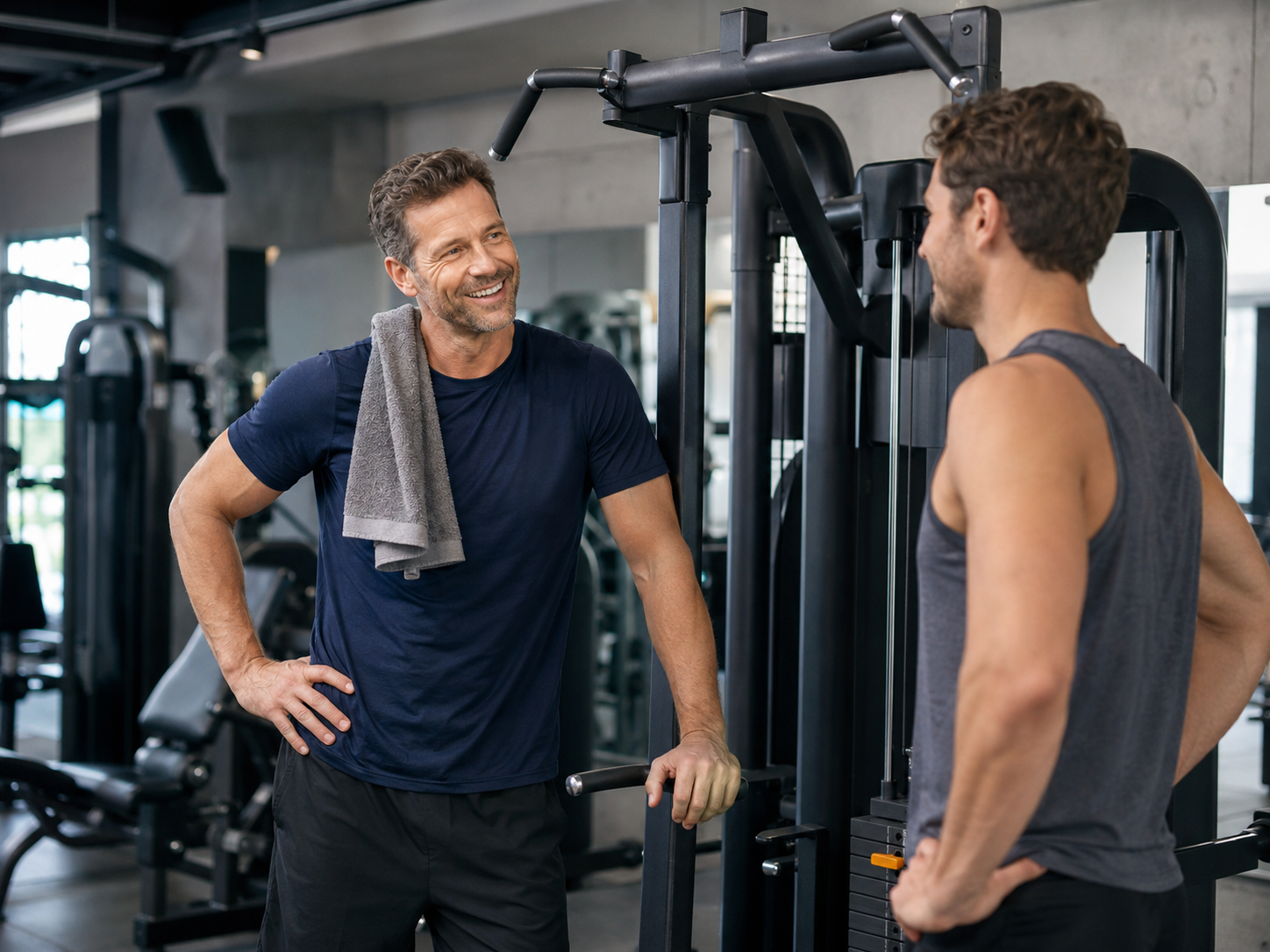
Functional fitness is training built around the movements you use in daily life rather than around isolated muscles. Instead of asking one muscle to work in a fixed path, it trains whole patterns: pushing, pulling, squatting, hinging, carrying, stepping, and rotating.
A 2024 systematic review defined functional training as exercise that uses activities of daily living or simulated daily-task movements as the training medium, rather than rote movements without added purpose. The strongest finding was specific, not vague: single-component functional training improved or maintained activities of daily living in community-dwelling adults aged 60-plus, while its effects on balance and mobility were not clearly superior to those of other structured exercise programs.
We use that evidence as a baseline, not a script. The study tells us that functional training can help preserve daily-life ability, but it does not tell us exactly which squat, hinge, carry, or balance progression is best for a specific person on a specific day. That is where coaching matters: we assess the person, choose the right version of the pattern, and progress it based on how their body responds.
That distinction is useful. Functional training is not magic because it looks more “real life.” It works best when the movement being trained actually matches the task you want to protect. A biceps curl builds the biceps. A loaded carry builds the ability to lug a heavy bag across a parking lot without your grip giving out. Both can belong in a program, but only one is rehearsing something you will actually do on Saturday.
When we use this lens with a client, we are not just asking, “What exercises should this person do?” We are asking, “What does this person want to keep doing in real life, and which movement patterns need to become stronger, steadier, or less painful for that to happen?” That is where functional training becomes personal instead of trendy.

The Seven Fundamental Movement Patterns
Almost every physical thing you do in a day is a combination of seven basic patterns. Think of them as the alphabet of human movement: learn the letters, and you can spell almost anything. Train all seven, and you cover the demands of real life instead of leaving gaps.
Squat
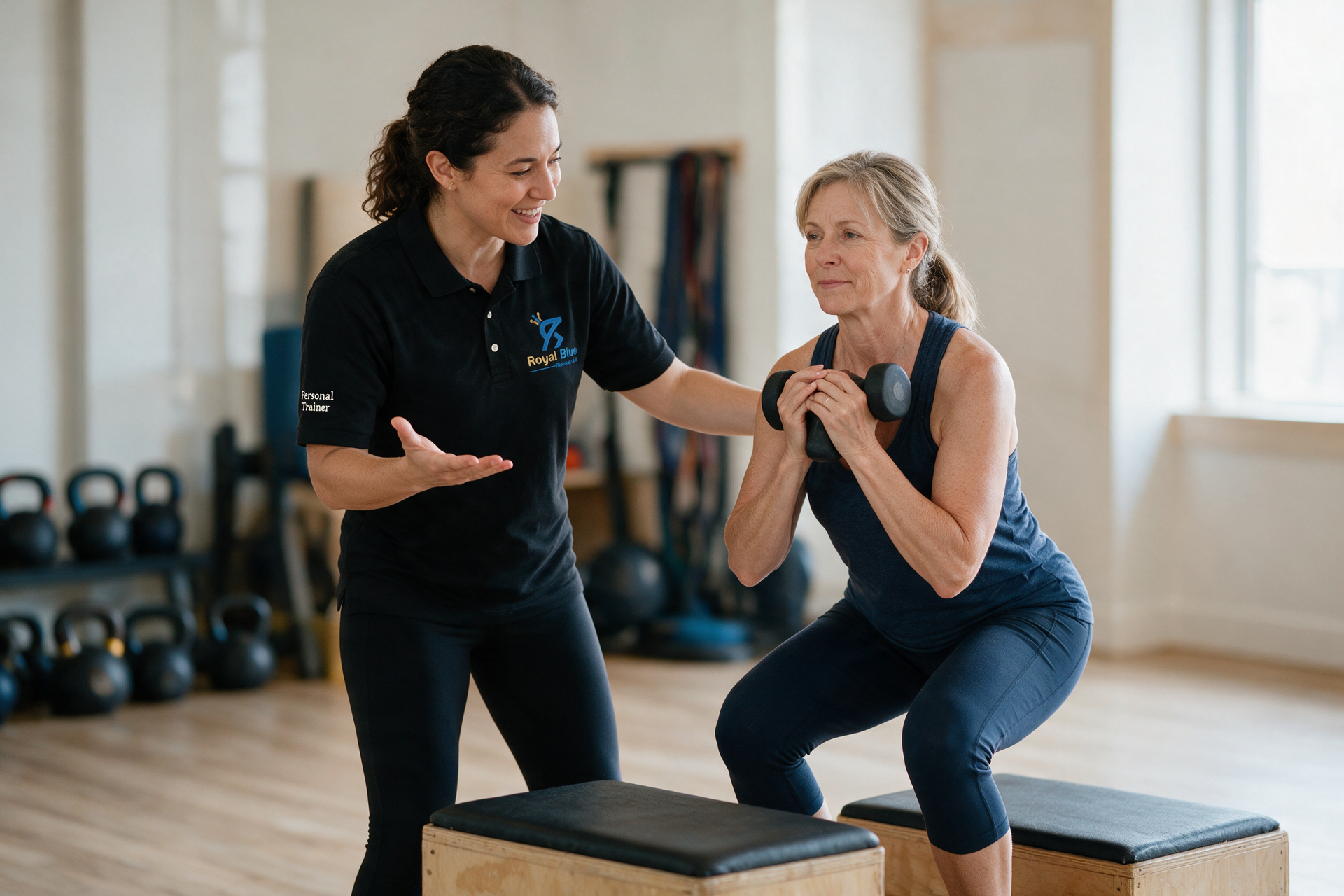
The squat is how you sit, stand, and lower yourself with control. Every time you get out of a chair, off the couch, or down to a low shelf and back up, you are squatting. Train it, and the simple act of standing up stays easy and quiet instead of becoming a production. The trap is treating it as an all-or-nothing barbell lift; in truth, it lives on a scale from chair height to full depth, and the real win is owning the bottom position and standing tall without pushing off your knees.
Hinge
The hinge is bending at the hips to pick things up safely. Lifting a laundry basket, a bag of soil, or a sleeping child off the floor is a hinge. A strong, well-practiced hinge is the single best insurance policy your lower back can have, because it teaches you to load the hips instead of rounding the spine. It is also the most-skipped pattern, because it is easy to fake by bending through the back; done well, you feel it in the hamstrings and glutes, and a heavy bag stops being a gamble.
Lunge
The lunge is a single-leg strength pattern and the foundation of stairs and stepping. Climbing steps, stepping over a curb, catching your balance when one foot lands wrong: all of it lives in the lunge pattern. Training one leg at a time also exposes and evens out the side-to-side differences that walking alone hides. Start with split stances and a hand for support, then progress to step-ups; even a few steady reps rebuild the single-leg confidence that flat, two-footed walking quietly lets fade.
Push
The push is moving something away from you or yourself away from the ground. Pushing a heavy door, putting a suitcase in the overhead bin, getting up off the floor with your arms: these are pushes. Trained overhead and in front, the pattern keeps your shoulders capable instead of cautious. Train it both in front of you and overhead, and scale the overhead version to a pain-free range, so the shoulder stays willing rather than learning to brace and avoid.
Pull
The pull is bringing something toward you, and the quiet guardian of your posture. Opening a heavy door, pulling a bag out of the trunk, hauling yourself up a railing: all pulls. Pulling strength also balances all the forward, hunched hours of modern life, which is why it tends to make people stand taller almost immediately. Most people are markedly weaker pulling than pushing, and closing that gap with rows and supported pull-downs is one of the fastest ways to undo the forward, rounded posture that desk life builds.
Rotation
Rotation is twisting and resisting a twist with control. Turning to back the car out, swinging a golf club, reaching across your body to grab a seatbelt: rotation. Just as important is anti-rotation, the ability to stay stable while a load tries to twist you, which is what actually protects the spine during everyday turning. The aim is controlled rotation through the hips and mid-back while the low back stays quiet and stable, the opposite of the loose, snapping twist that tweaks people when they reach into a back seat without thinking.
Gait and Carry
Gait and carry are walking and walking while loaded. Walking is the most fundamental human movement, and carrying the suitcase, the grocery bags, and the water jug is how strength meets endurance in the real world. A confident, loaded walk is one of the truest signs that your training has transferred to your life. Load one side only, and your core has to fight the lean the whole way, which is why a weekly carry or two builds grip, posture, and a kind of honest, all-over strength that isolation machines rarely reach.
These Patterns Protect Long-Term Independence
Training these patterns is not just about today's errands; it is about keeping the physical options that let life stay self-directed as the years add up. The National Institute on Aging groups exercise into aerobic work, muscle-strengthening work, and balance work, and the useful point is that these categories support each other. Aerobic work builds stamina, strength work makes everyday tasks like chair rises, stairs, and carrying groceries easier, and balance practice helps reduce the chance that a stumble becomes a fall.
This is where we connect the public-health categories to a real training plan. A guideline can say strength, balance, and aerobic work all matter, but a client still needs to know what that looks like on Monday, what to do when their knee feels stiff, and how to progress without guessing. Our job is to turn the broad categories into a routine that fits the person’s goals, joints, schedule, and current capacity.
The seven patterns are our way of tying those categories to real movement: squat for getting up and down, hinge for lifting, lunge for stairs and stepping, push and pull for doors and floor transfers, rotation for turning, and gait and carry for moving through the world while loaded. The exercise categories matter, but the transfer happens when those qualities show up in a task you actually care about.
The strength side also has broader health relevance, but the wording needs to stay honest. A British Journal of Sports Medicine systematic review and meta-analysis found that muscle-strengthening activity was associated with a 10 to 17 percent lower risk of several major outcomes, including all-cause mortality, cardiovascular disease, total cancer, diabetes, and lung cancer, independent of aerobic activity. The same review also cautioned that the certainty of evidence was low or very low for most outcomes and that more strength training is not automatically better. At Royal Blue Fitness, we translate that into a practical rule: strength belongs in the week consistently, at a dose you can recover from, alongside aerobic work, balance, and mobility.
We take that kind of research seriously, but we do not treat it like a one-size-fits-all prescription. The study supports the value of regular muscle-strengthening work; our role is to determine the safest and most useful dose for the person in front of us. For one client, that might mean two short strength sessions and daily walking. For another, it might mean more balance work, more recovery between sessions, or a slower build before heavier loading.

Inside the Royal Blue Fitness Pattern-Based Method
Knowing the seven patterns is the map. A method is how you actually walk the route without wandering or getting hurt. Here is how we turn the framework into a plan that fits one specific person: you.
Start With Your Real Life, Not Random Exercises
We begin with what you want to keep doing, then choose the patterns that protect it. Travel a lot? We prioritize carries, gait, and the push that loads an overhead bin. Garden?
Hinges and squats lead. Chase grandkids? Lunges, rotation, and getting off the floor. The exercise list is downstream of your life, not the other way around, which is what keeps training feeling relevant instead of arbitrary.
Assess How Each Pattern Feels in Your Body
Before we load a pattern, we look at how you actually move through it.
A squat that pinches, a hinge you cannot feel in your hips, a shoulder that complains overhead: each tells us where to start and what to adjust. This is what a Strength and Range of Motion Assessment is for: mapping your current range, strength, and control so the plan is built on facts about your body rather than a generic template. It also gives us a baseline to measure against later, so progress becomes something you can see rather than something you have to take on faith.
Keep It Pain-Smart and Joint-Friendly
Functional does not mean fragile, and it does not mean grinding through pain.
Every pattern has a version that fits the body in front of it: a box squat, a supported hinge, an incline push. The University of Kentucky’s health and wellness team keeps the basics refreshingly plain: train the major muscle groups at least twice a week, use movements that carry over to daily life, and build gradually with good technique. MedlinePlus adds the safety guardrail: start slowly if you have been away from exercise, check with your provider if you have health concerns, and stop if you feel pain, dizziness, or extreme shortness of breath. We scale load and range to what you can own cleanly today, then build from there. Discomfort is information, not a test of toughness.
Progress on Purpose, Not by Guessing
Progress is planned, not improvised. Once a pattern feels solid, we add a little: a bit more load, a longer carry, a deeper range, a steadier tempo. Small, deliberate steps compound into real strength over months, and they keep you out of the two traps that derail most people: doing the same workout forever or leaping ahead and getting hurt. Steady beats heroic every time. The pattern stays the same while the demand creeps upward, which is what lets a movement you once did with a chair turn, over months, into one you do with real load and full confidence.
A Functional Strength Week, Mapped Out
You do not need to train all seven patterns every day to see the benefits of functional training. You can spread it across a week, and they will fit comfortably alongside the general activity targets that public-health guidance recommends, about 150 minutes of moderate activity plus muscle-strengthening work on two or more days, covering all the major muscle groups. Here is one simple way the pieces fit together. Treat it as a starting template, not a prescription.
| Day | Focus | Real-life payoff |
|---|---|---|
| Monday | Lower-body strength: squat and hinge | Standing up, stairs, lifting from the floor |
| Tuesday | Walk or easy cardio plus a loaded carry | Stamina and grip for groceries and travel |
| Wednesday | Upper-body strength: push and pull | Overhead lifting, doors, and pushing up from the floor |
| Thursday | Mobility and balance | Steadiness on uneven ground, confident reaching |
| Friday | Full-body: lunge, rotation, and a carry | Stepping, twisting, and loaded walking together |
| Saturday | Something you enjoy: hike, bike, or play | Real life is the point; this is where it cashes in |
| Sunday | Rest and recover | Adaptation happens between sessions, not during them |
Two focused strength days, regular walking, a little balance work, and something you genuinely enjoy. That is a functional week, and it is far more sustainable than an all-or-nothing program that looks impressive for three weeks and then collapses.
Starting Out When You Feel Stiff or Rusty
If it has been a while, the patterns can feel intimidating, but starting is gentler than most people fear. Harvard Health notes that muscle and strength begin to decline as early as the mid-30s, and that functional training is a practical way to slow those changes and stay strong and independent. The lesson is not to panic; it is to begin, because the slide responds to training at any age.
Begin with supported, scaled versions: squat to a chair, hinge to a counter, push against a wall, carry a single light bag. Consistency matters far more than intensity at the start. MedlinePlus offers sensible first-timer guidance. If you have not exercised in a while, start slowly, check with your provider if you have health concerns, and stop if you feel pain, dizziness, or shortness of breath. A few weeks of small, repeatable sessions build the foundation; the loading can come later. The only session that does not count is the one you talk yourself out of starting.
Functional Fitness Is Freedom, Not Gym Tricks
Strip away the equipment and the jargon, and functional fitness is about one thing: keeping your options open. The freedom to take the trip, play on the floor, carry your own bags, say yes to the hike, and handle whatever the day asks without first checking whether your body will allow it. That is not vanity, and it is not about looking a certain way. It is about staying capable, and capability is what lets you keep living on your own terms.
That is also why the seven patterns are a starting point, not the finish line. From here, specific tools sharpen specific qualities: controlling tempo to build control under load, using functional movement training to connect strength to real tasks, or judging whether a given program actually transfers to your life. Those are branches of the same tree. The trunk is this: train the movements life uses, progress them on purpose, and protect them as the years go by.
Build Your Pattern-Based Plan: Start With an Assessment
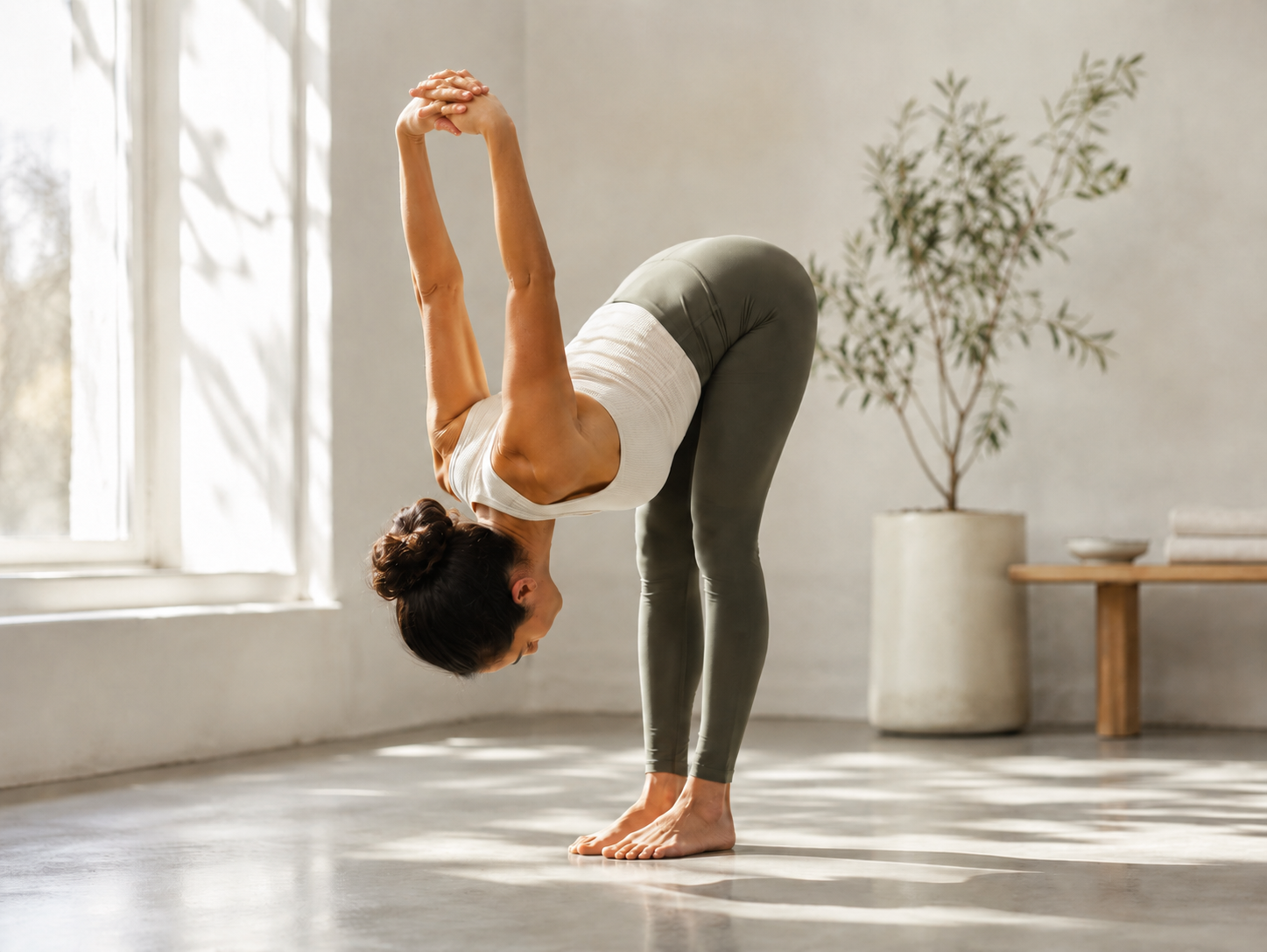
The seven patterns are universal, but the right starting point is personal, shaped by your history, your goals, and how your body actually moves today. That is where we begin. A Strength and Range of Motion Assessment maps how each pattern feels in your body so we can build a pattern-based plan made for you, not a template. If you want functional strength training in Pleasant Hill to translate into a lifetime of doing what you love, that is the first step, and it is a good one to take while the choice is still entirely yours.
Functional Fitness: Quick Answers
What is functional fitness?
Functional fitness is training built around the movements you use in daily life, like squatting, hinging, pushing, pulling, and carrying, rather than around isolated muscles. The goal is transfer: training that translates into real-world strength, balance, and ease in everyday tasks. It is a way of choosing and organizing exercise, not a specific class or piece of equipment, which is why it can be done with weights, bands, machines, or just your body.
What are the seven movement patterns?
They are squat, hinge, lunge, push, pull, rotation, gait, and carry. Together, they cover almost every physical demand of daily life, from standing up and climbing stairs to lifting, reaching, twisting, and walking while loaded. Think of them as the alphabet of human movement: train all seven and your program covers the full range of what your body is actually asked to do, instead of leaving gaps that show up as weak links later.
Title or Is functional fitness right for me if I'm 40-plus or out of practice?
Yes, and arguably it matters more, not less. Muscle and balance begin to decline gradually from the mid-30s, so training these patterns is one of the most effective ways to maintain strength and independence as the years add up. Everything scales: a squat can start as sitting and standing from a chair, a carry as a single light bag. The patterns stay the same; the version meets you where you are today and progresses from there.
Does functional fitness actually build strength?
Yes, when the patterns are loaded and progressed over time, rather than just performed lightly. The difference from traditional lifting is mainly the choice of movements: you build strength in the positions and patterns life actually uses, which makes that strength more useful outside the gym. Adding resistance gradually, whether with weights, bands, or body weight, is what turns practiced movement into genuine, transferable strength.
How often should I train the patterns?
For most people, two to three total-body strength sessions a week is plenty, alongside regular walking and a little balance and mobility work on the other days. That fits comfortably within the common guidance of about 150 minutes of moderate activity plus muscle-strengthening on two or more days. Consistency across the week matters far more than any single hard session, so a sustainable rhythm beats an ambitious plan you cannot keep.
Where should I start if I feel stiff or nervous?
Start small and supported: squat to a chair, hinge to a counter, push against a wall, carry one light bag, and keep the sessions short and frequent. If you have health concerns, check with your provider first, and stop anything that causes pain or dizziness. The fastest way to start well is to have someone map how your patterns move and set the right starting point, which is exactly what an assessment is for. To begin your functional strength training in Pleasant Hill, start gently, stay consistent, and let the loading come later.
Here are our latest articles! Click to read more.