The Mental Side of Comebacks: How to Rebuild Confidence After Injury
You can finish physical therapy, rest the injury, and rebuild real strength, and still freeze for half a second before the one movement that reminds you of how it happened. The body gets cleared. The confidence does not always come with it. If you are waiting to feel ready before you trust your body again, you may be waiting on the wrong thing, because readiness after injury is built, not felt.
That hesitation is not weakness. It is information. After an injury, confidence has to be rebuilt the same way strength is, with evidence. Research on athletes returning to sport has found that self-reported fear can track with both functional performance and the risk of a second injury in certain populations, in one study of young athletes returning after ACL reconstruction (Paterno et al., 2018). The coaching lesson we take from that is simple: confidence needs a plan, not a pep talk.
This guide walks through why the gap between a healed body and a trusting mind is normal, and the step-by-step way we help clients close it.
I have lived this gap, not just coached it
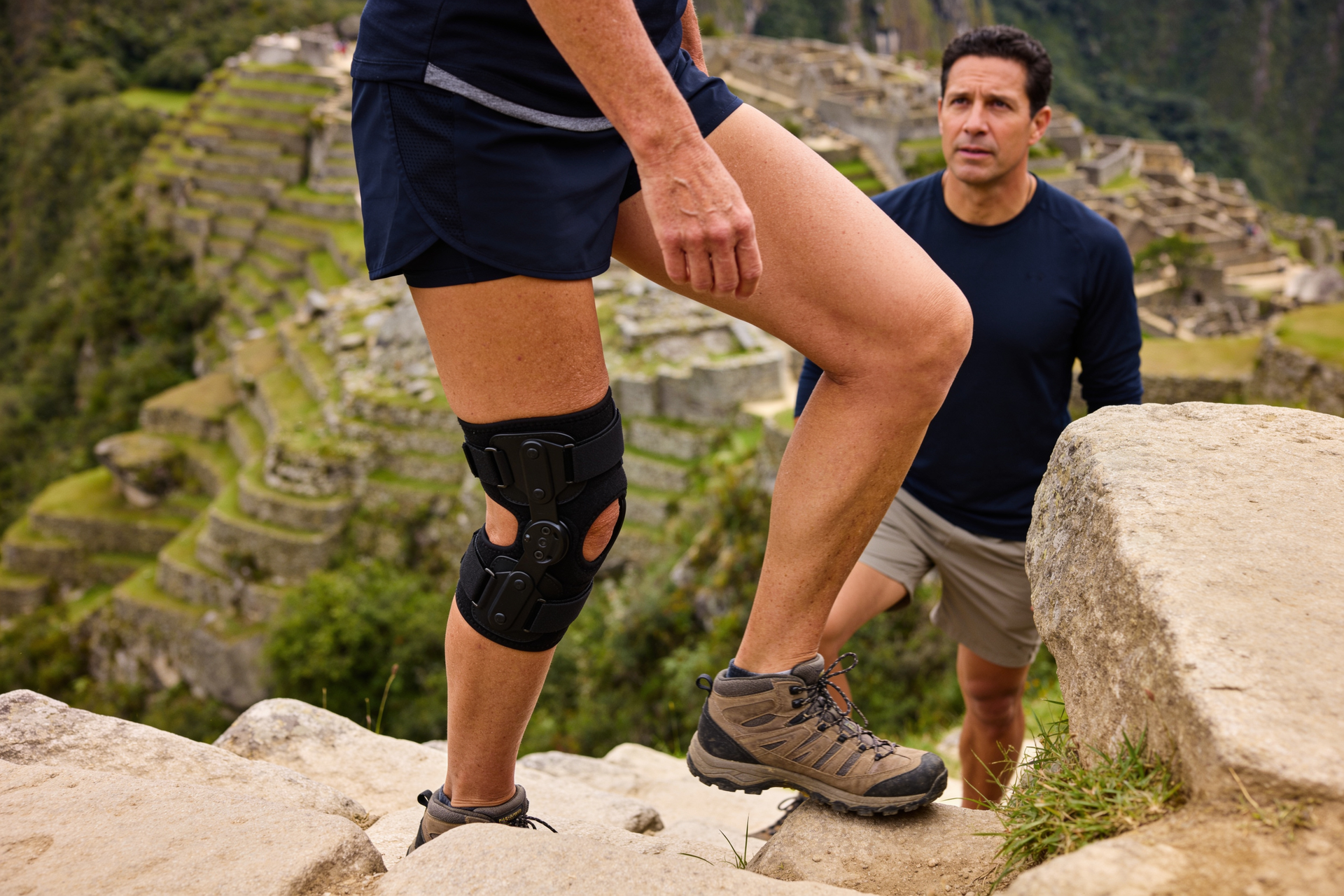
Before this was something I coached, it was something I went through. I wrestled, and I tore my ACL and MCL. The repair healed on schedule. The trust took years.
It was not only on the mat. In the pool, my knee felt so loose that a simple flutter kick hurt. Walking down stairs, the joint would occasionally catch, that small sickening lurch where you grab the rail. Even on flat ground, some steps would snag for no reason I could name. The doctor was happy. I was not, because my body kept reminding me it might let me down.
What made it drag on was that I had no idea what I was doing. I was trying to figure it out alone, with no coach and no one to walk me through the fear of wrecking the knee again. So I either pushed too hard and scared myself, or backed off everything and stayed stuck. That is a big part of why it took years instead of months.
I am telling you this because I remember exactly what it feels like to be someone who holds himself to a high standard while his body simply cannot meet it yet. That gap is not just physical. It is mentally and emotionally heavy. It is also the reason I am good at this now: when a client comes back from a surgery or an injury, I am not guessing at what they are carrying.
The body can heal before confidence catches up
A comeback runs on two clocks. One is physical: strength, range of motion, tissue tolerance, skill. The other is psychological: trust, courage, identity, and the willingness to load the body again. They rarely finish at the same time.
Many people assume confidence comes back on its own once the pain fades. Sometimes it does. Often it has to be trained, the same as a muscle.
This is why comeback conversations get confusing. Friends say you look fine. A clinician says the tissue is progressing. A coach sees clear improvement. But inside your own body, the memory of what happened can still be loud. The gap between outside clearance and inside confidence is real, and pretending it is not just drives it underground.
The goal is not to shame that gap away. It is to build a bridge across it, plank by plank, out of clear progressions, specific milestones, and repeated experiences where your body does exactly what you asked it to.
Injury changes more than your strength
Injury changes the way you listen to your body. A normal sensation can feel suspicious. A moderate set can feel dangerous well before it is objectively too much. An activity that once felt like freedom can start to feel like a test you might fail.
It also touches identity, and that part gets underrated. Runners miss running. Golfers miss the course. Lifters miss feeling strong. Active people miss saying yes to a hike or a game without first running a private risk calculation. Part of rebuilding confidence is getting that yes back, not just the range of motion.
Fear of reinjury needs a plan, not a pep talk
Telling yourself to stop being scared almost never works. I tried it on my own knee for a long time. Fear only quiets down when it gets repeated proof that the body can handle a specific demand. That proof has to be earned in order: first controlled movement, then strength, then complexity, then the real task.
The classic mistake is leaping straight from rest to full demand. The opposite mistake is avoiding anything that feels uncertain at all. A good comeback lives in the space between those two, and that space is wider than most people think.
Fear gets worse when the next step is vague. “Try running again” feels threatening. “Walk five minutes, jog one minute, repeat three times, then check in tomorrow” feels doable. Specificity lowers the emotional cost, because now the body knows the exact ask instead of bracing for the whole mountain.
This is also why all-or-nothing returns are so risky. If the only options are full send or total rest, the comeback turns into a test of courage instead of a process. A better plan hands you intermediate steps that are challenging but not chaotic. That is the heart of what we call the RBF Comeback Ladder.
The RBF Comeback Ladder, one rung at a time
We do not ask anyone to jump from rehab to real life in one leap. We build a ladder and climb it rung by rung, only moving up when the current rung feels genuinely solid. Each rung is a small, winnable bet, not a leap of faith.
| Rung | What it is | What it proves |
|---|---|---|
| Assess | Look honestly at where the body is starting | An accurate, non-guessing baseline |
| Restore control | Move well in low-risk, familiar patterns | You can own the movement, not just survive it |
| Build Strength | Add load gradually to the pattern | Real capacity, not just hope |
| Reintroduce demand | Add speed, range, or complexity | The body handles closer-to-real stress |
| Test readiness | Rehearse the task that actually matters | Evidence you can do the real thing |
| Reassess | Confirm what improved and what still needs work | A clear next rung instead of a gamble |
The ladder is not strictly one-directional. On a rough day you step down a rung, gather a few more wins, and climb back up. Stepping down is not failure. It is how you keep the climb honest.
Small wins matter more than big declarations
Confidence grows when the body collects wins. A win can be a deeper squat with no hesitation, a controlled step-down, a pain-free walk, a clean hinge, or a return to one modified drill from your sport. Small, but real.
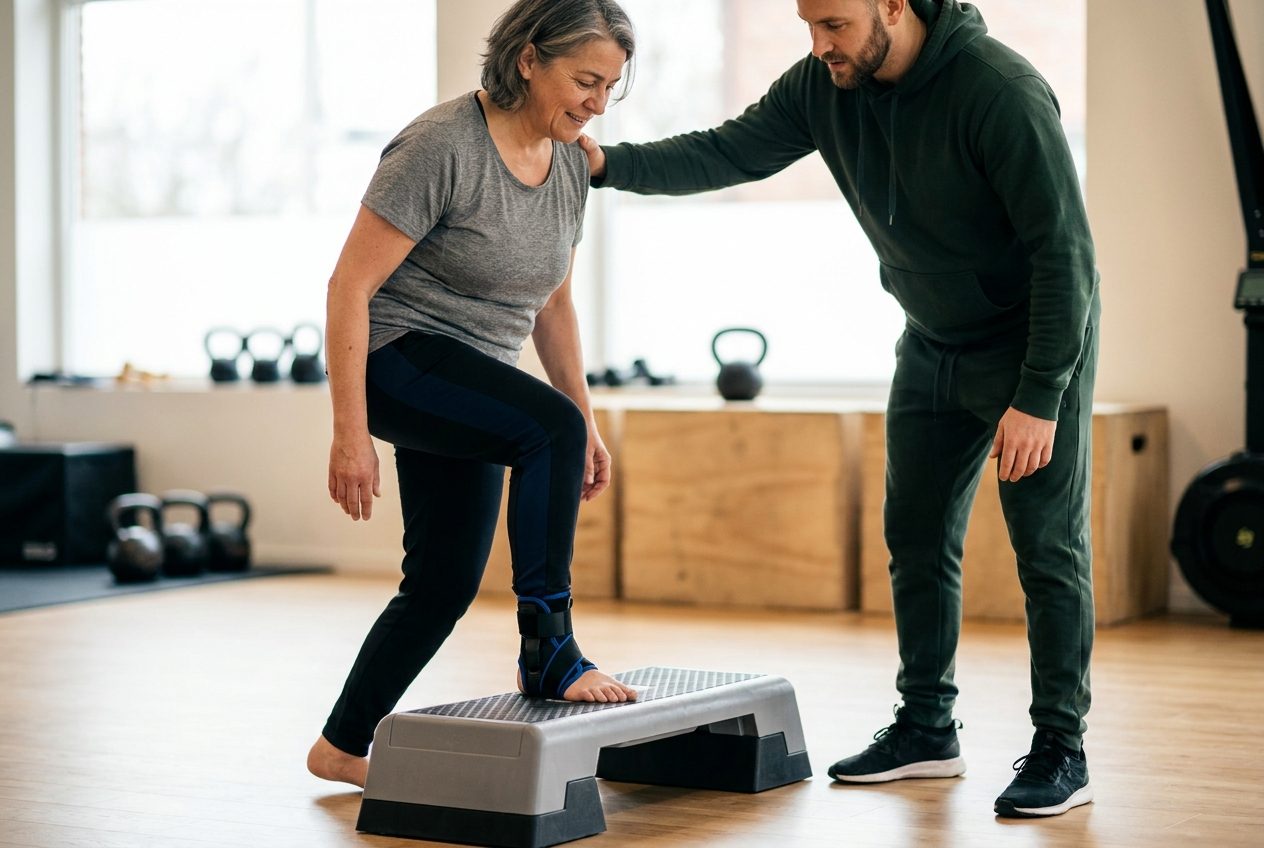
These wins matter because they rewrite the story. Instead of “I am injured,” the body slowly learns “I can handle this step.” That is how confidence becomes physical instead of merely motivational. It stops being a thing you talk yourself into and becomes a thing you have evidence for.
Small wins also teach you to separate sensation from danger. During a comeback, not every feeling means something is wrong. Some sensations are just effort, unfamiliar load, or the stiffness of re-entering movement. Others are real signals to modify or stop. A structured plan trains you to tell them apart instead of panicking at every twinge.
To keep the wins honest, tie them to a reassessment cadence rather than a feeling. We typically recheck the key markers every few weeks, so “I completed three sessions this week and recovered well” replaces “I hope I am ready.” Evidence on a schedule keeps confidence grounded instead of forced, and it catches a stall early.
Three questions to tell caution from avoidance
Caution protects you. It says, “this movement needs a smaller version first.” Avoidance shrinks your world. It says, “I should never try that again.” The tricky part is that early on, the two feel almost identical. When a client is stuck, these are the three questions I actually ask, and they usually expose which one is running the show.
- Is this movement genuinely not ready, or just scary? If a smaller, controlled version feels fine, the issue is probably fear, not capacity. If even the scaled version produces real warning signs, it is caution, and you modify.
- What is the smallest honest version I could do today? Avoidance has no answer to this. Caution always does, because caution still wants a path forward, just a safer one.
- Am I deciding from evidence or from a prediction? Fear forecasts disaster before anything happens. Track what actually occurs in a session and compare it to what you feared. The gap between the two is usually where avoidance lives.
If a movement is truly not appropriate yet, you modify it. If it is appropriate but frightening, you build a smaller version and let the evidence do the convincing.
When confidence dips again, adjust the rung
A dip does not mean the comeback failed. It means the next step needs adjusting. Go back to the last version that felt solid. Reduce load, range, speed, or complexity. Then track what actually happened, not what the fear predicted would happen.
This is where a coach earns their keep. A good coach notices when you are ready for more, when you are protecting yourself appropriately, and when the plan has quietly started running on fear instead of evidence. When I was rehabbing alone, that outside read is exactly what I did not have, and it cost me a lot of time.
How Royal Blue Fitness rebuilds confidence after injury
Our Rehab to Resilience pathway is built around the exact gap I lived in: the stretch between finishing basic rehab and feeling ready for real life again. We use assessment, strength progression, controlled exposure, and regular reassessment to help you rebuild trust one layer at a time, with someone reading the situation alongside you.
A Strength and Range of Motion Assessment gives the comeback a real starting point. Instead of guessing whether your body is ready, we look at motion, strength, side-to-side asymmetry, tolerance, and the specific demands of the activity you want back. That turns a vague fear into a concrete first rung.
To be clear about scope: Royal Blue Fitness is not a replacement for medical care or physical therapy. We handle the next fitness layer, rebuilding strength, confidence, and real-world capacity once the clinical phase is no longer enough to answer the question that actually keeps people up at night, “can I trust my body again?” If your body is improving but your confidence has not caught up, the next move is not to force it. It is to give your confidence something real to stand on.
Frequently Asked Questions
Why am I scared to exercise after my injury?
Because your brain may still link certain movements, loads, or positions with threat, even after the tissue has healed. That does not mean you are broken or weak. It means your comeback needs controlled exposure and a stack of small wins, so your nervous system gets evidence that the demand is safe.
How do I learn to trust my body again?
Start with movements you can fully control, build strength gradually, add demand in small steps, and track the repetitions that go well. Trust is the byproduct of accumulated evidence, not a mindset you flip on. The more honest wins you bank, the more your body believes the next step is safe.
When should I get help, and who from?
If pain or physical uncertainty is keeping you from normal movement or from returning to your activity, an assessment-informed coach can help clarify the next rung. And if anxiety, low mood, or fear after the injury persists or starts affecting daily life, talk with your doctor or a mental-health professional. As Mayo Clinic notes, exercise can ease anxiety and low mood but does not replace therapy or medication when symptoms linger (Mayo Clinic). Mental support works alongside your comeback plan, not instead of it.
How long does it take to feel confident again?
It varies a lot, and honestly it can take longer than the physical healing. Mine took years, partly because I did it alone. With a clear plan and someone guiding the progression, most people get there far faster, but the timeline is personal and rarely a straight line. Expect good weeks and flat weeks. Confidence tends to return in steps rather than a smooth ramp, so a slow stretch is not a sign it is failing. Comparing yours to anyone else's is one of the quickest ways to lose confidence, not build it.
Your next rung
A healed body and a trusting mind are two different projects, and the second one rarely finishes on its own. The good news is that confidence is buildable: clear progressions, honest small wins, and someone who can tell your caution from your avoidance. If you are stuck in the gap between cleared and ready, a Strength and Range of Motion Assessment is a calm, practical first rung, and we will climb the rest with you.
Book a
Strength and Range of Motion Assessment and let us give your confidence something real to stand on.
Here are our latest articles! Click to read more.