From Injury to Full Function: Post Physical Therapy Training
You did the hard part already.
You got hurt, you went through surgery or a serious injury, you stayed consistent with physical therapy, and you did the homework. The pain is better than it was. You have more motion than you did right after surgery. On paper, you are “done.”
But your body tells a different story.
Your shoulder still pinches when you reach overhead. Your knee feels shaky on the stairs. Your back locks up if you sit too long. You are grateful for the progress, but the idea of “normal life” still feels fragile.
If you want a deeper understanding of what the post-physical therapy training process is and why it matters, you can check out our companion article, “Rehabilitation After Physical Therapy: How Post-Physical Therapy Training Bridges the Gap.” This article focuses on something different: how we actually build that bridge in real life and how we help clients go from discharge slip to full confidence again, with practical training after physical therapy that fits your lifestyle.
At Royal Blue Fitness, this transition is our specialty. We work with adults 40-plus who are coming out of rehab and want personal training after physical therapy so they do not want to lose the progress they fought for. Our job is to take the baton from your surgeon and physical therapist, then guide you from “medically cleared” to “genuinely capable,” using structured, pain-smart strength, functional training, and a post-rehab fitness program that respects your history and your goals.
Below is the process we use to get clients from injury to full function. These are numbered for clarity, but in practice, they work together as a cycle that repeats and evolves as you get stronger.
1. Start Post Physical Therapy Training With a Clear Assessment
Most people finish PT with a stack of exercises, a short summary, and a “follow up if anything changes.” What they rarely get is a detailed, whole-body picture of where they are now.
That is where we start.
We take time to understand:
- What your injury was and how it was treated
- How many rounds of PT did you complete, and how did your body respond?
- What still hurts, feels weak, or feels unreliable in real life
Then we test the things that matter for your return to full function.
Strength and Power Testing
We look at how much force you can produce, how fast you can produce it, and how evenly you can use both sides of your body.
For example:
- How strong is your surgical knee compared to the non-surgical side
- How much grip strength do you have after a shoulder injury
- How your hips and core handle loaded movements like hinges or carries
We are not chasing “gym numbers” for bragging rights. We are looking for patterns, asymmetries, and limits so we know where to safely begin.
Range of Motion, Joint Health, and Post-Rehab Readiness
Next, we check how your joints move:
- Do you have enough hip rotation to squat and get up from the floor without strain?
- Does your shoulder have the reach needed for daily activities, not just basic rehab drills?
- Are there motions that feel pinchy, blocked, or guarded, even if they are technically possible
Here, we are interested in both the quantity of motion and the quality: how it feels, how controlled it is, and what your body does to “cheat” around any limitations.
Muscle Endurance and Control for Return to Training
Finally, we look at how long your muscles can hold good form, not just whether they can do one strong rep.
You might be able to step up onto a box once, but can you handle a full flight of stairs while carrying groceries? You might hold a plank, but does your back start to complain after 20 seconds?
These assessments give us a baseline, so you and your coach both know exactly where you are starting and what needs attention first.
2. Start Slow: Unlearn Compensated Patterns, Re-learn Proper Mechanics
After an injury, your body gets very good at one thing: protecting itself.
You might shift weight away from the sore side, stiffen up surrounding joints, or change how you walk, stand, and lift. These compensations are normal and often helpful early on. The problem is when they stick around long after the tissue has healed.
Our early training block focuses on unwinding those habits and teaching your body to move well again.
We often:
- Inhibit overactive muscles that are doing too much, such as hip flexors or upper traps that stayed “on” to guard a weak area.
- Restore mobility in stiff areas that stopped moving because of pain, bracing, or time in a sling or brace.
- Strengthen underused muscles that never fully re-engaged after the injury, such as the glutes after a back issue or rotator cuff muscles after a shoulder repair.
- Integrate everything with whole-body patterns so your muscles work together, not in isolation.
Instead of complex choreography, this looks like:
- Slow, controlled hinges to re-teach your hips to share the load with your back
- Supported squats that gradually load your surgical knee while keeping alignment clean
- Focused shoulder work that blends stability and reach, so your shoulder learns to trust overhead positions again
The emphasis is on form and control, not exhaustion. You should feel like you are re-learning how to move with confidence, not just surviving a hard workout.
3. Apply Progressive Training Overload Without Aggravating Your Joints
Once your patterns look cleaner and you can move through key ranges without flare-ups, it is time to gradually ask more of your body.
Progressive overload simply means increasing the challenge in a planned way so your body has a reason to get stronger and more resilient.
We might:
- Add a little more load to a movement that feels solid
- Increase the number of reps or sets, as long as your form holds
- Change the tempo, for example, slower lowers to build control, then faster pushes to build power
- Add a bit of instability or range once the basics are strong
The key is that progress is earned, not forced.
We watch for clear signals:
- Mild muscle fatigue that recovers within 24 to 48 hours is normal
- Joint pain, sharp pinches, or swelling that lingers are signs that we pushed the wrong variable
Because you have already been through PT, you may be understandably cautious about pain. We respect that. You will always know why we are progressing a movement and what we are watching for together, so you never feel like you are gambling with your body.
4. Introduce Challenges That Mimic Your Day-to-Day Life
Rehab exercises are often done on flat floors with perfectly balanced loads. Real life does not work that way.
To bridge that gap, we introduce challenges that look more like your actual day:
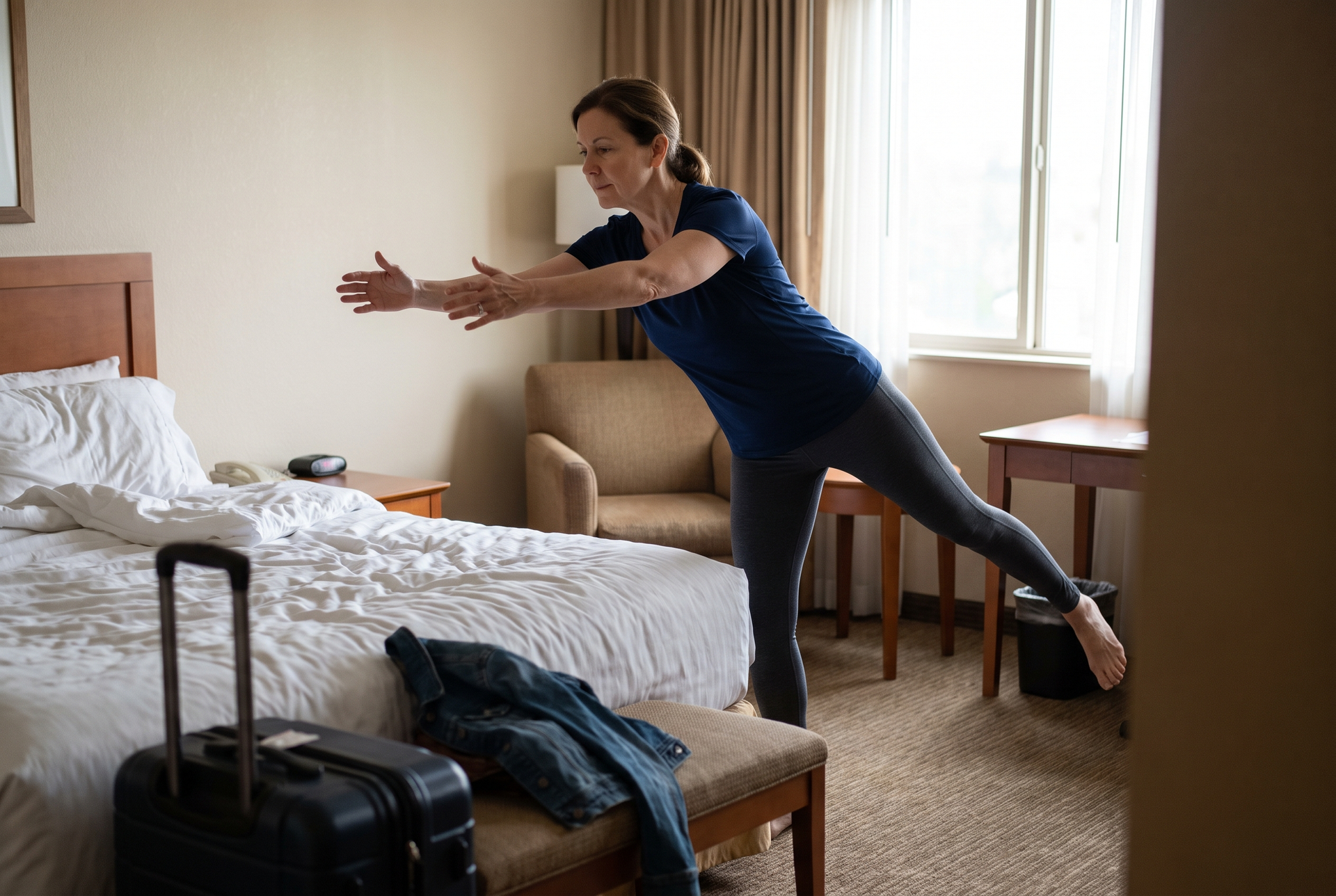
- Off-balance positions to simulate stepping off a curb, walking on uneven ground, or navigating a crowded airport
- Uneven weights, like carrying one suitcase on one side and a backpack on the other
- Shifts in the center of mass, such as holding a weight out in front or off to the side, then learning to keep your trunk stable
- Different angles and planes of motion, because life involves twisting, reaching, and turning, not just straight up and down
This is where gym strength becomes functional strength.
Instead of just leg presses, you might:
- Practice controlled step-downs that mimic stairs
- Load up suitcase carries, working toward the weight you actually travel with
- Combine hinge and rotation patterns in a safe, coached way so your back can handle yard work or picking up kids or grandkids
We match these challenges to your actual goals:
- Want to return to hiking on uneven trails
- Need to handle long workdays, standing or at a computer
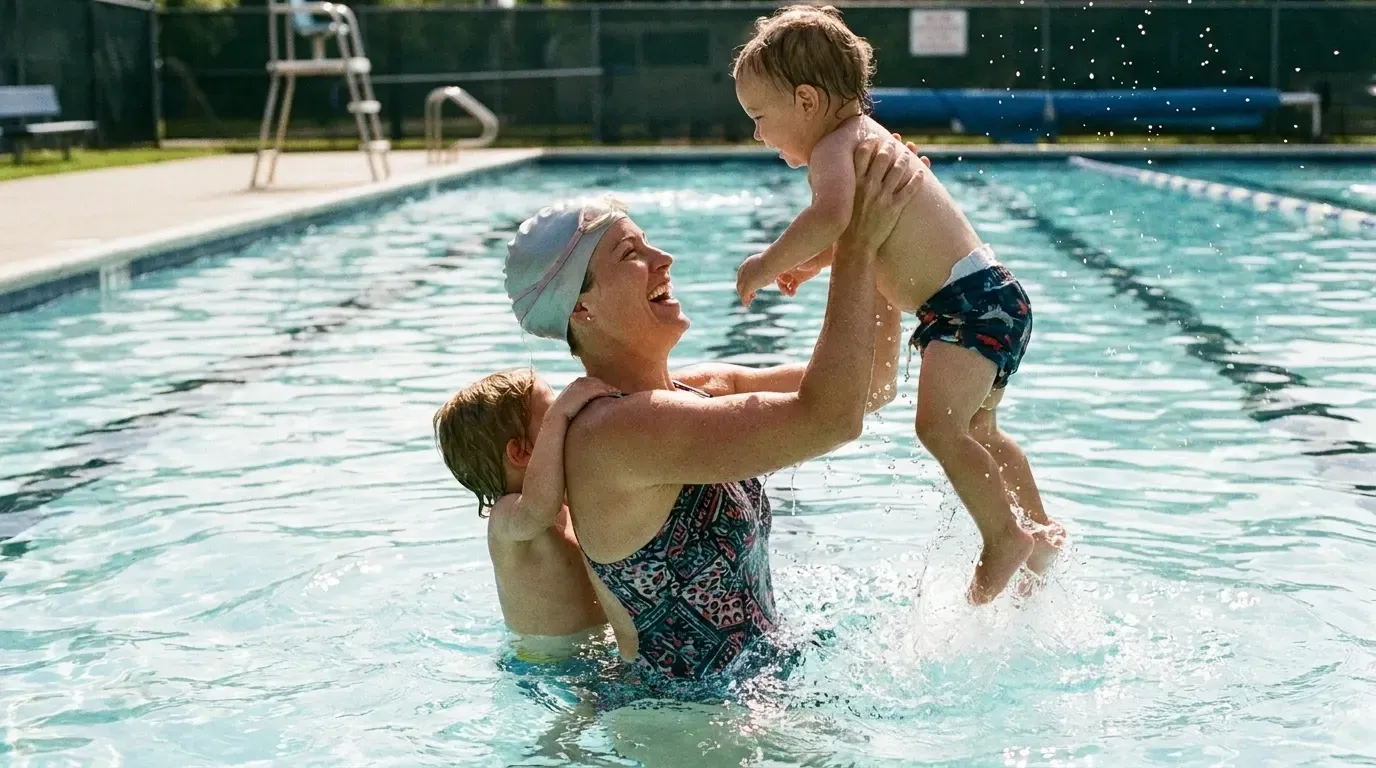
- Want to play on the floor with kids and get back up without thinking about it
Every drill has a clear “why” behind it. Training becomes practice for the life you want to live, not just a series of random hard workouts.
5. Reassess, Adjust, and Set a New Baseline
The final “step” is not really the end. It is the checkpoint before the next phase.
After a block of training, we circle back to the same kinds of tests we used at the beginning:
- Is your surgical side now closer in strength to the other side
- Do your joints move more freely, with less guarding or hesitation
- Does your form hold up better when you are tired?
- Most importantly, how do your daily tasks feel now compared to four, eight, or twelve weeks ago?
When we see objective improvements, we lock in that new baseline. You and your coach get to see your progress in numbers, not just in feelings.
If something is not progressing as expected, we adjust:
- Sometimes we need to spend more time on a stubborn pattern
- Sometimes, life stress, sleep, or work demands require us to dial volume down before we push forward again
- Sometimes your goals expand because you realize you are capable of more than you thought
Reassessing keeps your training honest and personalized. It also reassures you that you are not just repeating the same workouts forever. You are moving through a clear progression, with every phase backed by data and how your body actually feels.
Putting It All Together
The post-physical therapy training process is not about living in fear of re-injury. It is about respecting what your body has gone through, then providing it with the structure, challenge, and support it needs to rebuild trust in itself.
At Royal Blue Fitness, we:
- Start with a clear picture of your current abilities
- Help you undo the compensations that kept you safe but now hold you back
- Progress your strength in a way that protects your joints
- Design challenges that look and feel like your real life
- Reassess regularly so your plan grows with you, not ahead of you
If you have “graduated” from PT but still do not feel like yourself, you are not alone, and you are not at the finish line. You are at the starting line of your next chapter, moving from injury to full function with post-physical therapy support in Pleasant Hill, CA, a plan that makes sense, and a coach who truly pays attention.
FAQ
What is post physical therapy training?
Post physical therapy training is a structured fitness process for people who have finished PT but still feel weak, limited, guarded, or unsure about returning to full activity. It focuses on rebuilding strength, movement quality, confidence, and real-life function after medical rehab.
What should I do after physical therapy ends?
After physical therapy ends, the next step is usually to assess what still feels weak, stiff, painful, or unreliable. A post-rehab training plan can then rebuild strength, range of motion, control, endurance, and confidence with gradual progressions.
Is post-rehab training the same as physical therapy?
No. Physical therapy is medical rehabilitation. Post-rehab training happens after medical care or PT discharge and focuses on fitness, strength, function, movement quality, and return to daily life or activity. It should not replace medical care when symptoms need clinical evaluation.
When should I start training after physical therapy?
You can usually start training after physical therapy once you have appropriate clearance and your symptoms are stable enough for exercise progression. The first phase should be controlled, assessed, and scaled to your current ability instead of jumping back into random workouts.
Can strength training help after injury?
Yes. Strength training after injury can help rebuild capacity, confidence, muscle endurance, and joint support when it is progressed carefully. The key is to increase load, range, speed, and complexity gradually instead of forcing progress too quickly.
Where can I get post-rehab training in Pleasant Hill?
Royal Blue Fitness offers post-rehab training in Pleasant Hill for adults who have finished physical therapy but still want help rebuilding strength, movement quality, confidence, and real-life function.
Here are our latest articles! Click to read more.