Flexible Fitness Models: How to Choose a Custom Fitness Program Between In-Person, Online, and Hybrid Training
There has never been more ways to train, or more pressure to pick the right one. You can hire a coach down the street, stream a class from your kitchen, follow an app on your phone, or simply lace up and head out the door alone.
More flexibility feels like progress, but flexibility is not the same as results. A model only works if it fits the life you actually live and the one you will actually show up for. This guide lays the common options side by side, with their honest trade-offs, so you can match one to your week instead of chasing whichever is loudest this year.
Six ways people train today
The shift is well documented. The American College of Sports Medicine's annual survey of fitness professionals puts wearable technology and mobile exercise apps among the top trends of the year, sitting right beside the steady demand for in-person coaching.
One reframe before the list: these models are not rival religions. Most people blend them over a lifetime, and plenty blend them inside a single week. The goal is to understand what each does well, so you can lean on the right one for the season of life you are in.
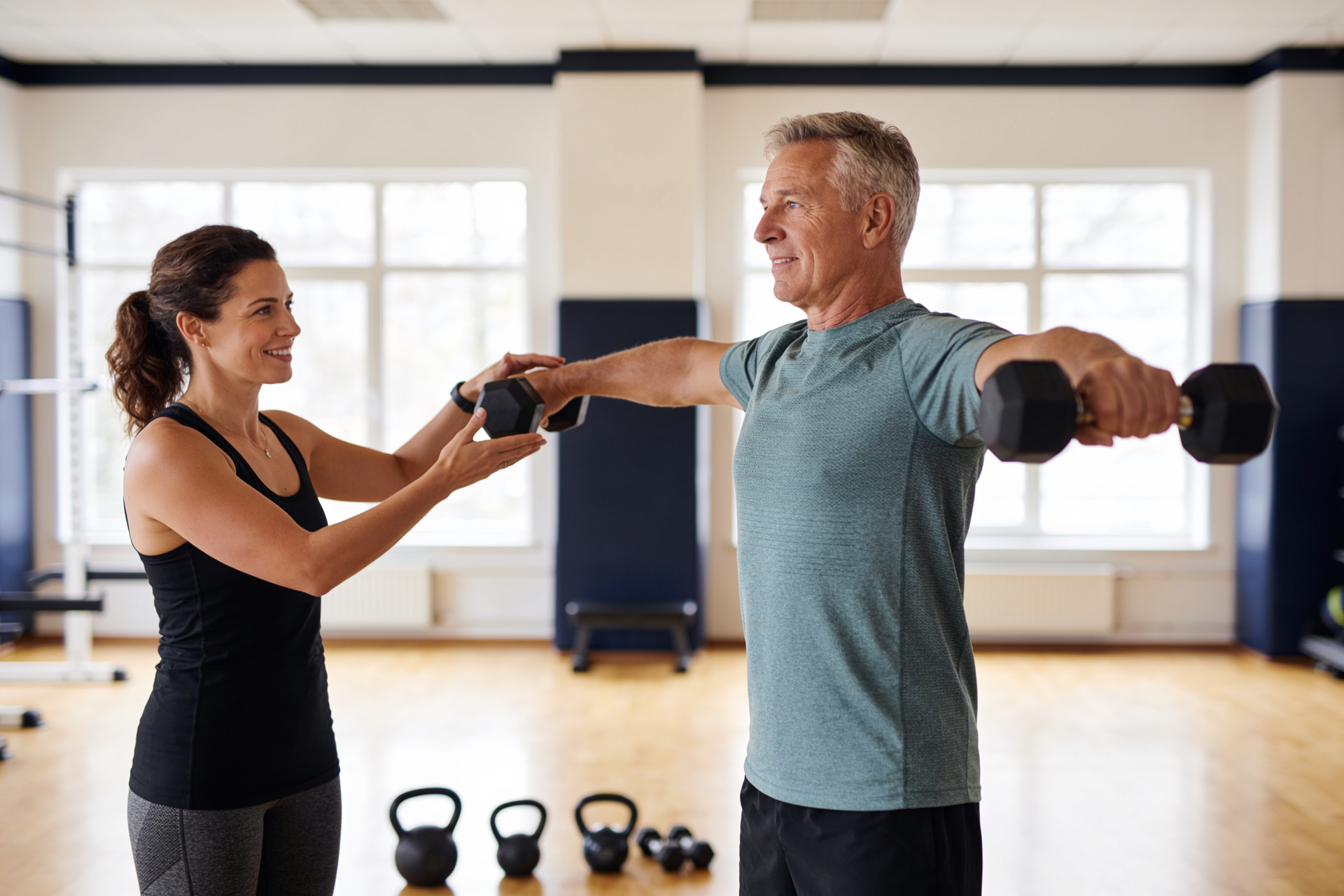
In-person personal training. Best for people who want hands-on coaching, fast form correction, and a standing appointment that is genuinely hard to skip.
Think beginners learning to lift safely or anyone returning after a layoff. The trade-off is cost and a fixed schedule.
Online or remote coaching. Best for self-motivated people who want a custom plan and expert feedback without paying for floor time, often through video reviews and weekly check-ins.
You get a real coach's brain at a lower price, but you supply the discipline and the space. A natural fit for the frequent traveler or the parent whose training window moves daily.
Hybrid training. Best for people who want expert eyes on the hard parts and convenience for the rest, blending coached sessions with app-driven days. The only real downside is that it is rarely the cheapest line on the page, since you are paying for two things at once.
On-demand fitness apps. Best for structure, variety, and training entirely on your own clock.
Ideal as an entry point, a travel option, or the connective tissue between coached sessions. Pricing is low and the library is deep, but accountability is left almost entirely to you.
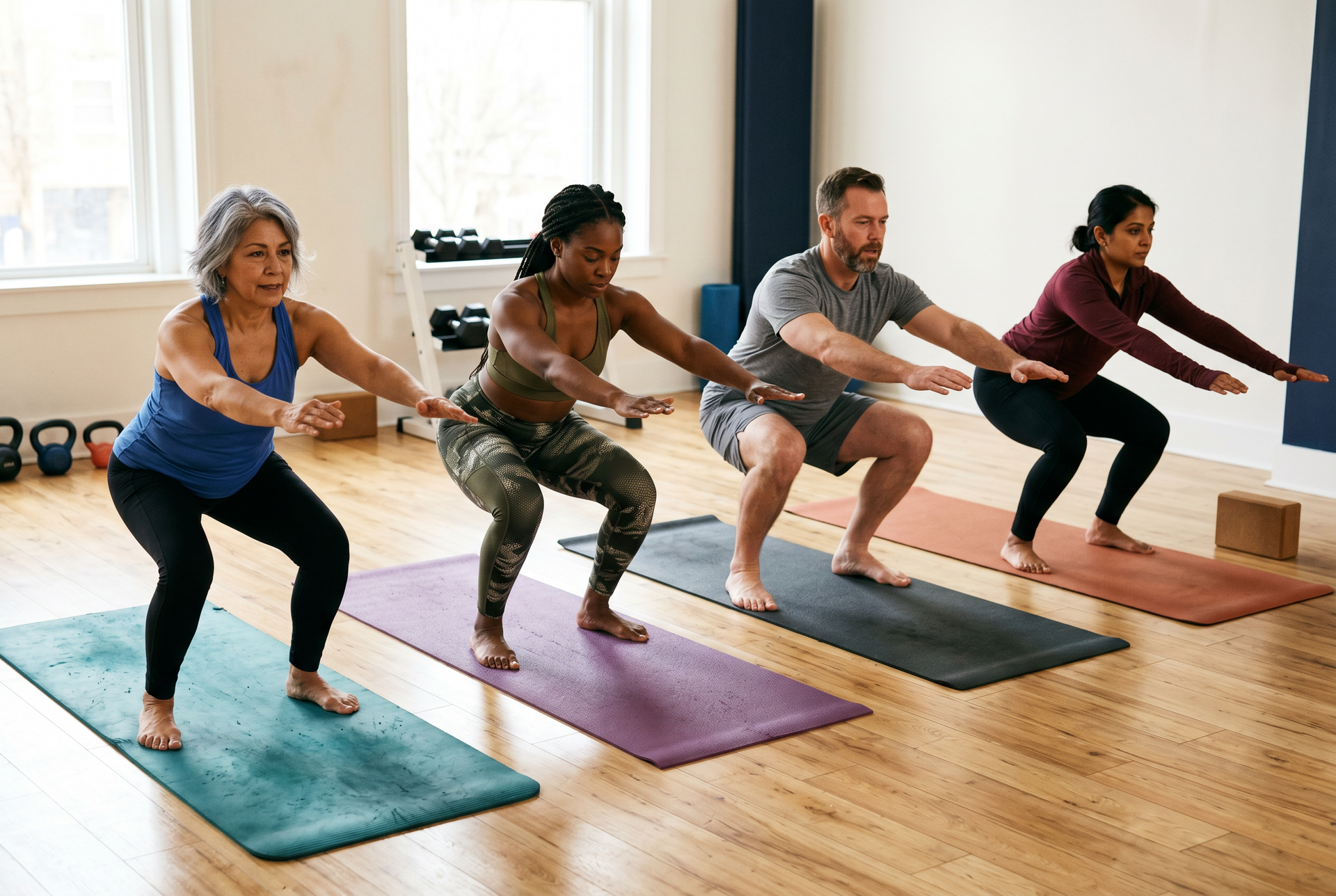
Group exercise classes. Best for energy, a built-in community, and a set schedule that pulls you in.
What you gain in atmosphere, you give up in personalization, since one instructor cannot tailor every rep to everybody in the room. They suit people who are motivated by others and bored by training alone.
Self-directed training. Best for experienced, disciplined people who already know how to program and progress themselves.
It is the cheapest and most flexible option. It is also the easiest to quietly abandon when work, family, or fatigue start competing for the hour.
Research behind the trade-offs
Beneath the marketing, a few patterns hold up. A 2025 randomized trial compared supervised, app-guided, and self-guided programs over ten weeks. Every group got stronger, but adherence split sharply: roughly 88 percent for the supervised group, 81 percent for the app group, and just 52 percent for the self-guided one.
Sit with those adherence numbers for a moment, because they matter more than any single workout. Over a full year, the gap between 88 percent and 52 percent is not a rounding error.
It is the difference between a body that changed and one that mostly did not, even when both people followed identical programs on paper. The model you can stick to will beat the better model you abandon every single time.
A separate look at supervision during strength training found it nudged muscle adaptations upward even in already trained lifters, for the same plain reason: a person in the room keeps the effort honest when motivation wobbles.
Translated into a decision, the research says something freeing. You are not choosing the most effective program in a laboratory. You are choosing the one you will still be running when life gets loud.
So instead of asking which model is best in the abstract, ask which model gives you the most support you will actually accept, at a price and a schedule you can hold. The honest answer to that question beats the theoretically optimal program almost every time.
Side by side: the decision matrix
Here is the same picture in one view. Find the column that matters most to you, and read down it.
| Model | Accountability | Personalization | Cost | Schedule Flexibility |
|---|---|---|---|---|
| In-person training | High | High | Highest | Low |
| Online coaching | Medium | High | Medium | High |
| Hybrid | High | High | Higher | Medium |
| On-demand apps | Low | Low to Medium | Low | High |
| Group classes | Medium | Low | Low to Medium | Low |
| Self-directed | Low | Up to You | Lowest | High |
No row is the winner. A column is. The model that fits is the one that scores well on what you most need and lets you live with the trade-off elsewhere.
The most common mistake is choosing a single column, usually cost, and then quitting when a different column, usually accountability, turns out to be the one that actually decides whether you keep going.
If you are torn between two rows, let your primary goal break the tie. Chasing strength or a specific skill tilts you toward personalization and accountability, which favors in-person or hybrid.
Trying simply to move more, more often, tilts you toward flexibility and cost, which favors an app or self-directed work. Build the choice around the column that maps to your goal, and the rest of the matrix becomes a short list of trade-offs you have already decided you can live with.
Quick self-check before you choose
Answer these honestly. Your answers point to a model faster than any review will.
- How much do you need someone expecting you in order to actually show up?
- How confident are you in programming and progressing your own training?
- Is your schedule predictable, or does it shift from week to week?
- What can you sustainably spend, in both money and time?
- Do you have a history, a sensitive joint, or a specific goal that needs individual attention?
If you lean toward needing accountability and individual attention, in-person or hybrid will serve you best. If you scored high on self-direction and a moving schedule, online or app-based training fits. If you come alive around other people, a class might be the thing that finally sticks.
Be honest about the version of you that exists on a hard week, not the ambitious one who bought the membership. The model has to survive your worst Tuesday, not just your best Saturday.
Put it together with a quick example. Take a shift worker on a tight budget whose week never repeats and who has already stalled twice training alone.
The self-check flags low self-direction, an unpredictable schedule, and limited spending. The matrix steers away from a fixed in-person slot and toward an app for flexibility, paired with one online-coached check-in a month for accountability and the occasional form read.
Cheap, flexible, and no longer entirely solo.
Mistakes that send people back to square one
Most failed starts trace back to a handful of predictable errors, and none of them are about choosing the wrong exercises. The first is choosing on price alone and discovering too late that it quietly demanded a discipline you did not have.
The second is choosing on hype, signing up for whatever is trending rather than what actually fits your week. The third is choosing the person you wish you were, rather than the one with a full calendar and a tired Wednesday.
The fourth is subtler and the most costly: treating the decision as permanent. People pick a model, struggle, and conclude they have failed at fitness when all they have learned is that one model did not fit one season of their life.
The fix for every one of these is the same. Weight accountability honestly, choose for your real life rather than your ideal one, and treat the first pick as an experiment you are fully allowed to revise.
There is a fifth mistake hiding inside the others: outsourcing the decision to a review or a friend's success story. The model that transformed your coworker was matched to your coworker's schedule, budget, and temperament, none of which are yours. A glowing testimonial tells you a model can work, not that it will work for you.
You can combine them, and most people should
Nothing about this requires you to order a single dish. The most durable routines usually borrow from several models at once: a class on Monday for the energy, an app on the days you travel, a coached session every other week to keep your form and your loads honest.
This is also why your mix should shift over time. Build a foundation with more support than you think you need, then trade some of it for flexibility as your skill and your habit harden. The right routine in January may look nothing like the right one in July.
If you are unsure where to begin, start with more structure rather than less. It is far easier to dial support down once a habit is built than to bolt it on after motivation has already drained away.
A concrete version makes it real. Picture someone who lifts twice a week with a coach to keep the strength work honest, follows an app on a third day while traveling, and joins a Saturday class purely because their friends go. No single model could deliver all of that at once, but stitched together the mix covers strength, flexibility, and the plain enjoyment that keeps the whole routine alive.
Any model beats no model
One thing matters more than the model you pick: that you pick one and start. The National Institute on Aging's practical tips for getting and staying active make the case that small, regular amounts add up, and that the best plan is simply the one you will keep.
A University of Michigan Medical School article, summarizing national activity guidance, notes that regular activity improves how the body functions day to day and makes ordinary tasks easier, whatever form that activity takes.
The coached models earn their cost by protecting consistency, which is also why a rundown of the benefits of working with a trainer keeps circling back to accountability and confidence rather than any single exercise. The model is the vehicle; movement is the destination.
It is worth saying plainly, because endless comparison can become its own form of procrastination. Researching models is not training. At some point, the most useful move is to pick the one that fits your honest self-check, commit to it for a real stretch of eight to twelve weeks, and judge it on whether you actually showed up.
Let us point you to the right model
If your options still feel overwhelming, you do not have to guess your way through it. A Strength and Range of Motion Assessment gives us a clear read on your strength, your mobility, and your starting point.
From there, we can point you to the right model, in person, online, hybrid, or some blend of them, based on how you move and what your week actually looks like. The right choice is rarely the trendiest one. It is the one you will still be doing six months from now.
Choosing a fitness model: quick answers
Which fitness model is the most effective?
The most effective model is the one you adhere to. In head-to-head research, supervised training tends to win on consistency, but a model you abandon in a month loses to a humbler one you keep for a year. Match the model to your life first, and let effectiveness follow from showing up.
Is online training as good as in-person?
For a motivated person with sound form, it can come remarkably close, and it usually costs less and flexes around your schedule. The gap shows up in real-time correction and accountability. If you tend to drift without a person expecting you, in-person or hybrid will likely serve you better.
I keep quitting every program I start. Which model fixes that?
Choose for accountability, not for features. A model with a real person who notices when you miss, whether an in-person coach, a remote one who checks in, or a class that expects you, addresses the actual problem. The plan was probably never the issue; the follow-through was.
Can I switch models later, or am I locked in?
You can, and probably should. Many people start in person to build a base, shift toward online or hybrid as their form and confidence grow, then add coached check-ins when a goal or a plateau calls for it. Treat the choice as a starting point, not a life sentence.
Is a fitness app enough on its own?
For some experienced, self-directed people, yes. For most, an app works best as a single layer rather than the whole plan, because it provides structure but not judgment or accountability. Pairing it with even occasional human input tends to yield better results.
How long should I give a model before deciding it is not working?
Give it a real stretch, not a bad week. Eight to twelve weeks is usually long enough to tell the difference between a model that does not fit and a rough patch that would have passed. Judge it mainly on adherence: did you actually show up most of the time?
Here are our latest articles! Click to read more.