How to Learn the Hip Hinge: A Plain-English Guide to Safer Deadlifts, Carries, and Everyday Lifting
You bend down to pick up a laundry basket, a bag of dog food, or a grandchild, and your back does the work it was never meant to do alone. That single habit, bending from the spine instead of the hips, is behind a lot of the "I tweaked my back lifting something" stories. The fix has a name: the hip hinge.
It is the foundational movement behind deadlifts, carries, kettlebell swings, and almost every time you pick something up off the ground. Learn it, and you protect your back while unlocking some of the most useful strength exercises there are.
This guide explains what the hip hinge is, in plain language, and how to start feeling it. You do not need to be especially flexible, athletic, or experienced to learn it.
The hinge is a skill, which means it is something you practice and improve, not a talent you either have or lack. A few minutes of focused practice with the right cues is usually enough to start feeling the difference, and a week or two is often enough to make it feel natural.
What is a hip hinge
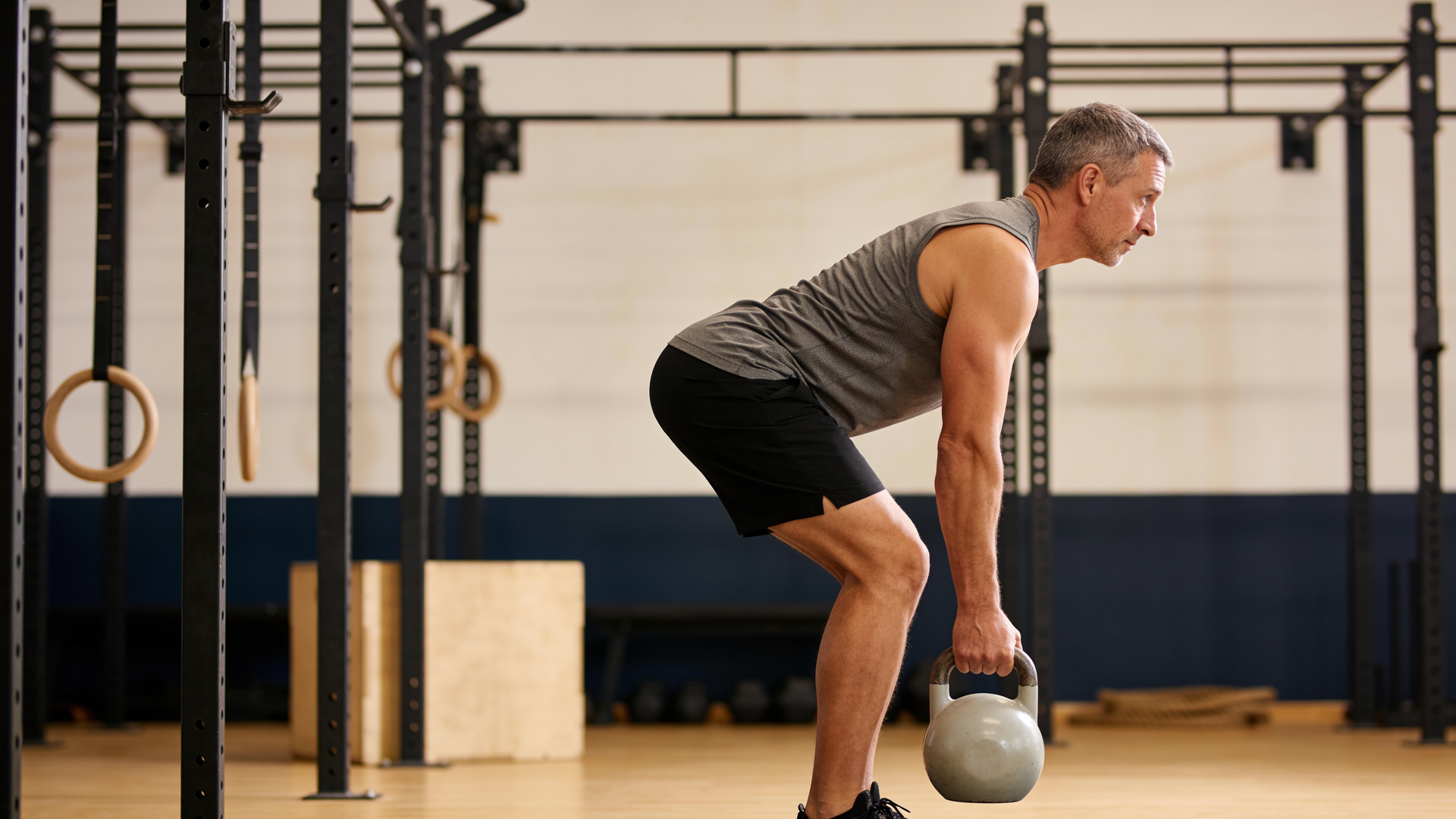
A hip hinge is a movement in which you bend forward by pushing your hips backward, letting your torso tip toward the ground while your back stays long and stable, then stand back up by driving your hips forward. The motion happens at your hip joints, not your lower back. Think of your hips as the hinge of a door: the door swings on the hinge while the door itself stays flat.
In a hinge, your hips swing while your spine stays in its strong, neutral position rather than rounding. That is the whole idea, and everything else is just learning to feel it.
It helps to contrast it with how most people bend by default. The instinct, especially when reaching for something low, is to keep the hips fairly still and curl the spine forward, rounding the back to reach the ground.
The hinge does the reverse: the spine stays steady and long while the hips travel backward. Once you can feel that swap, from bending the back to moving the hips, the rest of the movement falls into place quickly.
Why it matters
The hip hinge matters because it is how your body is built to handle load when you bend and lift. Your hips and the muscles around them, your glutes and hamstrings, are large and powerful, and they are designed to produce force. When you hinge correctly, those muscles do the heavy work.
Research on hip-hinging movements like the Romanian deadlift confirms how strongly they recruit the glutes and hamstrings, the engine the hinge is meant to use. When you bend from your spine instead, you ask the smaller, more vulnerable structures of your lower back to do a job they are poorly suited for. Learning the hinge is how you shift the work to where it belongs.
In everyday life
Outside the gym, the hinge shows up every time you pick something up, lean over a sink, or load groceries into a car. Most back complaints from lifting come not from the weight being too heavy but from the pattern being wrong, bending and twisting through the spine under load.
Building the hinge into how you move makes everyday lifting safer and more confident.
The American Council on Exercise describes hinging at the hips as a foundational skill, noting that using your hips as a hinge lets you employ the large muscles of the glutes, hamstrings, and back.
University ergonomics guidance makes the same point for daily life: hinge at your hips when you lift, so your legs do most of the work instead of your back.
In the gym
In training, the hinge is the engine behind deadlifts, Romanian deadlifts, kettlebell swings, and good mornings, all of which build the powerful posterior chain along the back of your body. A systematic review of the muscles worked during the deadlift and its variations shows how central hip-driven lifting is to producing force through that chain. A quick scope note: this guide teaches the movement as a general skill, not as treatment for back pain.
If you have back pain or a history of injury, that is a conversation for your medical provider or physical therapist, not a movement you should troubleshoot alone.
What it looks like: cues that work
Learning the hinge is mostly about learning to feel the difference between moving at your hips and bending at your spine. A few simple cues make that click for most people, far better than any anatomical lecture. The goal is to groove the pattern with light or no load before you ever add weight.
In the assessment, the two hinge faults we catch most are the ribs flaring as the chest drops, which is the spine extending instead of staying long, and the weight sliding onto the toes as the hips fail to travel back. The fixes are small and specific: a cue to exhale and gently knit the ribs down before you move, and a cue to feel your heels and reach the hips toward the wall behind you. Most people feel the difference within a rep or two.
Setup and the movement
Groove the movement in a few clear steps:
- Set your stance. Feet about hip-width apart, with a soft, unlocked bend in your knees.
- Push your hips back. Reach your backside toward an imaginary wall behind you, letting your torso tip forward as a single unit.
- Keep your back long. Chest proud rather than rounding, with your weight settling into your mid-foot and heels.
- Stand tall. Go back only as far as you can while keeping your back flat, then drive your hips forward to stand up.
Simple ways to feel it
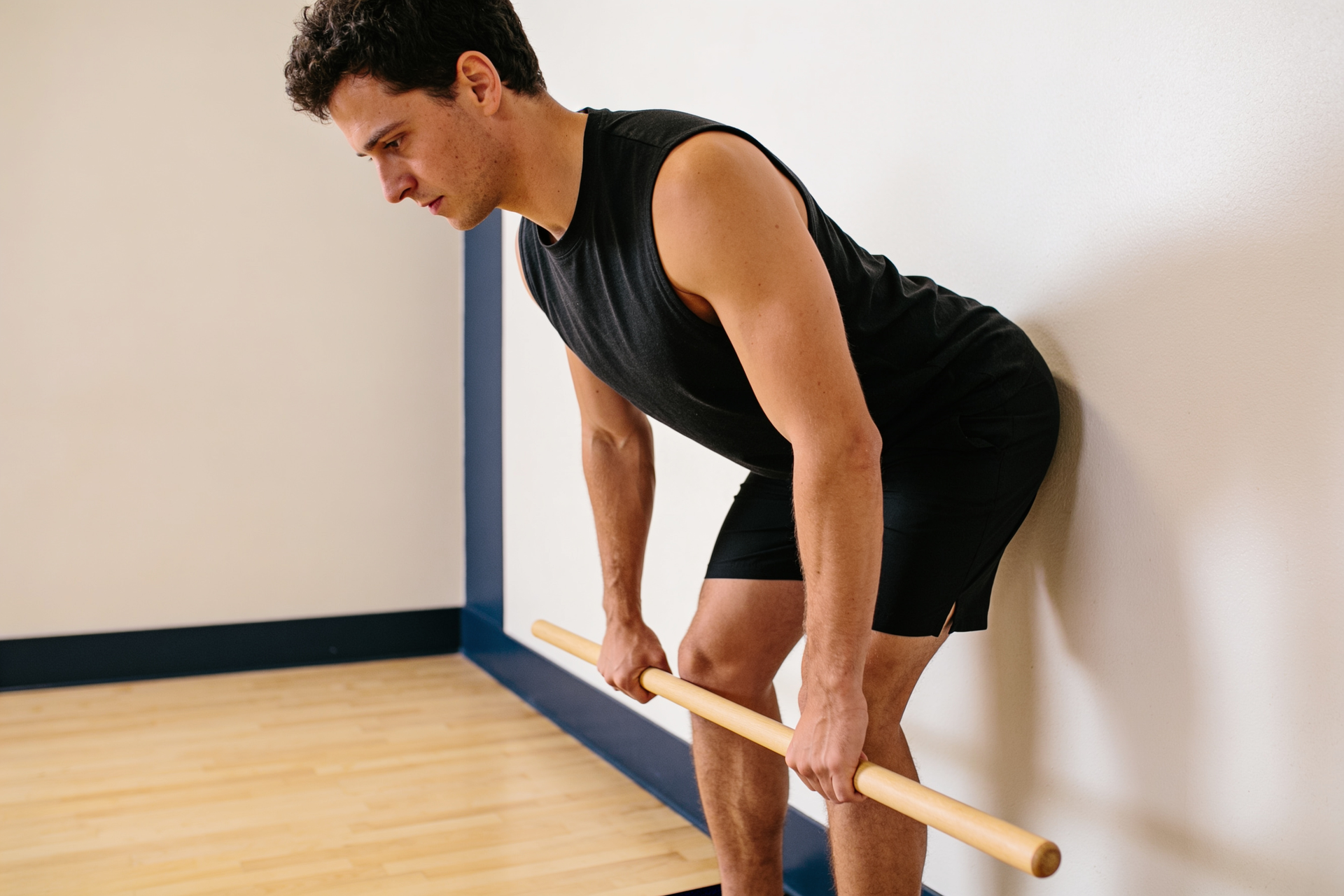
If the pattern feels confusing, a couple of tricks shortcut it. Stand a step away from a wall and practice pushing your hips back until they lightly touch it, which teaches the backward hip motion. Or hold a dowel or broomstick along your spine, touching your head, upper back, and tailbone, and hinge while keeping all three points in contact, which teaches you to keep your back neutral. Guidance on good posture from MedlinePlus reinforces why keeping that neutral spine, the natural curves in your back, is so valuable when you move and lift.
These drills make the right pattern obvious in a way words cannot. Spend a few minutes on them before any loaded hinge, treating them as the warm-up that teaches the pattern.
Most people find that a week or two of brief, regular practice makes the hips-back motion feel automatic, and at that point, adding a light weight becomes straightforward rather than risky. The drills are not a beginner phase you abandon; they are a reset you can return to any time the movement feels off.
Common errors
A few predictable errors turn a hinge back into a back-bender, and catching them early saves a lot of frustration. The most common one is worth its own moment, because it is the entire point of learning the movement.
Rounding or squatting it
The two classic mistakes are rounding your back and squatting the movement. Rounding means your spine flexes rather than staying long, which shifts the load back onto the structures you are trying to protect.
Squatting it means you bend your knees too much and drop straight down rather than pushing your hips back, which turns the hinge into a squat and takes your powerful posterior chain out of the movement. The fix for both is to slow down, reduce or remove any load, and rebuild the pattern with the wall or dowel drills until the hip-driven motion feels natural.
Filming yourself from the side makes these errors easy to spot. A quick self-check is to pause at the bottom of your hinge and notice where you feel it.
If the effort and tension sit in your glutes and hamstrings, you are likely hinging well. If you feel it mostly in your lower back, that is the signal to stop, reduce any load, and rebuild with the wall and dowel drills before going further.
Where the hinge shows up
Once you own the hinge, you start seeing it everywhere, which is why it's such a high-value skill to learn early. It is the foundation of the deadlift and its variations, the kettlebell swing, the good morning, and any rowing movement where you hold a hinged position.
This single pattern underpins so much of resistance training. Learn it once, and you have unlocked a whole family of the most effective strength exercises, plus a safer way to move through daily life.
Hinge vs squat: related terms
People often confuse the hinge and the squat, so it helps to draw the line clearly. In a squat, you bend mainly at the knees and sink your hips down between them, keeping your torso relatively upright, as if lowering into a chair. In a hinge, you bend mainly at the hips and push them back, letting your torso tip forward, with much less knee bend.
Both are essential lower-body patterns and belong in a good training program, but they load your body differently and emphasize different areas. Knowing which one a given exercise calls for is part of moving and lifting well.
| Aspect | Hinge | Squat |
|---|---|---|
| Main joint | Hips travel backward | Knees bend, hips sink down |
| Torso | Tips forward | Stays relatively upright |
| Knee bend | Slight | Significant |
| Main muscles | Glutes and hamstrings | Quads and glutes |
| Everyday version | Picking a basket off the floor | Lowering into a chair |
Frequently Asked Questions
Is the hip hinge the same as a deadlift?
Not exactly. The hip hinge is the underlying movement pattern, and the deadlift is one exercise built on that pattern. When you deadlift, you perform a loaded hip hinge to lift a weight off the ground. Master the hinge first as a movement skill, and the deadlift and its variations become far easier and safer to learn, because you already own the pattern they depend on.
How do I know if I am hinging correctly?
The clearest signs are that you feel the effort in your glutes and hamstrings rather than your lower back, your back stays long and flat rather than rounding, and the movement happens by your hips moving backward rather than your knees bending forward. The wall drill and the dowel-along-the-spine drill are simple self-checks, and filming yourself from the side reveals whether your back is staying neutral. If you feel it mainly in your lower back, that is the signal to reset and rebuild the pattern.
Can the hip hinge help my back?
Learning to hinge at the hips rather than bend at the spine is widely taught as a safer way to lift, and many people find that moving this way makes everyday lifting feel more confident. That said, this guide is general movement education, not medical advice or treatment for a back condition. If you have back pain or a past injury, please work with your medical provider or a physical therapist, who can advise on what is right for your specific situation.
Do I need equipment to practice the hip hinge?
No. The hinge is a bodyweight pattern you can practice with nothing at all, and the most useful learning tools are things you already have: a wall to push your hips toward and a broomstick or dowel to keep your spine neutral. Grooving the pattern with no load is exactly how you should start, before you ever add a weight. Once the movement feels natural and unloaded, you can begin adding light resistance. A broomstick and a clear patch of floor are genuinely all you need to learn the pattern well.
Master the hinge, protect your lifts
The hip hinge is a small skill with an outsized payoff: it protects your back and unlocks access to some of the most useful strength exercises. Learn to push your hips back while keeping your spine long, practice it with the wall and dowel drills, and build it into how you lift both in the gym and at home.
The one thing you cannot fully judge from inside the movement is whether your own hinge is as sound as it feels, since the spine rounding you are trying to avoid is exactly the part that is hard to see on yourself. That is where an outside read helps. A
Strength and Range of Motion Assessment gives you a clear look at your hinge and your other foundational patterns, so the strength you build sits on movement that is genuinely sound. For anyone around Pleasant Hill or the East Bay who wants to lift at the gym or just around the house with more confidence, it is a grounded place to start. Good movement is the foundation on which everything else is built.
Here are our latest articles! Click to read more.