Heat Smart: Safe Summer Exercise for Hypertension Control
Summer is a double-edged season when you are managing blood pressure. On one side, the long days and warm mornings give you more reasons and more chances to be active, and activity is one of the best things you can do for your numbers.
On the other side, heat puts real, extra demand on your cardiovascular system, and some blood pressure medications change how your body handles that heat. The answer is not to hide all summer indoors, and it is not to push through conditions your body is straining against.
It is to train heat-smart: keep the movement that helps your blood pressure while respecting the guardrails that keep it safe.

Exercise Is a Core Tool for Blood Pressure
Before the summer rules, it helps to see the payoff clearly. Regular activity is not a side note in blood pressure management; it is one of the central tools.
Research reviews in people with high blood pressure find that regular aerobic training can lower blood pressure by several points on average. That is the reason it is worth protecting your training through the hard months instead of letting summer quietly end it.
Aerobic Work Makes the Heart More Efficient
Aerobic activity trains the heart itself. When you walk, cycle, or swim regularly, the heart gets better at its job, which lowers the strain of everyday demands on your blood pressure.
The NHLBI describes how regular moderate activity strengthens the heart muscle and improves its ability to pump blood, while small blood vessels widen to deliver more oxygen. A more efficient heart does the same work at a lower cost, and over time, that supports healthier blood pressure.
Consistency matters more than intensity here, which is good news for summer, because the steady, moderate work is exactly the kind that travels well through the heat.
Strength Training Belongs in a BP Plan
Strength work earns its place alongside the cardio. It is easy to think blood pressure is only an aerobic project, but resistance training adds its own benefit and rounds out the plan.
An American Heart Association scientific statement positions physical activity, including dynamic resistance training, as a first-line option for lowering mildly to moderately elevated blood pressure. The practical takeaway is that two short, controlled strength sessions a week should be part of your routine, with steady breathing and no breath-holding under load.
In summer, you simply move those sessions into a cool space so the heat is not stacked on top of the effort.
Heat Adds Real Cardiovascular Strain
Heat is not a minor inconvenience for your heart; it is added work. To cool you, your body sends more blood to the skin and your heart rate climbs, which means the same walk costs your cardiovascular system more on a hot day than a cool one.
The American Heart Association warns that hot, humid weather raises the demand on your heart and that certain heart and blood pressure medications can exaggerate the body's response to heat. This is why summer training for blood pressure is not the same as spring training with a hotter backdrop.
The heat changes the load, so the plan has to change with it, which is exactly what the rest of this guide is for.
Four Heat-Smart Safety Rules for Summer
These four rules are the backbone of safe summer training with high blood pressure. Think of them as the order of operations before any session:
- Time it. Train in the cool of the morning or evening, not at midday.
- Hydrate. Drink before, during, and after, and do not wait until you feel thirsty.
- Know your medications. Ask your clinician how yours interact with heat, and never change them on your own.
- Watch the signals. Stop if you experience chest pressure, severe dizziness, confusion, or fainting.
Train in the Cooler Hours
Move your sessions out of the heat of the day. The single easiest adjustment is timing.
A walk at 7 a.m. and the same walk at 3 p.m.
ask very different things of a cardiovascular system that is already working to manage blood pressure.
Aim for early morning or the cooler part of the evening, and keep an eye on the heat index, not just the temperature, since humidity makes a big difference in how hard your body has to work to cool itself. On extreme-heat or air-quality-alert days, move the session indoors to an air-conditioned space or take a planned rest day.
Skipping one hot afternoon to protect your week is a good strategy, not a lapse in discipline.
Hydrate With Intention
Treat water as part of the workout, not an afterthought. Dehydration increases the workload on your heart and makes heat illness more likely, so fluids are a cardiovascular safety tool in summer, not just a comfort.
Drink before you head out, carry water and sip during the session, and rehydrate afterward, without waiting for thirst to remind you. If you are on a fluid restriction or a diuretic, your hydration needs may be specific to you, so follow the plan your clinician has given you rather than a generic rule.
The goal is steady, sensible hydration that keeps you ahead of the heat across the whole session.
Know How Your Medications Handle Heat
Your medications and the heat interact, and only your prescriber should adjust them. This is the rule that matters most and gets overlooked the most.
Some common blood pressure and heart medications change how your body responds to heat. The American Heart Association notes that medications such as beta blockers and diuretics can affect how you handle hot conditions, which can influence hydration, heart rate, and your sense of how hard you are working.
The action here is simple and firm: do not change, skip, or time your medication around workouts on your own. Ask the clinician who prescribed it how heat and exercise fit with your specific medications, and follow their guidance.
This article cannot and does not give medication advice.
Warning Signs That End the Session
Some symptoms are a full stop, not a reason to slow down. Knowing them in advance matters, because in the moment, the heat can cloud your judgment.
Stop immediately and cool down for chest pain or pressure, severe shortness of breath, a pounding or irregular heartbeat, severe dizziness, confusion, or fainting. MedlinePlus advises getting out of the heat and seeking medical help for these heat-emergency signs, and calling 911 for the most serious symptoms.
With high blood pressure, treat these signals conservatively and err on the side of stopping. No session is worth pushing past a cardiovascular warning sign.
Heat-Smart, Joint-Friendly Options for Hot Weather
You do not need anything exotic to train for blood pressure in the summer. A few accessible options cover most people and are gentle on the joints as well as the heat.
Cool-Hour Walking
Walking is the dependable base of a summer blood pressure plan. It is moderate, easy to scale, and simple to keep consistent, which is what actually moves your numbers.
Walk in the cool hours, choose shaded routes, and carry water. Start with what you can sustain, even ten or fifteen minutes, and build gradually toward the weekly target. Because the intensity is easy to control, walking is also the safest way to stay active on borderline-warm days when you want movement without much cardiovascular risk.
Water-Based Cardio
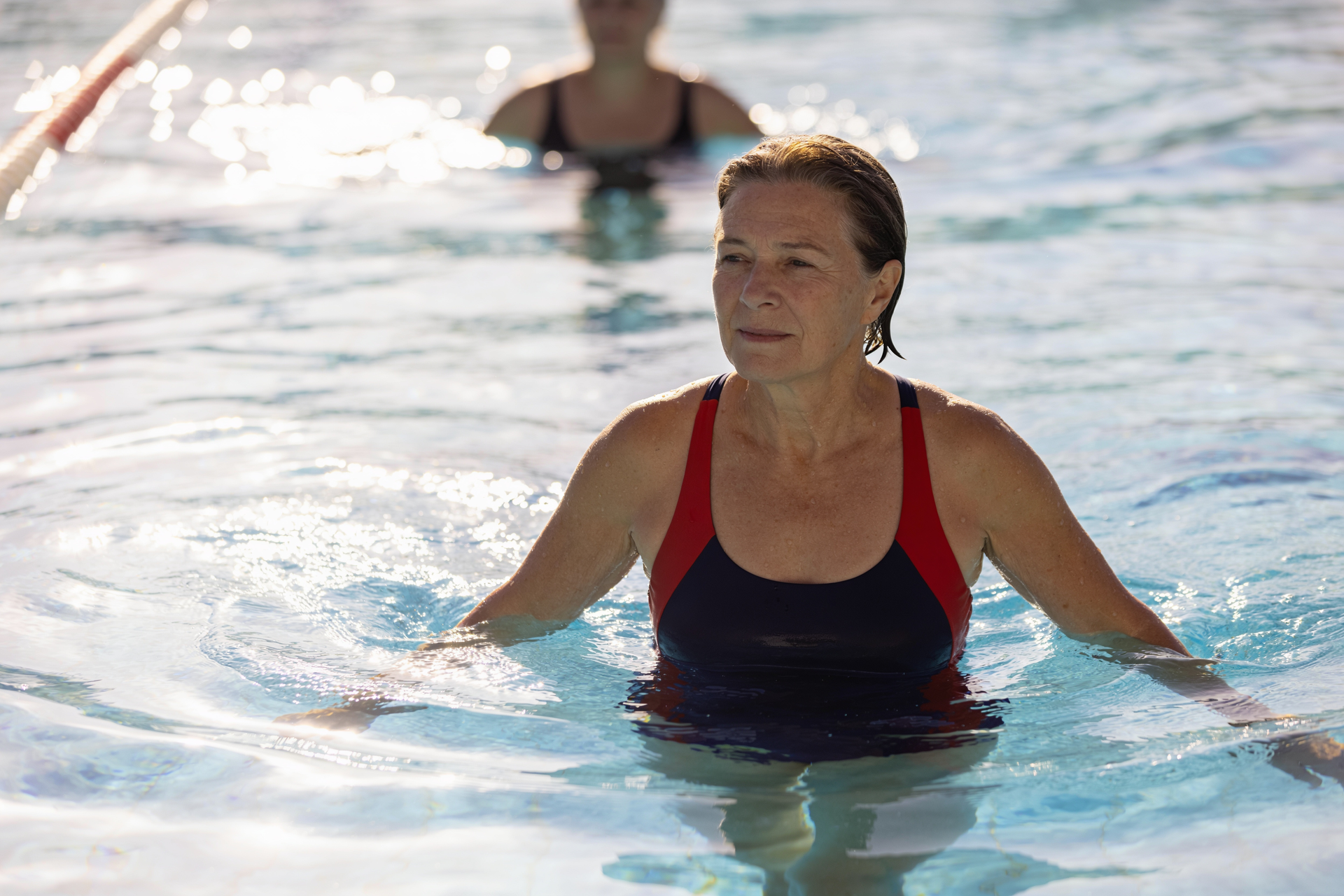
Water lets you train cool while it spares your joints. A pool keeps your body temperature in check during the very activity that would overheat you on land, making it a natural summer choice.
Swimming, water walking, or a water aerobics class all provide steady aerobic work with very little heat or joint stress. For anyone whose summer routine stalls because outdoor heat feels unsafe, water-based cardio is often the option that keeps it alive through the hottest weeks.
Strength in a Cool Space
Keep your strength work, just move it indoors. Two short resistance sessions a week belong in your plan, and a cool, controlled space takes the heat out of the equation.
Train in air conditioning, use moderate loads you can handle with good form, breathe steadily through each rep, and avoid holding your breath under load, which can spike blood pressure. Machines, bands, and bodyweight all work. The point is to preserve the strength benefit for your blood pressure without adding heat strain on top of the effort.
Interval Walking When You're Cleared
A little more intensity can help once your clinician signs off. Gentle intervals, alternating a brisker pace with an easy one, can add a useful training stimulus for some people.
A randomized trial in the AHA journal Hypertension found that aerobic exercise lowered blood pressure even in people with resistant hypertension, whose numbers stay high despite multiple medications. That said, added intensity belongs only in cool conditions and only after your clinician has cleared you for it.
If you are newly diagnosed, recently changed medications, or unsure, keep the pace steady and save the intervals for cooler weather or a clinician's green light.
A Simple Heat-Smart Weekly Plan
Here is one way the pieces fit together across a week. Treat it as a starting template to adapt with your clinician and your own schedule, not a prescription. Move any session to a cooler window or indoors if the day turns extreme.
| Day | Focus | Heat-smart note |
|---|---|---|
| Monday | Cool-hour walk, about 30 minutes | Early morning, shaded route, water along the way |
| Tuesday | Strength in a cool space, full body | Indoors or AC; steady breathing, no breath-holding |
| Wednesday | Easy recovery or water cardio | A pool keeps you cool while you keep moving |
| Thursday | Cool-hour walk, about 30 minutes | Evening, once the worst heat has broken |
| Friday | Strength in a cool space, full body | Indoors; lighter than Tuesday if you feel taxed |
| Saturday | Optional interval walk, if cleared | Cool conditions only, with provider clearance |
| Sunday | Rest | Hydrate, sleep, and let your system recover |
That is roughly 150 minutes of moderate aerobic work plus two strength sessions, spread to avoid the heat. If it feels like too much at first, do less and build; some activity is better than none, and consistency is what carries the benefit.
Signs to Slow Down or Call Your Clinician
Beyond the in-session stop signs, keep the bigger picture in mind. Some patterns are not emergencies but still deserve a conversation with your care team before you keep training through them.
Call your clinician if your blood pressure readings climb or fluctuate unusually, if you feel unusually fatigued or lightheaded during your usual routine, or if new symptoms appear during or after exercise. Physicians at Columbia put it plainly: if you have a pre-existing cardiovascular condition, talk to your doctor about what activity is safest for you.
Summer is exactly the season to keep that line of communication open, because the heat can change how your usual plan feels. When in doubt, slow down and ask rather than push and hope.
The Royal Blue Fitness Approach to Heat-Aware BP Plans
Managing blood pressure through the summer is as much a coordination problem as a fitness one: the training has to fit the heat, your medications, and your clinician's advice all at once. That is the work we are built for, after your provider has cleared you to exercise.
Coaching at Royal Blue Fitness starts from your Strength and Range of Motion Assessment, so your walking volume and two strength days match where you actually are, then we adjust as your readings and the season change, always inside what your provider has cleared. We choose cool-hour timing, joint-friendly options, and strength work you can sustain.
We stay in our lane: we do not give medical or medication advice, we route anything clinical back to your provider, and we keep your plan for hypertension management in Pleasant Hill realistic, so you actually stick with it.
Use Summer to Build Health, Not Setbacks
With a few heat-smart rules, summer can be a season that improves your blood pressure rather than threatening it. Train in the cool hours, hydrate with intention, keep your clinician in the loop on medications, and respect the warning signs.
When you are ready to turn that into a plan built for your situation, and your provider has cleared you to exercise, a Strength and Range of Motion Assessment gives us a starting point for building a heat-aware, blood-pressure-friendly routine.
Heat-Smart Exercise for Blood Pressure: Quick Answers
Is it safe to exercise in the heat if I have high blood pressure?
For many people, yes, when it is done heat-smart and with medical clearance. That means training during cooler hours, hydrating well, keeping intensity moderate, and knowing the warning signs that mean it is time to stop.
Heat does add real strain on the cardiovascular system, and some medications change how you handle it, so the safest path is to clear your plan with your clinician first and then follow the guardrails consistently. The aim is steady, sustainable activity, not extremes in either direction.
What are the best exercises for blood pressure in summer?
Cool-hour walking, water-based cardio, and strength training in a cool space cover most people well. Walking is the dependable base, water cardio keeps you cool while sparing your joints, and two short strength sessions a week round out the plan.
Consistency matters more than intensity for blood pressure, so the best exercise is usually the moderate one you can keep doing through the whole summer rather than the hardest one you can manage on a single good day.
Can my blood pressure medication affect how I handle heat?
It can. Some blood pressure and heart medications, including certain diuretics and beta blockers, can change how your body manages heat, hydration, and heart rate.
This is important, but the right response is not to adjust anything yourself. Never change, skip, or re-time your medication around workouts on your own.
Ask the clinician who prescribed it how heat and exercise fit with your specific medications, and follow their guidance. This article does not provide medication advice.
What warning signs mean I should stop?
Stop and cool down right away if you have chest pain or pressure, severe shortness of breath, a pounding or irregular heartbeat, severe dizziness, confusion, or fainting. These can be signs of a cardiovascular or heat emergency, and the most serious of them warrant calling 911.
With high blood pressure, it is wise to treat it conservatively and end the session early when something feels wrong. Getting evaluated is always better than pushing through a warning sign.
How much exercise per week supports blood pressure?
A common target is about 150 minutes of moderate aerobic activity per week plus two strength sessions, which the federal physical activity guidance for adults also recommends. You do not have to hit that on day one.
Some activity is better than none, and the benefits begin to accumulate before you reach the full target, so start with what you can sustain in the heat and build gradually, ideally with your clinician's input.
Here are our latest articles! Click to read more.