Joint-Friendly Strength Training for Women with Arthritis
If you are a woman with arthritis, strength training can feel like a risk-reward calculation. You want to be stronger, more independent, and less limited by your joints, able to carry the groceries, lift a grandchild, and get through a full day without negotiating with your hands or knees, but you do not want to provoke a joint that already feels unpredictable. The honest answer is that you do not have to choose between progress and protection. You need a plan that builds strength while respecting the signals your body sends on any given day.
At Royal Blue Fitness, joint-friendly strength training means choosing and progressing exercises with enough precision that your body can adapt without being forced into a one-size-fits-all template. This guide walks you through what that looks like in practice: what joint-friendly really means, why it matters specifically for women, the variables a good coach adjusts before abandoning an exercise, a simple way to start and progress, a worked example, and the mistakes that quietly stall the most motivated people.
Strength Training With Arthritis Should Not Feel Like Guesswork
Arthritis can make exercise feel like a negotiation with your joints. One day, a movement feels fine. The next day, the same movement feels stiff, swollen, or unreliable. That uncertainty is why many women swing between two extremes: pushing too hard on good days, then avoiding strength work entirely after a bad one. Neither pattern gives the body what it needs over the long run.
Joint-friendly strength training offers a third option. It teaches you how to build strength while adjusting range of motion, load, tempo, support, and total volume around what your body can tolerate that day. The Arthritis Foundation makes the case plainly:
the right exercise strengthens the muscles that support and protect your joints, eases stiffness, supports balance, and makes daily tasks feel less effortful. Movement is not the enemy of a sensitive joint. The wrong dose of movement is.
What Joint-Friendly Strength Training Actually Means
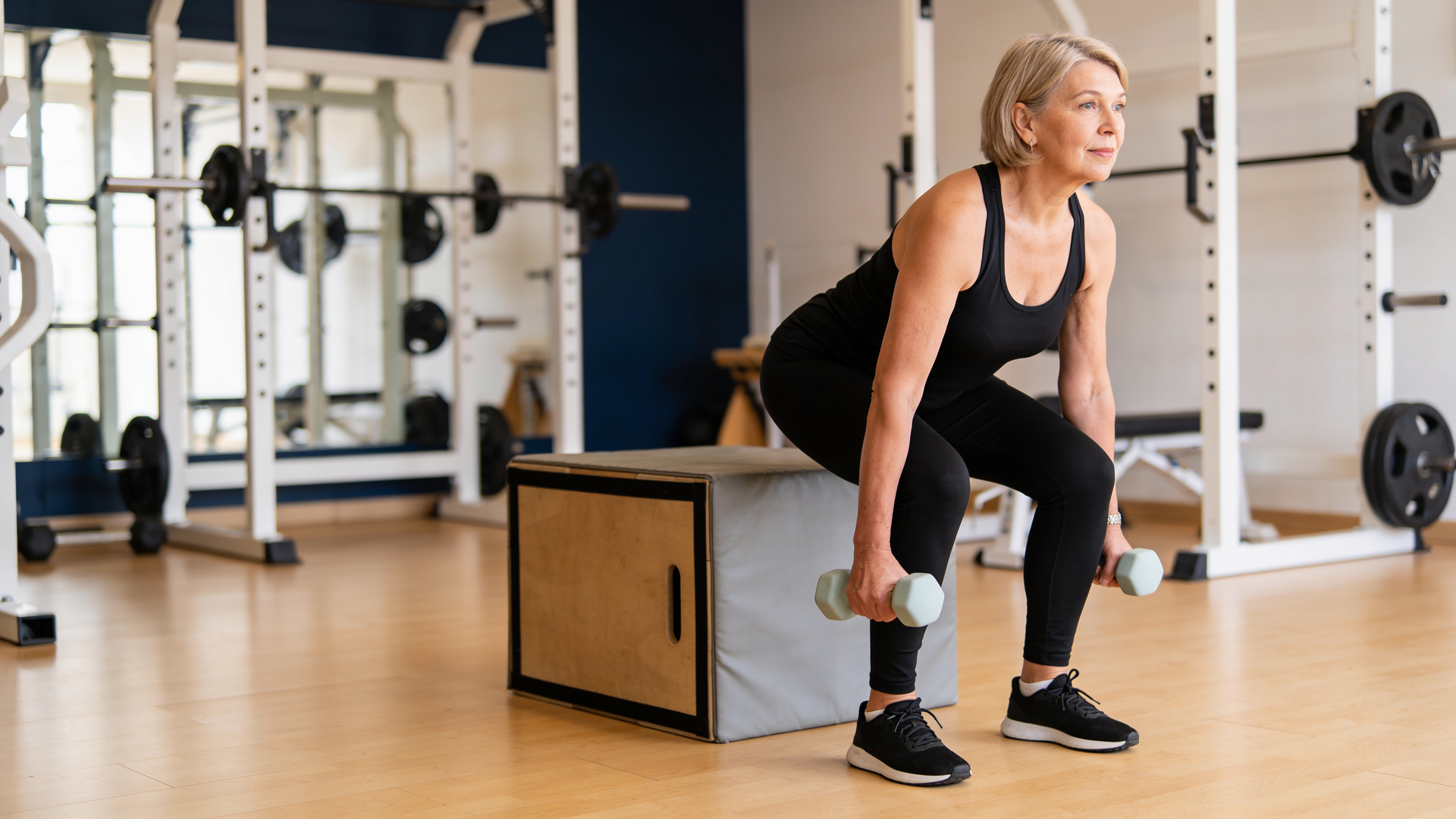
Joint-friendly does not mean easy, fragile, or watered down. It means the exercise is selected and progressed in a way that honors joint sensitivity while still asking the body to adapt. For one woman, that may mean a supported squat down to a box. For another, it may mean a heavier hinge pattern through a shorter range with excellent control. Same principle, different expression.
This is not wishful thinking; it is what the research keeps finding. A 2024 meta-analysis of resistance training in osteoarthritis concluded that
structured strength work improves pain, muscle strength, and physical function for people living with the condition. More broadly, the case that
strength training behaves like medicine for the whole body is well established: it supports muscle, bone, metabolism, and function in ways few other interventions match. The goal is not to avoid every sensation. The goal is to learn which sensations are acceptable, which call for a modification, and which should be referred back to a healthcare provider.
At Royal Blue Fitness, we think of joint-friendly training as controlled, modified, progressive, and pain-aware. Controlled because tempo and position are deliberate. Modified because the exercise meets you where you are. Progressive because it still moves forward. Pain-aware because the plan listens to feedback instead of overriding it.
Why This Matters Specifically for Women
Arthritis-friendly training is not generic training with a softer label. Several things make the conversation different for women. Osteoarthritis of the hand is markedly more common in women than in men, which is why grip, pinch, and carrying tasks deserve real attention rather than an afterthought. Bone health is a parallel concern, since the drop in estrogen around menopause accelerates bone loss at the same stage of life when many women first notice joint symptoms. Strength training is one of the most useful tools women have for protecting muscle and bone, especially around menopause, which means the same sessions that make your joints feel more capable are also defending the skeleton underneath them.
Practically speaking, that changes the emphasis, not the principles. We pay closer attention to hand and wrist loading, we treat carrying capacity as a trainable skill rather than a hazard to avoid, and we build sessions that double as bone-loading work without overwhelming a tender joint. A plan that ignores these realities can still look reasonable on paper, but it leaves the most relevant gains on the table.
The Five Variables to Modify Before You Quit an Exercise
When a movement irritates a joint, the answer is rarely to delete it forever. More often, the first move is to change how the movement is loaded or performed. That keeps the training useful while reducing unnecessary irritation. The range of motion can be shortened. Load can be reduced. Tempo can be slowed. External support can be added. Volume can be lowered. Those five levers let a coach preserve the pattern while matching the capacity of the person in front of them.
| Variable | How to adjust it | Why it helps |
|---|---|---|
| Range of motion | Use a smaller depth or shorter reach | Keeps the pattern while reducing joint stress |
| Load | Use less weight or a lighter band | Lets the body practice control with less strain |
| Tempo | Slow down the lowering phase | Reduces rushing and improves joint awareness |
| Support | Use a wall, rail, box, or bench | Improves confidence and positioning |
| Volume | Do fewer sets or reps | Controls total irritation and fatigue |
The order matters. In most cases, we adjust range of motion and support first, then tempo, and only then reach for load and volume. Pulling the right lever keeps a useful exercise in your program, rather than shrinking your plan one quit at a time.
Strength Areas That Matter Most for Women With Arthritis
Arthritis may announce itself in one joint, but a good program looks at the whole system. Hips and glutes control the pelvis, legs, and knees. The thighs power stairs, sit-to-stand transitions, and getting up from low surfaces. The upper back and shoulders support posture, carrying, reaching, and pushing. Core and trunk control allow the body to transfer force without dumping stress into a single painful area.
Grip and carrying strength belong on that list, and not only because of daily tasks like groceries, laundry, and bags. For women specifically, hand involvement is common, and the evidence is encouraging:
targeted hand exercise can improve grip strength, reduce pain, and improve hand function in people with hand osteoarthritis. Training the hands gently and progressively is not a risk to manage around. Done well, it is part of the genuine fitness benefit that well-dosed strength work provides, alongside (not instead of) the care your healthcare team directs.
How to Start and Progress: A Simple Sequence
Most women do not need a complicated program. They need a repeatable one. Here is the sequence we use to get started without guesswork:
- Pick three to four foundational patterns: a squat or sit-to-stand, a hinge, a push, and a pull or carry. These cover the movements daily life actually demands.
- Choose the most supported version of each that still feels like work. A box squat, a band-assisted row, an incline push against a counter. Supported does not mean trivial.
- Set a starting dose you could repeat tomorrow: usually two sets of eight to twelve controlled reps, stopping a couple of reps shy of struggle.
- Run that exact session two or three times before changing anything. Consistency at a tolerable dose is the data you are collecting.
- Progress one variable at a time, in small steps: a little more range, a slightly slower lower, then a touch more load. Never advance two levers in the same week.
- Re-check the joint the next morning. If it feels normal, the dose was right. If it is flared, you moved too fast, not too far, in the wrong direction.
The point of the sequence is to make progress boring and predictable. Boring is what lets a sensitive joint trust the plan long enough to get stronger.
A Worked Example: One Sensitive Knee, One Tough Week
Imagine a woman with knee osteoarthritis whose knee is mildly swollen on a Monday. Her usual session includes a goblet squat to a low box. Instead of skipping legs or grinding through pain, she works the five variables in order. She raises the box so the squat is shallower (range of motion), keeps her usual light dumbbell but slows the lowering to a three-count (tempo), and lightly holds a rail for the first set (support). She does two sets of eight instead of three sets of ten (volume), and leaves the load unchanged because the other levers already lowered the demand.
The set feels controlled, the knee stays quiet, and the next morning it feels no worse. Her hands are stiff that same week, so on her rows she swaps a hard, thin grip for a thicker, padded handle and trims the longest holds, which keeps the pull productive without aggravating sore finger joints. By Thursday, the swelling has settled, so she lowers the box back to its usual height and removes the rail. Nothing was abandoned. The pattern stayed in the program, the week stayed productive, and the joint was respected. That is what pain-aware progression looks like in real time.
A Sample Joint-Friendly Strength Session Framework
A joint-friendly session should have a clear shape rather than a random list of exercises that leave you wondering whether you did too much. A simple, repeatable structure works for most women:
- Five to ten minutes of easy movement and range-of-motion work to wake up the joints
- Two lower-body strength patterns, such as a supported squat and a hinge
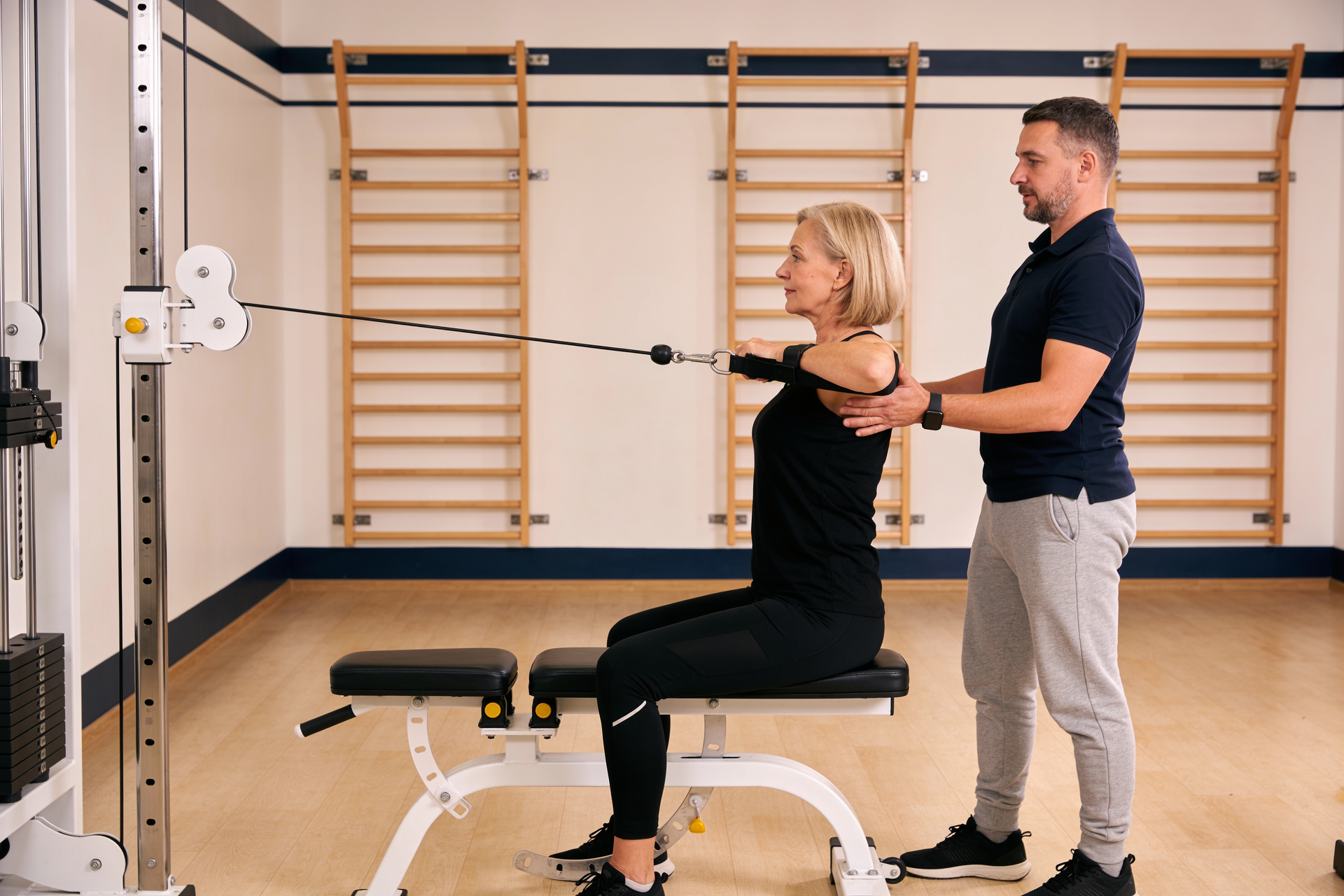
- One upper-body pattern, such as a row or an incline push
- One core or carry drill that trains trunk control and grip together
- One balance or coordination drill, then a short recovery check-in
The intensity should feel productive but repeatable. The best sign is not that you are exhausted. The best sign is that the next day your body still trusts the plan.
What Pain-Aware Progression Looks Like
Pain-aware progression is not fear-based progression. It does not tell you to stop the moment anything feels uncomfortable. It asks better questions. Is the sensation mild or sharp? Does it stay stable or climb during the set? Does it settle afterward? Does it feel worse later that day or the next morning? Is there swelling, giving way, or new loss of function?
Public-health guidance lands in the same place. The World Health Organization recommends regular aerobic and muscle-strengthening activity for adults, while emphasizing that people living with chronic conditions should
work within their abilities and check in with the right professionals when needed. That is exactly the balance we aim for: confident movement with sensible boundaries, not avoidance dressed up as caution.
Common Mistakes Women Make With Arthritis-Friendly Training
The same handful of mistakes stall most well-intentioned plans. Naming them makes them easier to avoid:
- Training only on good days. Strength is built by consistency, not by occasional heroic sessions. A smaller dose you can repeat beats a big effort you recover from for a week.
- Quitting an exercise instead of modifying it. A flare in one position rarely means the whole pattern is off limits. Adjust a variable before you delete the movement.
- Ignoring the hands and grip. For women, hand involvement is common, and skipping grip work leaves a meaningful, trainable area untouched.
- Chasing soreness as proof. Productive training does not require next-day pain. With arthritis, the morning-after check is your most honest feedback.
- Progressing two things at once. Adding range, load, and volume in the same week removes your ability to tell what your joint actually tolerated.
When to Get Medical Guidance Before Training
Royal Blue Fitness coaches strength, mobility, progression, and fitness strategy. We do not diagnose arthritis, prescribe medical treatment, or replace your healthcare team. If you have new swelling, sharp pain, sudden weakness, unexplained loss of motion, recent surgery, fever, or symptoms that do not match your normal pattern, the next right step is to speak with your provider before training through it.
That boundary protects you, and it makes your fitness plan more effective because your coach is building strength around a clear picture rather than guessing past a medical issue that needs clinical evaluation.
How Royal Blue Fitness Builds Arthritis-Friendly Strength Plans
A Strength and Range of Motion Assessment gives us a starting point. We look at how your joints move, where strength is limited, which patterns feel sensitive, and which tasks matter most to your life. From there, we choose exercises that build real capacity instead of forcing your body into a template, and we adjust the five variables as your symptoms shift week to week.
In the assessment, we map which positions a joint tolerates today, not just where it hurts: how deep a knee will load before it complains, which grip lets a wrist pull without flaring, how much range a shoulder owns pain-free. That map is what tells us which of the five variables to set first for each exercise, so the starting plan already fits the joint instead of testing it.
For women with arthritis, the goal is not to chase perfect movement or to avoid effort. The goal is to build enough strength that daily life feels less guarded and training feels like a tool you can trust.
The Royal Blue Fitness Takeaway
A joint-friendly plan is not a softer plan. It is a smarter one. It keeps useful exercises in your program by modifying them, builds the grip and carrying strength that women with arthritis genuinely need, doubles as bone-protective work, and progresses slowly enough that a sensitive joint can come along for the ride.
The goal is not to collect more exercises. It is about understanding what your body needs, choosing the right starting point, and building a plan that keeps progressing without losing sight of real life. If you want a clear starting point, a
Strength and Range of Motion Assessment is the simplest way to begin.
Frequently Asked Questions
Can women with arthritis strength train?
Yes, in most cases. Major health organizations encourage muscle-strengthening activity for adults living with arthritis because building the muscles around a joint helps support and protect it. The key is to start with a supported, manageable version of each movement, keep symptoms stable, and progress only when a session feels repeatable. If your symptoms are new, severe, or changing, check with your provider first.
What exercises should I avoid with arthritis?
There is no universal banned list, because tolerance is individual. Rather than avoiding whole categories, most women do better adjusting how an exercise is performed: shortening the range, slowing the tempo, adding support, or lowering the load. The exceptions are movements that produce sharp pain, swelling, or a joint giving way. Those are signals to modify the pattern or step back and get it checked, not to push through.
Is soreness normal after strength training with arthritis?
Mild, general muscle soreness that fades within a day or two can be normal. What you are watching for is the difference between muscle soreness and joint irritation. Soreness in the muscle belly that eases with gentle movement is usually fine. Sharp joint pain, new swelling, or symptoms that are worse the next morning suggest the dose was too high, and the next session should pull one of the five variables back.
Should I train during an arthritis flare-up?
During an active flare, the usual goal shifts from progress to maintenance. Many women can still do gentle range-of-motion work and very light, supported movement, which can help more than complete rest. Heavy loading and new progressions should wait until the flare settles. If a flare is severe, unusual, or comes with fever or significant swelling, contact your provider before training.
How often should women with arthritis strength train?
Two to three strength sessions per week are a common and effective target for adults, with at least a day between sessions that work the same joints. Consistency at a tolerable dose matters far more than intensity. If two full sessions feel like too much at first, shorter and more frequent bouts can be a reasonable way to build the habit before you add volume.
Here are our latest articles! Click to read more.