Training On Sand: A Low-Impact Summer Workout Guide For Every Fitness Level
Summer trips to the beach can be more than sunscreen, snacks, and sandcastles. For adults, that strip of sand is also a built-in training ground. It can help you build strength, sharpen balance, and challenge your heart without beating up your joints.
At Royal Blue Fitness, we coach people who want to feel strong, steady, and pain smart so they can actually enjoy summer trips, not just survive them. Sand is one of our favorite real-world tools. It is unstable, forgiving, and sneaky-hard in all the best ways once you know how to use it.
This guide shows you why sand training is so kind to your joints, how to handle sun and heat the smart way, and three 30 to 40-minute joint-friendly beach workouts for beginner, intermediate, and advanced levels.
Sand is gentle on your joints and hard on your muscles
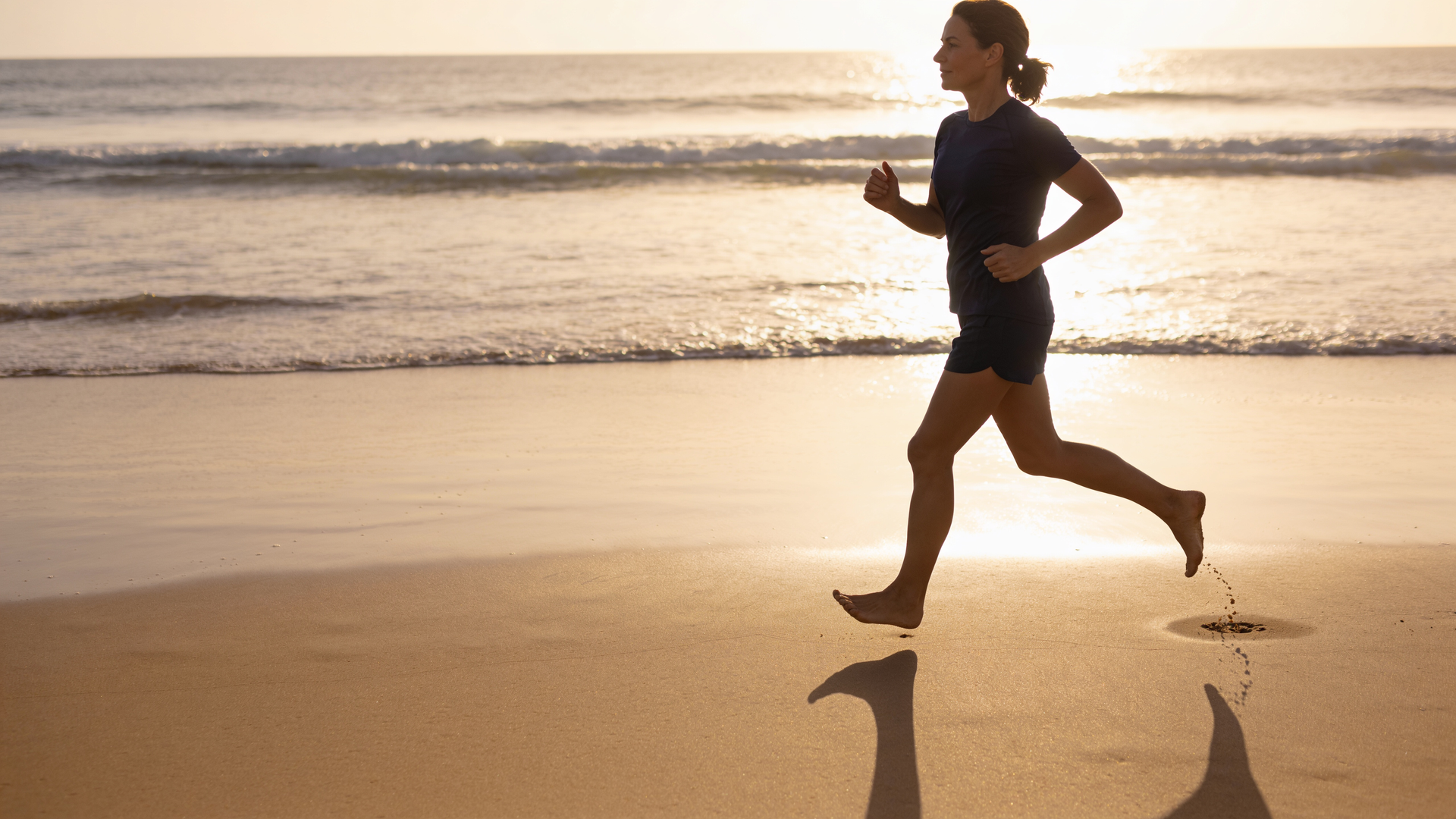
Sand looks soft and harmless, but from a training standpoint it is a high-value surface. It makes easy movements harder and hard impacts softer, which is a rare and useful combination.
You work harder while your joints get pounded less
Compared with firm ground, moving on sand asks more of your muscles while sending less shock through your joints. Start with the effort.
Sand is a yielding surface, so every step loses a little energy to the grains shifting under you, and your body has to make that energy back. In one classic study of walking and running on sand, walking on sand used roughly two to nearly three times the energy of walking the same speed on a hard surface, and running used about 1.6 times more. The exact jump depends on how soft and dry the sand is and how fast you move, but the direction is consistent: you get a bigger training effect at a gentler pace.
Now the joints. Because sand compresses on contact, it stretches out the moment of impact instead of stopping your foot abruptly. Research comparing walking on sand with walking on stable ground measured lower push-off forces and slower loading through the lower body on sand, which is part of why sand keeps getting studied as a lower-impact option for people who want to train without aggravating sensitive knees, hips, or ankles.
In plain language: you work harder, but your joints feel less pounded. In our coaching, that trade is exactly why we reach for sand with members who want a real cardio and strength stimulus while a cranky knee or hip settles down.
Unstable footing trains the muscles that keep you steady
Because the surface keeps shifting, your body makes constant small corrections to stay upright. That quietly trains the parts of you that keep you balanced:
- Foot and ankle stabilizers
- Hip stabilizers like the gluteus medius
- The deep core muscles that hold your torso tall
This is not just a nice idea. A systematic review and meta-analysis of strength training on unstable surfaces found that, compared with no training, unstable-surface work improved strength, power, and balance across the lifespan, with the largest balance gains in mature adults. The same review is honest about the limits: against ordinary stable-ground training, the extra benefit in healthy young adults was small, and study quality was mixed. So we treat sand as a useful balance and ankle challenge, not a magic surface, and we match the dose to the person.
Sun and daylight, the honest version
Being outside near the water genuinely feels good, and some of that is real physiology. It is also an area where popular advice gets a little reckless, so here is the straight version.
Vitamin D helps your bones, but the sun is not the way to chase it
Your skin does make vitamin D when sunlight hits it, and vitamin D earns its reputation. According to the NIH Office of Dietary Supplements, it helps your body absorb calcium for stronger bones, your muscles need it to move, and your immune system uses it to fight off invaders.
Here is the part most beach articles skip. Because ultraviolet light is the main driver of skin cancer, the American Academy of Dermatology does not recommend trying to top up your vitamin D through sun exposure, and notes there is no sun dose that maximizes vitamin D without also raising skin-cancer risk. The safer route is food and, if your levels run low, a supplement you have discussed with your provider. Treat sunshine as a pleasant bonus of being outside, not a reason to bake on the sand.
Morning daylight is the bigger everyday payoff
The real everyday win from getting outside is light timing. Morning daylight helps set your circadian rhythm, the internal clock that shapes how well you sleep at night and how you feel during the day. When your sleep is steadier and your mood lifts, staying consistent with summer training gets a whole lot easier. An early beach session is a great way to bank that morning light.
Choose the level that matches today, not your best year
Pick the level that matches where you are right now, not where you used to be or hope to be by August. When you are between levels, start with the easier one and earn your way up. Honest self-rating is the same first move we use in a coaching assessment, because the right starting point protects your joints far better than ambition does.
The sand itself gives you a second dial to turn. Start every workout on the firm, wet sand near the waterline, where footing is steadier and your calves and ankles get an easier ride. Once that surface stops challenging you, move up the beach onto the soft, dry sand, which makes the same movements work harder. Wet to dry is the progression lever we lean on most with sand sessions, because it lets you raise the difficulty without adding speed, reps, or impact.
Beginner fits you if any of these sound familiar:
- You cannot comfortably run a mile in under 12 minutes.
- You feel deconditioned or are returning after a long break.
- Strength training has been on and off, or you started within the last year or two.
- You have some joint stiffness or past injuries that flare if you overdo it.
Intermediate fits you if most of these are true:
- You can walk briskly for 30 minutes and jog short stretches without pain.
- You train two to four days per week, most weeks.
- You can do squats, step-ups, and incline push-ups with good form.
Advanced fits you if these describe your week:
- You are active most days of the week.
- A one-mile run under 8 minutes is realistic, or you have equivalent cardio capacity.
- You strength train consistently, and your joints tolerate impact and power work.
If you have current pain, a recent surgery, or a history of joint replacements, you can still borrow from these workouts. Scale everything down and treat them as ideas to talk through with your medical provider or coach first.
Warm up for five to eight minutes before you push the pace
Always spend a few minutes preparing your body before you push the effort. On the beach, it can look like this:
- Easy shoreline walk. Three minutes on firmer, wet sand to let your ankles and hips get used to the surface.
- Ankle and foot prep. Ten ankle circles per side, then 10 slow heel raises and 10 slow toe raises.
- Hips and spine. Ten hip hinges with hands on your hips, then 10 gentle bodyweight squats to a comfortable depth.
- Upper body and core. Ten arm circles each direction, then a 20-second tall plank on a bench, a lifeguard stand, or the sand if that feels good.
Then you are ready to pick your level.
Beginner beach workout: intentional walking and simple strength
Goal: build cardio, joint-friendly strength, and confidence on the sand without jumping or running.
Total time: about 30 minutes.
Warm up. Use the five-to-eight-minute warm-up above.
Brisk walk intervals, four rounds of four minutes.
- Walk at a pace that makes conversation a little challenging but still possible.
- Stay on firmer, wet sand near the waterline, which is steadier and a bit easier on your calves. As the walk starts to feel easy over the weeks, drift up onto softer, drier sand to keep the challenge climbing.
- Every minute, pause for 5 bodyweight squats.
- Rest 1 minute between intervals, walking slowly and shaking out your legs.
Strength circuit, two relaxed rounds.
- 10 to 12 box or bench squats to a cooler or sturdy bench.
- 8 to 10 incline push-ups on a bench, railing, or rock.
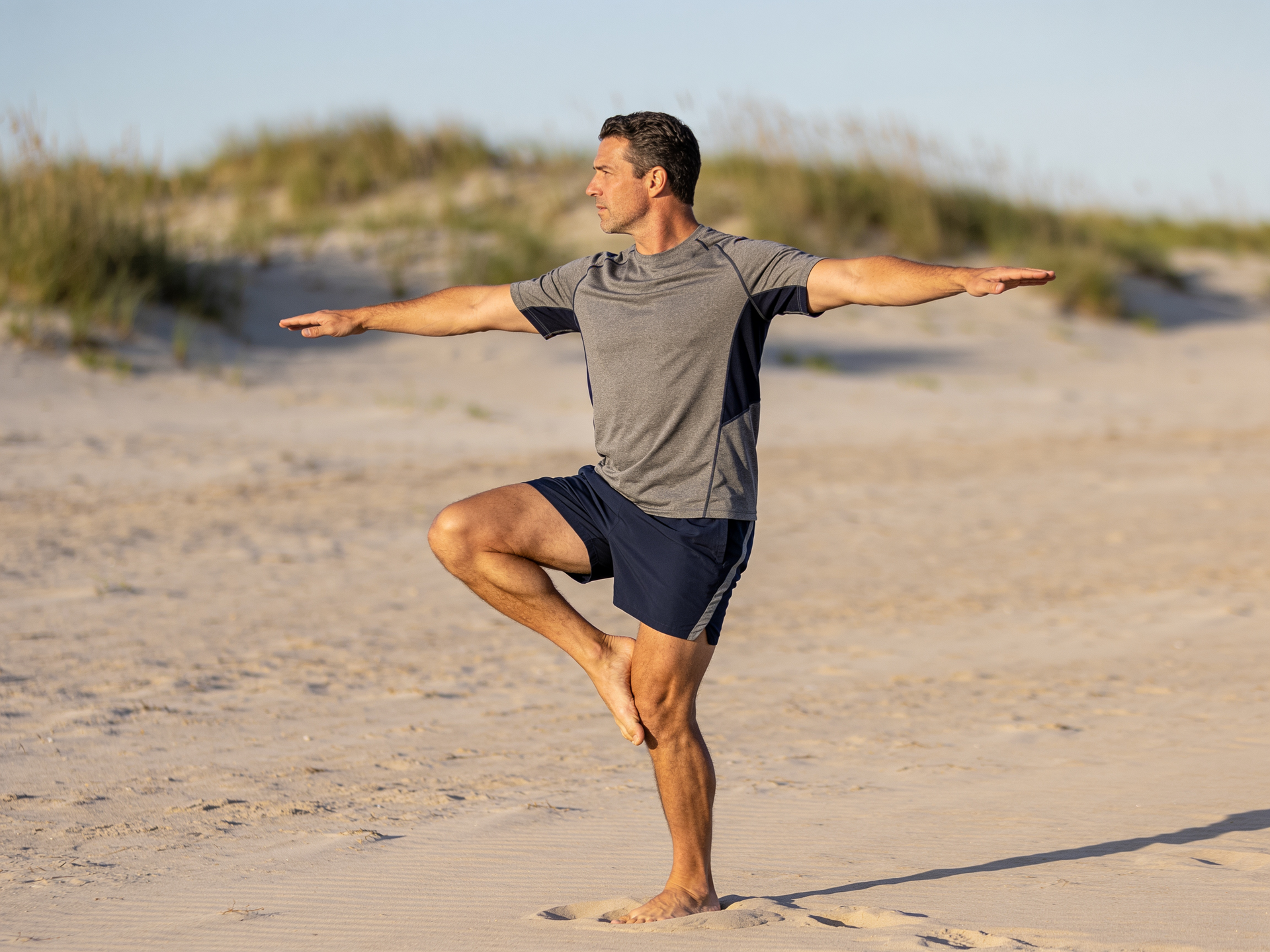
- 20 seconds single-leg balance per side, barefoot if safe, eyes on the horizon.
- 6 to 8 standing band rows with a light band looped around a post.
- Rest 60 to 90 seconds between rounds.
Cool down: 5 minutes. Slow shoreline walk, then gentle calf, hamstring, and chest stretches.
How it should feel: slightly breathless during the walk intervals, muscles working but not burning, joints supported rather than pounded.
Intermediate beach workout: strength, balance, and short bursts
Goal: blend strength, low-impact cardio, and a little speed without aggressive jumping.
Total time: 35 to 40 minutes.
Warm up. Same five-to-eight-minute sequence.
Sand strength tri-set, three rounds. Choose a slightly softer patch for more challenge.
- 12 reverse lunges in place, alternating legs.
- 10 to 12 elevated push-ups, or full push-ups on the sand.
- 30-second plank on hands or forearms.
- Rest 60 seconds between rounds.
Lateral movement block, six to eight rounds. Set two marks about 10 to 12 steps apart.
- 20 seconds lateral shuffle from mark to mark, staying low and controlled.
- 40 seconds easy walk back and reset.
Power-lite hill or dune walks, four rounds of 45 to 60 seconds. Walk up a gentle slope at a strong pace, and walk back down slowly. No slope? Substitute fast flat-sand walking.
Cool down: 5 minutes. Easy beach walk, then gentle hip flexor, quad, and shoulder stretches.
How it should feel: heart rate up, muscles pleasantly fatigued, but you finish feeling like you had a bit more in the tank. No sharp joint pain, no gasping.
Advanced beach workout: power and conditioning without the beating
Goal: use the sand to build power, conditioning, and full-body strength while staying kind to your joints.
Total time: 35 to 40 minutes.
Warm up. Same sequence, plus two or three relaxed 15-second jogs on the sand.
Power block, three rounds. Work in soft, dry sand here for the most challenge, and dial back toward firmer sand on any movement where your footing or joints feel sketchy.
- 8 sand hill runs, with a walk-back recovery. No dune or hill on your beach? Run 8 hard-effort intervals of 10 to 15 seconds on firm flat sand instead, treating the walk back as your rest.
- 6 to 8 walking lunges per leg in soft sand.
- 6 to 8 push-ups on the sand.
- 4 to 6 Turkish get-ups total if you are proficient, bodyweight or with a light sand-filled pack.
- Rest 60 to 90 seconds between rounds.
Strength-endurance circuit, two to three rounds.
- 30 seconds bear crawl forward, 30 seconds backward.
- 10 controlled skater steps per side, smooth rather than ballistic.
- 30 to 40 seconds plank with slow shoulder taps.
- Rest 60 seconds between rounds.
Finisher: 6-minute walk-jog on the minute. Each minute, 20 to 30 seconds relaxed jog in firmer sand, then walk and recover.
Cool down. Easy walk and full-body stretching, with extra attention for calves, hip flexors, and shoulders.
How it should feel: challenging, sweaty, and satisfying. Your breathing is heavy in the power block, but your joints feel supported, not slammed.
Sun and heat safety on the sand
The beach is hot and bright by design, so a few habits keep a good session from turning into a bad afternoon.
Train during the cooler hours. CDC guidance for active people in the heat is to schedule workouts earlier or later in the day, ease into the effort, and drink more water than usual rather than waiting until you feel thirsty.
Know when to stop. If you feel faint, weak, dizzy, or your muscles start cramping, that is your cue to stop, get to shade or cool water, and rehydrate. Push through nothing in the heat.
Protect your skin. Seek shade between efforts, wear a hat and sunglasses, and use a broad-spectrum sunscreen. Skip the idea of sunbathing to earn vitamin D.
Listen to your joints. Sand is forgiving, but it is not magic. If your ankles, knees, or hips feel unstable or painful, slow down, shorten your stride, or drop to an easier level.
If you live with a heart condition, are pregnant, or manage a chronic condition, talk with your provider about training in the heat before you start. Done right, a beach workout should leave you pleasantly tired and refreshed, not sunburned, dizzy, or limping.
How beach workouts fit into your bigger plan
Beach sessions are versatile. They make a fun summer swap for one gym day, an easy way to keep training while you travel, and a real-world test of the balance and stamina you will use for hiking, traveling, and keeping up with the people you love.
At Royal Blue Fitness, we build pain-smart strength and mobility plans around how you actually want to live, whether that means working sand sessions into your summer, training around an arthritis flare, or using beach days as a checkpoint for your balance and conditioning.
If you want help turning these workouts into a plan that protects your joints all year, the smartest first step is knowing exactly what your body is ready for. Our
Strength and Range of Motion Assessment maps your current strength, mobility, and balance so we can build your summer and the rest of your training year around joints that feel supported. Reach out, and we will get you started.
Frequently Asked Questions
Is walking on sand really better exercise than walking on pavement?
It is a different tool rather than a strictly better one. Soft sand makes your muscles work noticeably harder at the same speed, so you get more training effect from an easy-feeling walk, and it sends less shock through your joints than pavement. Pavement still wins for speed and long steady mileage. Many people use both: sand for strength and balance, firmer surfaces for distance.
Is running on the beach bad for my knees?
Not inherently. Sand lowers the peak impact forces your joints absorb, which can make it gentler than road running. The catch is that soft sand also taxes your calves, Achilles tendons, and feet in new ways, so the smart move is to start short, run on firmer, wetter sand near the waterline, and build up gradually. If you have ongoing knee pain, check with a provider before adding running.
How do I get enough vitamin D if I should not rely on the sun?
Through food and, when needed, supplements. Fatty fish, egg yolks, fortified milk and cereals, and some mushrooms all contribute, and a daily vitamin D supplement is a simple option if your levels are low. A blood test ordered by your provider is the only way to know where you actually stand, so let that guide whether you need to supplement and how much.
What should I do to stay safe working out in summer heat?
Train in the cooler morning or evening hours, hydrate before you feel thirsty and keep sipping, wear light clothing, and take shade breaks. Stop right away if you feel faint, dizzy, or unusually weak, or if your muscles start cramping, and cool down before continuing. If you have a heart condition, are pregnant, or manage a chronic illness, clear hot-weather exercise with your provider first.
Can beginners do barefoot sand workouts safely?
Yes, with a little caution. Going barefoot on firm, wet sand is a great way to wake up the small muscles in your feet and ankles. Scan your path for shells, glass, and rocks, start with short sessions so your feet adapt, and keep supportive shoes nearby for harder running or jumping. If you have diabetes or reduced sensation in your feet, keep shoes on and ask your provider what is appropriate.
How often should I train on the sand?
For most people, one to two beach sessions a week are plenty, especially while your feet and calves are adjusting. Treat soft-sand work like any new stimulus: introduce it gradually, leave recovery days around the harder sessions, and pay attention to how your joints and lower legs feel the next morning before you add more.
Here are our latest articles! Click to read more.