Train for the Moment: How to Build a Body Ready for Your Next Adventure
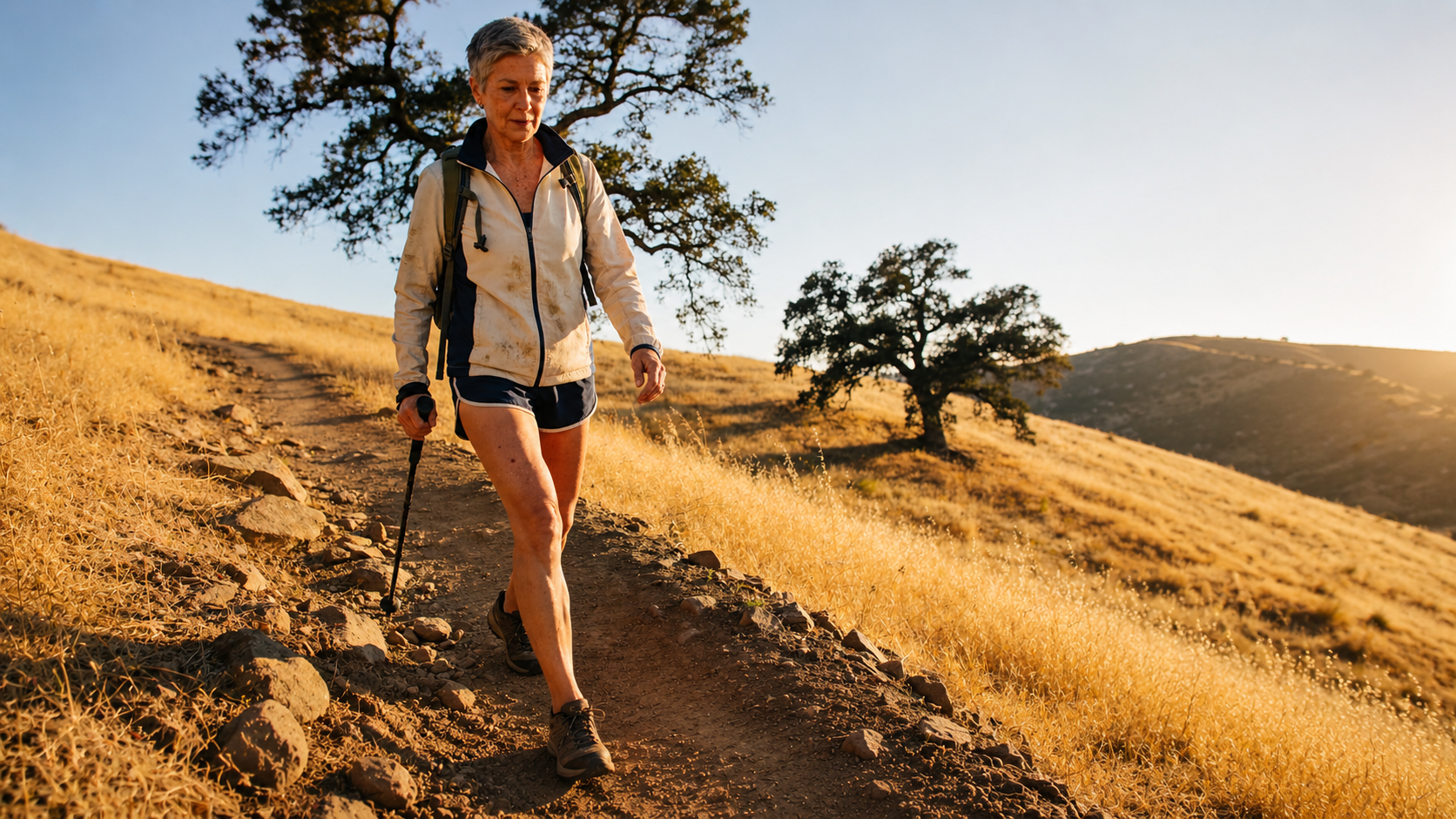
Most people do not start training because they love workouts. They start because there is something they want to do. They want to hike without wondering whether their knees will hold up on the way down. They want to travel without feeling wrecked after the first long day of walking. They want to lift luggage, climb stairs, carry gear, explore a new city, or say yes to an invitation without quietly calculating whether their body can handle it.
That is the heart of training for the moment. Your body is not only there for the hour you spend exercising. It is there for the trip, the trail, the wedding weekend, the golf round, the pickleball game, the airport sprint, the hill, the stairs, and the long day that asks more of you than an ordinary Tuesday. Building a body that is ready for those moments takes more than cardio, and it takes more time than the week before you leave. The rest of this guide walks through what readiness actually requires and how to build it on purpose.
REI's hiking guidance makes the practical version of this point well. Its training overview opens by admitting that you do not simply train for hiking by going on a few hikes, and it names
leg and core strength, endurance, balance, and cardio as the pieces of trail readiness. The federal
Physical Activity Guidelines for Americans set the broader floor: adults benefit from regular aerobic activity plus muscle-strengthening work on two or more days a week. At Royal Blue Fitness, we connect those ideas into a sharper question. What does your body need to be ready for the moments you actually care about?
Adventure readiness is more than cardio
When people get ready for an active trip, they usually think about cardio first. They walk more. They try to add steps. They put in a treadmill session or two. That is useful, but it is not the whole picture.
A real adventure rarely asks for only one physical quality. A hike asks for endurance, but it also asks your hips to climb, your ankles to adapt, your knees to control the downhill, your trunk to stabilize under a pack, and your balance to respond to uneven ground. Travel can look easier and still be brutal: standing in lines, hoisting a bag into an overhead bin, carrying everything on one shoulder, walking across terminals, sitting for hours, then walking again before your body has warmed up.
That is why readiness is not simply more cardio. It is the ability to move, produce force, absorb force, carry, balance, recover, and then do it again the next day. A body conditioned in only one direction tends to feel ambushed the moment the day turns multi-directional, uneven, loaded, or long.
What training for the moment means at Royal Blue Fitness
Training for the moment means we start with the life demand and build the plan backward from there. Instead of asking what workout to do today, the better question is what you want your body to be ready for.
That shift changes everything. A generic workout can make you sweat, but a goal-connected plan gives your body a specific job. If you want to walk a European city for a week, your plan should build walking tolerance, stairs, hip strength, foot and ankle capacity, and recovery from back-to-back active days. If you want to hike Mount Diablo or the Lafayette-Moraga Trail, your plan should build inclines, step-down control, balance, pack tolerance, and the ability to manage loose, uneven footing. If you want to play weekend pickleball, your plan should build lateral movement, rotation, deceleration, and the durability to change direction without paying for it on Monday.
You are not training for the gym alone
The gym is a tool, not the destination. Machines, dumbbells, bands, cables, steps, benches, and open floor are all ways to build capacity. But the point of that capacity is never to live inside the gym. The point is carry-over into the life you want to keep saying yes to.
So a good program eventually connects strength to real movement. A squat pattern should make chairs, stairs, hills, and lifting from the floor easier. A carry should make groceries, bags, gear, and luggage easier. Balance work should help with curbs, trail rocks, wet tile, crowded sidewalks, and the quick correction you make when a foot lands wrong. Trunk training should help you brace, rotate, and reach when life does not hand you perfect posture.
Your body needs capacity before the opportunity arrives
Many people wait until an event is close before they prepare. They walk a lot the week before a trip. They throw in a few hard workouts right before a hike. They try to cram fitness into a short window, then arrive sore, tired, and irritable. That approach usually produces the opposite of readiness.
Capacity takes time. Strength comes from repeated exposure. Balance improves through practice. Endurance grows through gradually rising volume. Recovery tolerance only improves once your body has already met the kind of demand you plan to ask of it. The more meaningful the moment, the earlier the preparation should begin.
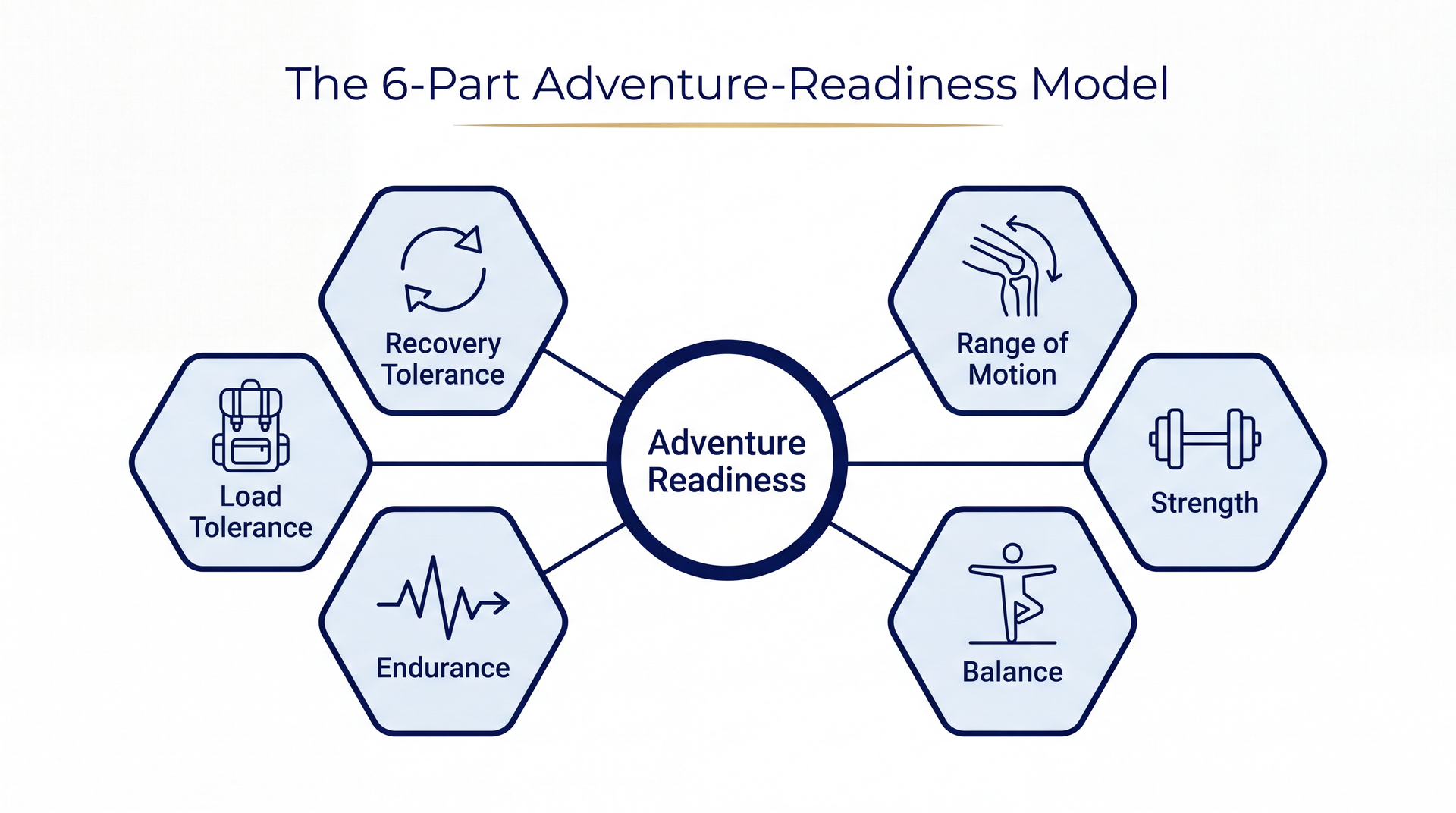
The 6-Part Adventure-Readiness Model
At Royal Blue Fitness, we plan readiness around six connected qualities. We call it our 6-Part Adventure-Readiness Model, and we use it both to design programs and to read assessment results. You do not need to be perfect in all six. But when one is clearly underdeveloped, it tends to become the quiet ceiling on everything else.
1. Range of motion
Range of motion is your available movement. An active life asks for more than touching your toes. Your ankles need enough motion for stairs, hills, and downhill control. Your hips need enough to step, hinge, sit, stand, and climb. Your shoulders and upper back need enough freedom to reach, carry, pack, unpack, and manage anything overhead.
When range is limited, the body finds workarounds. Sometimes that is fine for a short outing. But on a long, loaded, or repetitive day, the workaround is often what ends up irritating a back, knee, hip, foot, or shoulder. More range gives the body more options. In assessments, the ankle is the limiter we flag most often for hikers: when it cannot bend far enough, the knee and low back quietly take over the descent.
2. Strength
Strength is your ability to produce force. It helps you climb, lift, carry, stand up, step down, and stay in control when gravity is not being polite. For adventure and travel, the legs and hips lead, but the trunk, upper back, shoulders, and grip all matter too.
Strength also changes how the world feels. When you trust your body to handle a load, a hill becomes a challenge instead of a warning, a suitcase becomes a task instead of a gamble, and a long day becomes manageable instead of intimidating. What we see in assessments is that the people who feel most anxious about a trip are usually missing lower-body strength specifically, not fitness in general, and that is a very fixable gap.
3. Balance
Balance is not just standing on one leg. It is staying steady when the task changes underneath you. It is worth noting that
the CDC's STEADI functional tests for leg strength, balance, and mobility, the 30-second chair stand, the 4-stage balance test, and the timed up-and-go, were originally developed for fall prevention in seniors and aging adults. We point to them here not because adventure readiness is about fall risk, but because they show how tightly the same professionals tie leg strength, balance, and mobility together as one bundle of real-world movement confidence.
On a trail, balance is what saves you when the ground shifts. On a trip, it covers curbs, crowds, stairs, wet surfaces, and climbing in and out of vehicles. In daily life, it lets you react before a small misstep turns into a bigger problem. In our assessments, single-leg control is the quality people most often overestimate, right up until they try a step-down with their eyes off the floor.
4. Endurance
Endurance is the ability to repeat effort over time. It is not only how far you can walk once. It is how well you tolerate several active hours, several days in a row, and the constant transitions from sitting to moving. A walking-heavy vacation is where the difference between a decent workout and genuine all-day stamina becomes obvious.
Good endurance blends aerobic capacity, muscular endurance, pacing awareness, and the ability to recover between efforts. For some people that means longer walks. For others it means intervals, cycling, incline work, or lower-impact conditioning that builds capacity without aggravating joints. We usually match the method to the joints you have, not the other way around.
5. Load tolerance
Load tolerance is your ability to carry and manage weight. Packs, groceries, luggage, coolers, beach bags, golf bags, and grandkids are all load, and load in real life is rarely tidy. It shifts, it pulls on one side, it has awkward handles, and it often has to be lifted from the floor, carried through space, then placed on a counter, a shelf, a trunk, or an overhead bin.
This is where training gets very practical. Carries, hinges, step-ups, rows, and presses teach the body to manage weight in shapes that look like life rather than like a machine. A loaded carry is the single drill we add most often when someone is prepping for travel, because a one-sided suitcase haul is exactly what a terminal demands.
6. Recovery tolerance
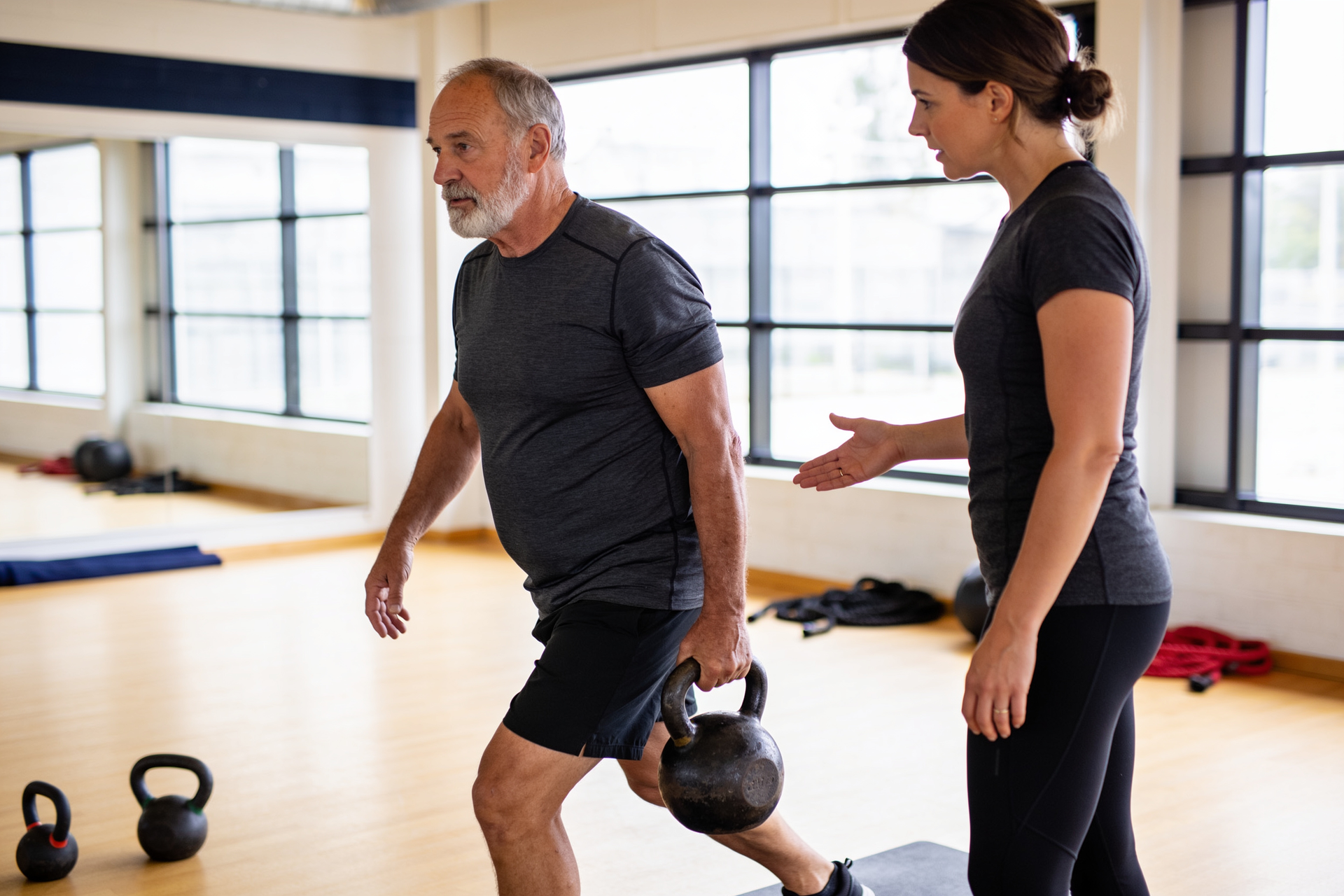
Readiness is not only about getting through the activity. It is about how you feel afterward. If you finish the hike but lose the next two days to soreness, stiffness, or a flare-up, your body made it through the event without truly owning the capacity behind it.
Recovery tolerance improves when training is progressed gradually. You expose the body to enough stress to adapt, then give it enough time and support to come back a little stronger. That rhythm is what separates real readiness from a one-time push that leaves you wrecked.
Real-life examples of adventure training
A strong adventure-prep plan should not look like random exercises picked because they seem functional. It should connect specific training to specific life demands. Here is how the six qualities translate into the work.
Lower-body strength for hills, stairs, and uneven ground
Lower-body work should include sit-to-stand, step-ups, split-stance patterns, hip hinges, calf work, and controlled lowering. Two short strength sessions a week, progressed gradually, is enough to build this for most people. Climbing is one demand, but descending is where most people feel their knees, hips, ankles, and balance the most. Step-down control, tempo work, and single-leg stability are what prepare you for the way down, not just the way up.
Core and carry strength for packs, luggage, and gear
Core training should not stop at crunches. For an active life, the trunk needs to brace, resist rotation, transfer force, and stay organized while the arms and legs do their jobs. Suitcase carries, farmer carries, rows, presses, and anti-rotation drills all teach the body to manage load while staying steady.
Mobility for long days and better movement options
Mobility work should target the places your goal demands most. For travel and hiking, that usually means ankles, hips, calves, hamstrings, the upper back, shoulders, and feet. The goal is not to stretch everything forever. It is to give the body enough access to move well, then strengthen the positions it now needs to use.
Balance and coordination for trail, travel, and daily confidence
Balance should progress from supported to dynamic. You might start with split-stance holds near a wall, then add weight shifts, step-and-hold drills, carries, head turns, or direction changes. The point is not a drill that looks impressive. The point is real life that feels steadier. This sits next to our balance and coordination work, which a separate Royal Blue Fitness article covers in more depth.
Conditioning that matches the demand
Conditioning should mirror the moment ahead. A long hike may call for steady aerobic work plus incline tolerance. A walking-heavy trip may call for back-to-back walking days. A recreational sport may call for short bursts, direction changes, and recovery between points. The more closely your conditioning matches the real demand, the less surprised your body feels on the day.
How far ahead should you start preparing?
REI suggests beginning hiking-specific training about eight weeks out, and that lines up with what we see. The honest answer depends on how much runway you have, so here is how we think about three common windows.
With 8 to 12 weeks, you have a real runway. You can build strength, add conditioning volume, practice carrying, address range-of-motion limits, and taper before the event. This is the ideal window for a trip, hike, race, or active vacation that genuinely matters to you.
With 4 to 6 weeks, you can still make useful progress. The aim is consistency, specific preparation, and no last-minute spikes. This window is good for building repeatable movement, raising confidence, and finding the right modifications before the day arrives.
With 2 weeks or less, the goal changes entirely. You are not building a new body overnight. You are trying to arrive fresh, mobile, and confident. That means practicing the basics, rehearsing your pace, skipping aggressive new exercises, and making smart calls about sleep, hydration, footwear, and recovery.
Common mistakes people make before an active trip
The most common mistake is only walking more. Walking matters, but it does not automatically build the strength, balance, step-down control, or load tolerance a real adventure asks for.
The second is training hard too close to the event. Soreness is not readiness, and a last-minute push tends to leave the body irritated at exactly the wrong time. The third is ignoring load: if your trip involves a pack, a suitcase, a cooler, or a camera bag, your body should feel that weight in training before the real day.
The fourth is treating pain as the only signal worth watching. A good plan also reads fatigue, balance, stiffness, recovery, confidence, and how well your movement holds up as the day gets longer. The fifth is assuming adventure training has to be extreme. Most people do not need a punishing program. They need a progressive one that fits their body and their goal.
Where an assessment makes the plan specific
A strength and range of motion assessment answers the question that actually controls readiness: what is limiting you right now? For one person it is hip strength. For another it is ankle mobility, balance, knee control, grip, back tolerance, aerobic base, or recovery capacity. Each one points to a different plan.
Without that information, people guess, and the guesses tend to run backward. They add cardio when they need strength. They stretch when they need control. They avoid hills when they need step-down practice. They push harder when they need better pacing. An assessment turns those guesses into a plan that is specific, safer, and far more useful, because it builds from the one quality holding you back rather than the one you already do well.
Train before the moment, not after it
The best time to prepare for a meaningful physical moment is before your body is forced to prove itself. That does not mean living in fear of every trip and trail. It means respecting the simple fact that the things you love require capacity, and capacity is built ahead of time.
At Royal Blue Fitness, we build that capacity through the six qualities in our readiness model: range of motion, strength, balance, endurance, load tolerance, and recovery. Whether your next adventure is a hike, a vacation, a family trip, a sport, or simply a more active life, the goal is the same. Build a body that is ready when the moment arrives.
If you have something coming up, do not wait for the day to test you. Start with a
strength and range of motion assessment and build a plan around the demands your next adventure actually requires.
Adventure Fitness Training: Frequently Asked Questions
How do I prepare my body for an active trip?
Start by listing the real demands of the trip: walking time, stairs, terrain, luggage, load, heat, and how much recovery you get between days. Then build strength, mobility, balance, and conditioning around those specific demands rather than training in general. The closer your preparation mirrors the trip, the less your body will be caught off guard.
Is walking enough to train for hiking or travel?
Walking helps, but on its own it is usually not enough. Hiking, travel, and active vacations also ask for strength, balance, step control, carrying tolerance, and the ability to recover from several active days in a row. Walking builds the aerobic base while strength and balance work build the parts that keep you steady and pain-free.
How long before a hike or adventure should I start training?
Eight to twelve weeks is ideal for meaningful progress, and REI uses a similar eight-week starting point for hiking-specific training. Four to six weeks can still help noticeably. With two weeks or less, shift the goal to staying fresh, rehearsing the basics, and avoiding aggressive new exercises that could leave you sore on the day.
What exercises help with hiking, stairs, and uneven terrain?
Step-ups, supported split-stance work, hip hinges, carries, balance drills, calf work, and controlled lowering are the common categories. Controlled lowering, sometimes called a heel-down or step-down, matters most for descending, which is where many people feel their knees. The right version of each depends on your current strength, range of motion, and comfort level.
Should I strength train before a walking-heavy vacation?
Yes. Strength training helps your hips, legs, trunk, and shoulders tolerate long days of walking, stairs, luggage, and repeated standing. It should be progressed gradually over several weeks rather than rushed in right before you leave, since a hard new program too close to the trip can leave you sore instead of ready.
What if I have knee, hip, or back concerns before my trip?
Start with an assessment and sensible modification. Pain does not automatically mean you cannot prepare, but it does mean the plan should be specific and progressive. When symptoms are new, severe, or getting worse, coordinate with your healthcare provider before training, since those signals belong with a clinician rather than a workout plan.
Here are our latest articles! Click to read more.