Stay Cool and Strong: Joint-Friendly Summer Fitness for Happier Joints All Year
Most summer fitness advice treats heat as a skin problem: wear sunscreen, drink water, avoid the midday sun. All true, and all in this guide. But there is a quieter story the season tells, and it shows up in the joints. The fix is to train in a joint-friendly way through the warm months: lower the impact, respect old injuries, and, the lever almost nobody talks about, control your speed so a hot, tired body does not rush itself into a flare.
At Royal Blue Fitness, we coach adults who want summer training that feels safe, smart, and sustainable, not all-or-nothing. The aim is simple: use the long days to build strength, mobility, and confidence, so when the colder months arrive you are not starting from zero. General summer fitness tips are a fine starting point. From there we layer on the joint-specific structure that keeps people moving comfortably.
Below is a practical guide to making the most of sensible sun exposure, protecting your skin and your joints in the heat, and building outdoor routines that keep you calm, strong, and consistent.
Heat is a joint variable, not just a skin one
Here is the observation we keep coming back to in our own coaching. Sometimes a joint flare-up is easy to trace: a knee that got overused on a long weekend, a shoulder that paid for a bad night of sleep. Often, though, the cause is harder to pinpoint, and one pattern shows up more than people expect. It tracks with big swings in temperature.
Everyone knows cold, damp weather can make joints ache. What surprises clients is the other end of the thermometer. We have watched very hot stretches set off cranky joints just as reliably as a cold snap does. It is not the headline most summer articles lead with, but in our practice the heat itself, not only the activity, seems to be part of the trigger.
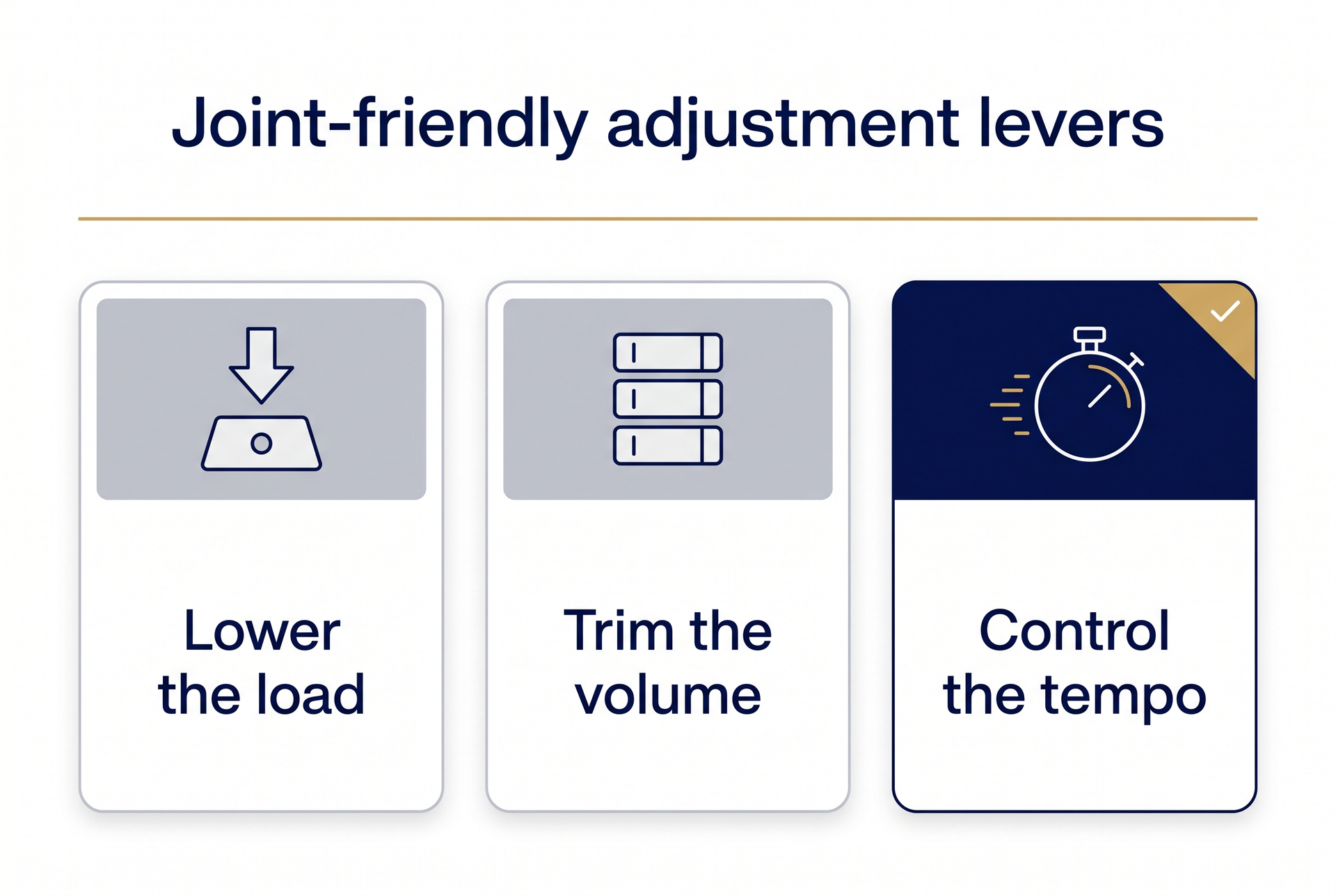
You do not have to know the exact mechanism to respond well to it. When the heat climbs and joints start talking, we shift to more joint-friendly training. Most people assume that just means swapping exercises or cutting the load. Those are on the table. But the most useful lever in summer is the one that gets overlooked, and it is the next section.
The summer lever almost nobody uses is tempo
When people are hot, tired, and sweaty, something predictable happens to their reps: they speed up. The body wants the set to be over, so it rushes. We will be honest, this includes the coach. On a sweltering afternoon the urge to just finish is universal.
That rush is exactly where summer joints get into trouble. Fast, uncontrolled reps hand the work to momentum and to the joint instead of the muscle. Slowing down does the opposite. Controlling the speed of a movement, the tempo, keeps the muscles loaded through the whole range, smooths out the jarring end points, and gives you constant feedback about what feels good and what does not.
So the cue we end up giving most in summer is not "add weight" or "do more." It is "slow it down." Here is what controlling tempo looks like in practice:
- Lower under control. Take three to four seconds to descend into a squat, a hinge, or a push-up. The lowering phase is where control protects the joint.
- Pause briefly. A one-second hold at the bottom kills momentum and forces the muscle, not the joint, to do the next part.
- Rise with intent, not a heave. Stand or press up smoothly rather than jerking to standing.
- Let breathing set the pace. If you are gasping and racing, that is the signal to slow the rep down, not push it faster.
None of this requires extra equipment or a single added rep. It is the same workout, paced so your joints can keep up with a body that is already working hard just to stay cool. Cutting load and trimming volume help too, and we use both. But tempo is the adjustment that does the most quiet work in the heat, and it is the one we have to coach on purpose, because the body will not choose it on its own.
Why summer is prime time for joint-friendly exercise
Warm weather is not just pleasant. It changes how your body feels and moves, and most of those changes are on your side. When temperatures rise:
- Circulation gets easier. Blood vessels dilate more readily, which supports blood flow to muscles and connective tissue.
- Joints often feel looser. Many people, especially with arthritis or old injuries, notice less stiffness than in cold or damp conditions.
- Daily movement climbs on its own. It is simply easier to get outside, which nudges your step count up without a formal workout.
Outdoor exercise also offers something indoor training does not. Resources like this
overview on exercising outdoors note how fresh air, natural light, and varied terrain can support heart health, mental well-being, and long-term consistency. In short, summer opens a window: build strength in joint-friendly ways, sharpen balance on real-world terrain, and pair movement with daylight for a steadier mood and energy.
What sensible sun exposure does for body and mind
We hear plenty about the risks of sun exposure, and they are real. Handled sensibly, moderate sunlight also offers genuine benefits. Patient-facing guidance from
Cleveland Clinic explains that just 10 to 30 minutes of sun on bare skin helps your body produce vitamin D, lifts mood through serotonin, and helps regulate the sleep cycle. Here is how that connects to your training:
- Vitamin D and bone health. Vitamin D helps your body absorb calcium, one of the main building blocks for strong bones. That matters when you want resilient support around your joints for the long haul.
- Mood and motivation. Daylight is tied to better mood, and a better mood means you are more likely to start the workout and less likely to talk yourself out of it.
- Sleep and recovery. Morning and daytime light help set your body clock, so you fall asleep more easily, and better sleep means better recovery from strength work.
Put simply, sensible sun supports your energy and mood, which makes consistency easier than relying on willpower alone. How much sun is right for you depends on skin tone, location, and season, so Cleveland Clinic notes it is always best to ask your healthcare provider what is safe for you.
Protect your skin and beat the heat so you can keep moving
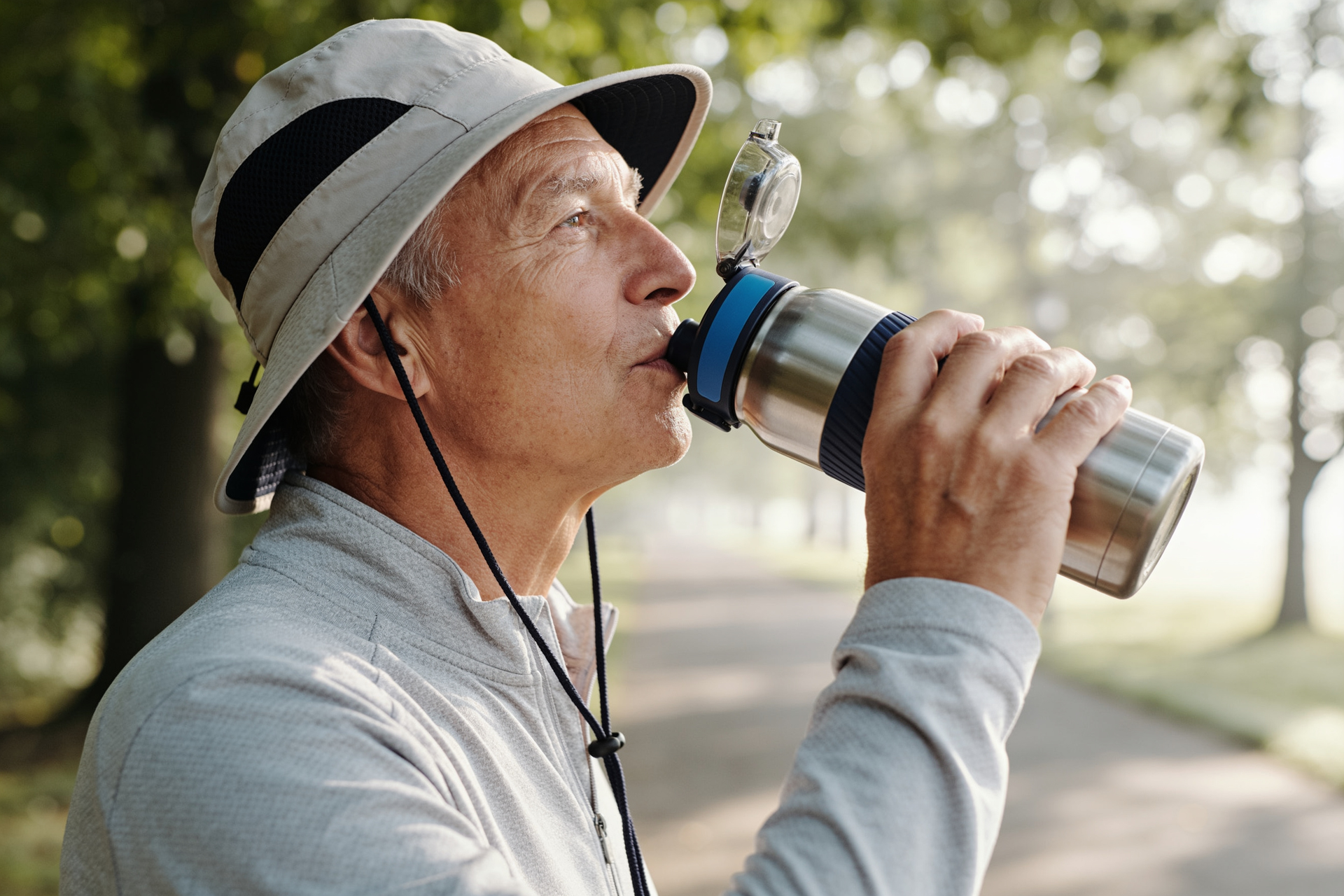
The goal is not to chase a sunburn. It is to collect the benefits of daylight without frying your skin or overloading your system. Think of this as your permission slip, with guardrails.
Time your sessions for the cooler hours
- Aim for early-morning or later-evening sessions, when the sun is lower and temperatures are kinder.
- If you must train midday, stay in the shade, shorten the session, and lower the intensity.
Cover the skin-protection basics
Dermatology guidance from the
American Academy of Dermatology recommends a broad-spectrum sunscreen rated SPF 30 or higher on exposed skin. For application, the AAD how-to-apply-sunscreen
guidance advises reapplying every two hours outdoors, and immediately after swimming or sweating. Lightweight, long-sleeve clothing and a hat add protection without much extra heat if the fabric is breathable.
Hydrate and manage the heat
Heat safety deserves the same care as sun safety. Guidance from the
CDC on heat and your health lines up with a simple approach: do outdoor activity during the coolest parts of the day, stay in the shade, take breaks, and carry a water bottle you refill through the day. The CDC also lists the warning signs your body is overheating, including muscle cramping, heavy sweating, dizziness, headache, weakness, and nausea. If those show up, stop, cool down, and hydrate. The American Heart Association offers similar
advice on staying active in warm weather.
- Drink ahead of thirst. Take in water before, during, and after outdoor sessions, not just once you feel thirsty.
- Plan for longer or sweatier efforts. Bring an insulated bottle, and consider electrolytes if you sweat heavily or train longer than 45 to 60 minutes.
- Build in shade breaks. A few minutes in the sun, then a couple in the shade to sip and cool, keeps your core temperature in check.
One important note on medication and heat. The CDC points out that many common medicines can make you more prone to dehydration or overheating on hot days. This is not a reason to change anything on your own. If you take a daily medication and plan to train in the heat, ask your doctor or pharmacist how it interacts with hot weather and exercise, and never stop or adjust a prescription without their guidance.
Play the long game. Protecting your skin and managing heat wisely lets you enjoy summer movement for years, not one intense season that ends in burnout or injury.
Joint-friendly routines you can take outside
This is where it comes together: daylight, warmer joints, and routines that respect past injuries and current limits. Aim for a weekly mix of three pillars, low-impact cardio, strength and stability, and mobility and recovery. The examples below put those pillars to work through a joint-friendly lens, and every one of them rewards the tempo control from earlier.
Walking intervals on soft terrain
- Choose a shaded path, park loop, or quiet neighborhood route.
- Warm up with 5 to 10 minutes of easy walking.
- Alternate 1 to 3 minutes of brisk walking with 2 to 3 minutes at an easy pace.
- Keep your posture tall, arms relaxed, and stride comfortable rather than forced.
Uneven outdoor terrain challenges balance and coordination more than a treadmill, which helps with fall prevention and joint stability.
Hill walks or gentle hiking
- Pick short local hills for strength and conditioning without high impact.
- Walk up at a steady pace you can still talk through.
- Walk down slowly, staying aware of your knees and ankles.
Uphill walking builds hip, glute, and calf strength with less pounding than running. Downhill can bother some knees, so shorten your stride or reduce the incline if you feel discomfort.
Water-based sessions
If you have access to a pool or calm water, the buoyancy relieves pressure on your joints while your muscles still work, which is ideal for back, hip, or knee discomfort.
- Try water walking in the shallow end.
- Add gentle leg swings, knee lifts, or side-steps against the water resistance.
- Keep each movement slow and controlled, letting the water, not momentum, do the resisting.
Park bench strength circuit
Find a sturdy bench or low wall and cycle through these, with the slow tempo from earlier on every rep:
- Sit-to-stand squats, using your hands on your thighs to assist if needed.
- Step-ups to a comfortable height.
- Incline push-ups with your hands on the bench.
- Standing band rows with a resistance band anchored around the back of the bench.
Do 8 to 12 controlled reps of each, rest, then repeat for 2 to 3 rounds. Quality beats quantity every time. This trains legs, core, and upper body with familiar patterns and no heavy loads, while still giving you fresh air and daylight.
A five-minute mobility sequence for the spots that lock up
Mobility is the pillar people skip, then miss most. It is also the easiest to do daily, and summer warmth is the perfect time because tissue moves more freely. Rather than a vague "stretch a little," here is a short, named sequence that hits the areas that tend to stiffen: ankles, hips, upper back, and shoulders. Move slowly and stay inside a comfortable range, never forcing.
- Ankle rocks, 30 seconds each side. In a staggered stance, gently rock your front knee forward over your toes and back, keeping the heel down, to free up the ankle.
- Standing hip circles, 5 each direction per leg. Holding a wall for balance, lift one knee and draw slow circles to open the hip.
- Thoracic rotations, 5 each side. With hands across your chest, rotate your upper back left and right, letting the mid-back, not the lower back, do the turning.
- Cat-cow or standing wall slides, 8 slow reps. Round and extend the spine, or slide your arms up and down a wall, to wake up the upper back and shoulders.
- Shoulder rolls and reaches, 30 seconds. Roll the shoulders back, then reach overhead and across to finish, easing tension from the neck and upper back.
Five to ten minutes of this on most days keeps stiff areas honest. It pairs naturally with the warm-up before any of the routines above, and it is gentle enough to repeat on a rest day.
Use summer momentum to feel better when temperatures drop
Think of summer as your offensive season for joint health. You are not just staying busy. You are building capacity so winter does not hit as hard. Use the warm months to strengthen legs, hips, and core, sharpen balance outdoors, build a walking or cycling habit, and practice regular mobility, and you create a buffer against the stiffness and inactivity that creep in during colder, darker months. A simple weekly frame:
- Two to three days of outdoor strength, or mixed strength and cardio.
- Two to three days of low-impact cardio like walking, cycling, or swimming.
- Five to ten minutes daily of mobility, using the sequence above.
You do not need perfection. You need repetition. Short, consistent sessions beat random heroic workouts every single time.
Signs to scale back or call in backup
Even with joint-friendly routines, there are times to pause, modify, or get support. Pay attention to:
- Pain that sharpens, lingers more than 24 to 48 hours, or changes how you walk or move.
- Swelling, warmth, or visible joint irritation after sessions.
- New numbness, tingling, or a joint that buckles.
These are signals to scale back intensity, shorten sessions, or shift to gentler movement until things calm down. If symptoms persist or worsen, it is time to talk with a qualified medical provider.
If you are ready to train but still feel stuck, a structured, pain-smart program can save you time and frustration. At Royal Blue Fitness, we build summer fitness plans that respect past injuries, focus on joint-friendly progress, and follow a system instead of guesswork, right down to coaching the tempo that keeps hot-weather joints comfortable. If you want help turning this into a personalized plan, you can
book a pain-smart assessment with us and we will build a summer routine that fits your life and carries you into fall and winter.
Frequently Asked Questions
Is it safe to exercise outdoors in summer heat if I have joint pain?
For many people it can be, as long as you train sensibly: pick the cooler parts of the day, keep intensity moderate, hydrate well, control your tempo, and use shade breaks. Warmer joints often move more comfortably in summer. That said, heat adds stress, so listen to your body, and if you have a health condition affected by heat, check with your medical provider about what is appropriate for you.
Why do very hot days seem to bother my joints?
It is more common than people expect. While cold and damp are the usual suspects for achy joints, in our coaching we see big heat swings stir up cranky joints too. You do not need to pin down the exact cause to respond well: ease the impact, manage the heat, and slow your movement speed so a hot, tired body is not rushing its reps. If a joint is persistently painful or swollen, that is a conversation for your medical provider.
How does slowing down my reps protect my joints?
Fast, rushed reps hand the work to momentum and to the joint. Controlling the speed, especially a slow three-to-four-second lowering phase, keeps the muscle loaded through the full range and smooths out the jarring end points. In the heat, when the body naturally wants to speed up to finish, deliberately slowing down is one of the simplest ways to keep joints comfortable without changing your routine.
How much sun do I need for vitamin D?
Less than most people think, often in the range of 10 to 30 minutes, and it varies by skin tone, location, and season. The aim is sensible, regular exposure rather than long, burning sessions. Because individual needs differ, a medical provider can advise on testing or supplements if you are concerned about your levels.
What are the signs I should stop a summer workout?
Stop or scale back for sharp or new pain, dizziness, nausea, heavy sweating, or a joint that swells or buckles. Pain that lingers well past a session or changes how you move is also a signal to back off. When symptoms persist or worsen, talk with a qualified medical provider rather than pushing through.
Here are our latest articles! Click to read more.

Strength for Independence After 50: Training for Stairs, Carrying, Travel, and Getting Off the Floor