Functional Strength Training vs Traditional Strength Training: What Is the Difference and Who Benefits Most?
You have a finite number of hours and a lot of conflicting advice. One coach swears by barbells and machines.
Another says functional training is the only thing that matters once you are past your twenties. Underneath the noise is a real decision: where should your time and effort actually go?
This guide lays the two approaches side by side: what each one is, where they overlap more than people admit, where they genuinely differ, and how to choose based on your goals instead of someone else's opinion.
Side by side, at a glance
Before the detail, here is the whole debate in one view. Read down the column that matters most to you.
| What you are comparing | Functional strength training | Traditional strength training |
|---|---|---|
| Main goal | Strength you can use in daily life | Maximal strength, muscle size, or a specific lift |
| Typical tools | Free weights, kettlebells, bands, bodyweight, loaded carries | Barbells, dumbbells, and machines on set lifts |
| Movement style | Whole-body, unsupported, several joints at once | Often supported and predictable, one target at a time |
| Measures success by | Easier stairs, safer lifting, real-life capability | A number on the bar that climbs month to month |
| Best fit for | Everyday capability, returning after a break, protecting hobbies | A measurable strength or physique goal, clear progress tracking |
The table makes the tension look sharp, but the rest of this guide shows why the honest answer is usually a blend with a clear lean, not a side to join.
You are choosing emphasis, not a team
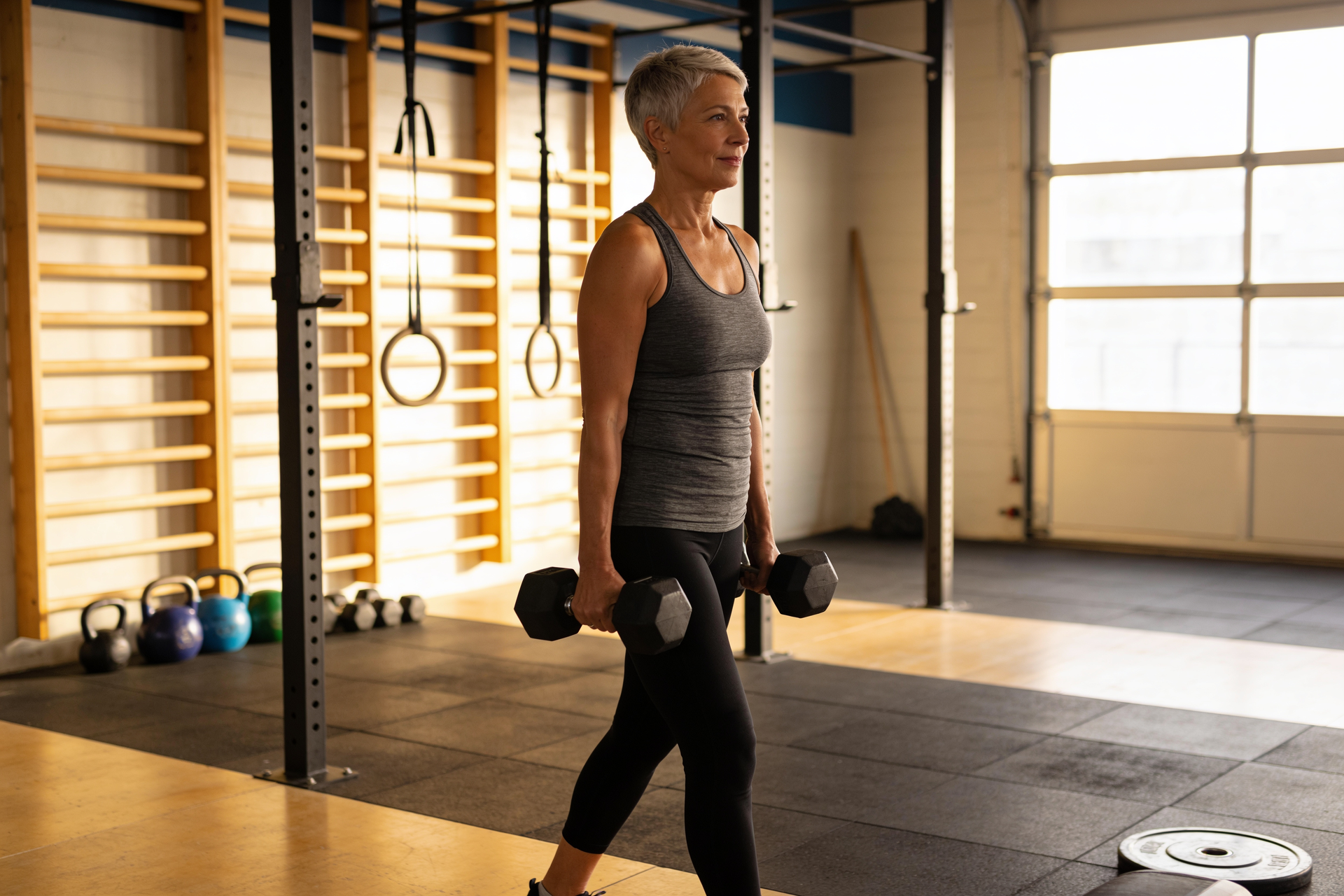
The choice is not good versus bad. Both functional and traditional training build strength, and both can be done well or badly. What you are really choosing is emphasis: how much of your training is organized around isolated, loadable lifts versus whole-body movements that mirror daily life.
Getting clear on that one distinction makes the rest of the decision much simpler. It turns a tribal argument into a practical question about what you want your strength to actually do for you.
Once the question is practical, the answer stops being about which approach is fashionable and starts being about which approach fits your week, your body, and your goals. That shift is the whole point, because the right plan is personal, not universal.
Functional strength training, defined
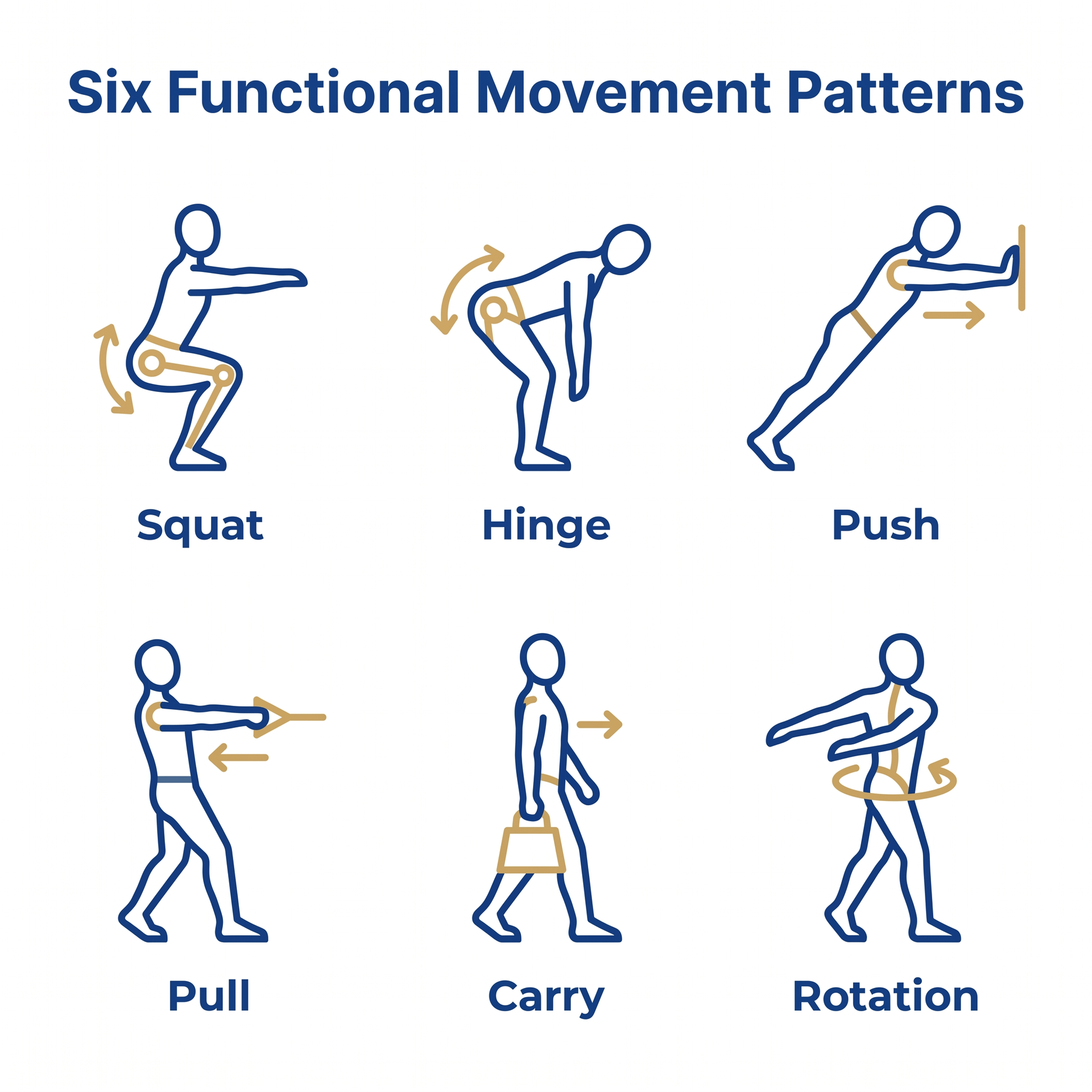
Functional training organizes work around the movement patterns you use every day: the squat, hinge, push, pull, carry, and rotation. The goal is strength that transfers to real tasks, not just to the gym.
In practice, it leans on free weights, kettlebells, bands, bodyweight, and movements that ask several joints and muscles to coordinate at once. Unsupported by design.
A dumbbell does not hold a fixed track for you the way a machine does, so your stabilizing muscles stay switched on the entire time. That extra demand is a feature, not a flaw, because real life never puts you on a fixed track either.
When you carry an uneven load or step onto an unstable surface, the same stabilizing muscles you trained are the ones that keep you safe.
Balance comes along for the ride. Because the movements are unsupported, they build coordination and steadiness alongside raw strength.
A systematic review of resistance exercise and balance found that strength work can improve balance ability in adults at the same time it builds strength, the steadiness that keeps you upright on uneven ground or when a load shifts without warning. That is part of why the style appeals to people who want training to protect how they move, not just how they look.
Measured by real-life capability. Did the stairs get easier?
Does lifting feel safer? Do long days on your feet leave less to recover from?
A functional program is perfectly happy to load you heavily, but it cares whether that strength shows up where you live. The win condition is a body that handles whatever the day throws at it, not a single number.
Traditional strength training, defined
Traditional strength training centers on structured resistance work, progressing specific lifts over time: squats, deadlifts, presses, rows, and machine-based accessory work, usually organized by muscle group or by a lift you are trying to improve.
Predictable by design. When the movement is stable and repeatable, you can push closer to your limits safely and see exactly how much you have improved from one month to the next. Research summarized by the National Strength and Conditioning Association shows that structured resistance training reliably builds force and muscle when the load is progressed sensibly.
Measured by progressive overload. By carefully controlling movement and load, you can add measurable strength and muscle to a target in a way that is easy to track week to week. If your goal is a bigger deadlift, more muscle, or a clear number that climbs over months, traditional training is built for exactly that, and the clarity keeps a lot of people coming back.
Structure is its own benefit. Because the plan is easy to follow and the progress is easy to see, you walk in knowing exactly what you are doing that day and walk out with a number that tells you whether it worked. For a lot of people, that clarity is the difference between training and just intending to.
Shared foundation, different emphasis
Here is what the loudest voices online tend to skip: these approaches share a foundation. Both build usable strength, and both rely on gradually doing a little more over time.
A barbell deadlift is a loaded hinge. A goblet squat is both a functional movement and a textbook strength lift.
A heavy farmer carry is as traditional as it is functional.
The labels describe emphasis, not separate universes of exercise. Strip away the branding and you find the same principle underneath: load a movement, recover, and load it a little more next time.
The American College of Sports Medicine's 2026 resistance training guidelines make the freeing point that the biggest returns come from consistent participation in any sensible program, not from chasing complexity. The best program is the one you will actually keep doing.
Real differences: emphasis and transfer
The meaningful differences show up in emphasis and transfer, not in a hard wall. Four comparisons make the tradeoff clear.
Goals and outcomes
Traditional training is the cleaner tool when the goal is maximal strength, muscle size, or improving a specific lift, because it isolates and measures so well. Functional training is the cleaner tool when the goal is moving through life with less effort, because it rehearses whole, unsupported movements rather than single muscles. Name your goal first, and the emphasis usually picks itself.
Equipment and setting
Machines reduce the balance and coordination demand of a movement, which is genuinely useful for safely targeting a muscle or training around an injury. Free weights and bodyweight keep that demand in, which builds stability and coordination along with strength.
A 2023 meta-analysis comparing free weights and machines found that both build strength and muscle comparably, with gains specific to how you train, so the choice comes down to your goals and the stability you want to train, not to one being better than the other. Neither is cheating; they are different tools for different jobs.
This is also where coaching judgment earns its keep. When someone comes to us at Royal Blue Fitness rebuilding after a knee issue, we will often load the quad on a machine first, so the rest of the body does not have to stabilize a cranky joint, then graduate them to loaded carries and free-weight work once their control holds up. The tool follows the assessment, not the trend.
Put plainly: a machine can be the safest way to rebuild a muscle after an injury when you want to load one area without asking the rest of the body to stabilize. A free-weight carry can be the best way to prepare for hauling luggage through an airport. The smart move is to pick the tool that matches the job in front of you.
Everyday transfer
This is the heart of it. Strength practiced in a fixed, supported path transfers best to that exact path.
Strength practiced through full, unsupported movement transfers more readily to the messy demands of daily life. A Cochrane review of progressive resistance training links steady strength work to measurable gains in everyday tasks such as rising from a chair and climbing stairs.
If transfer to real life is your priority, that tilts the balance toward a functional emphasis.
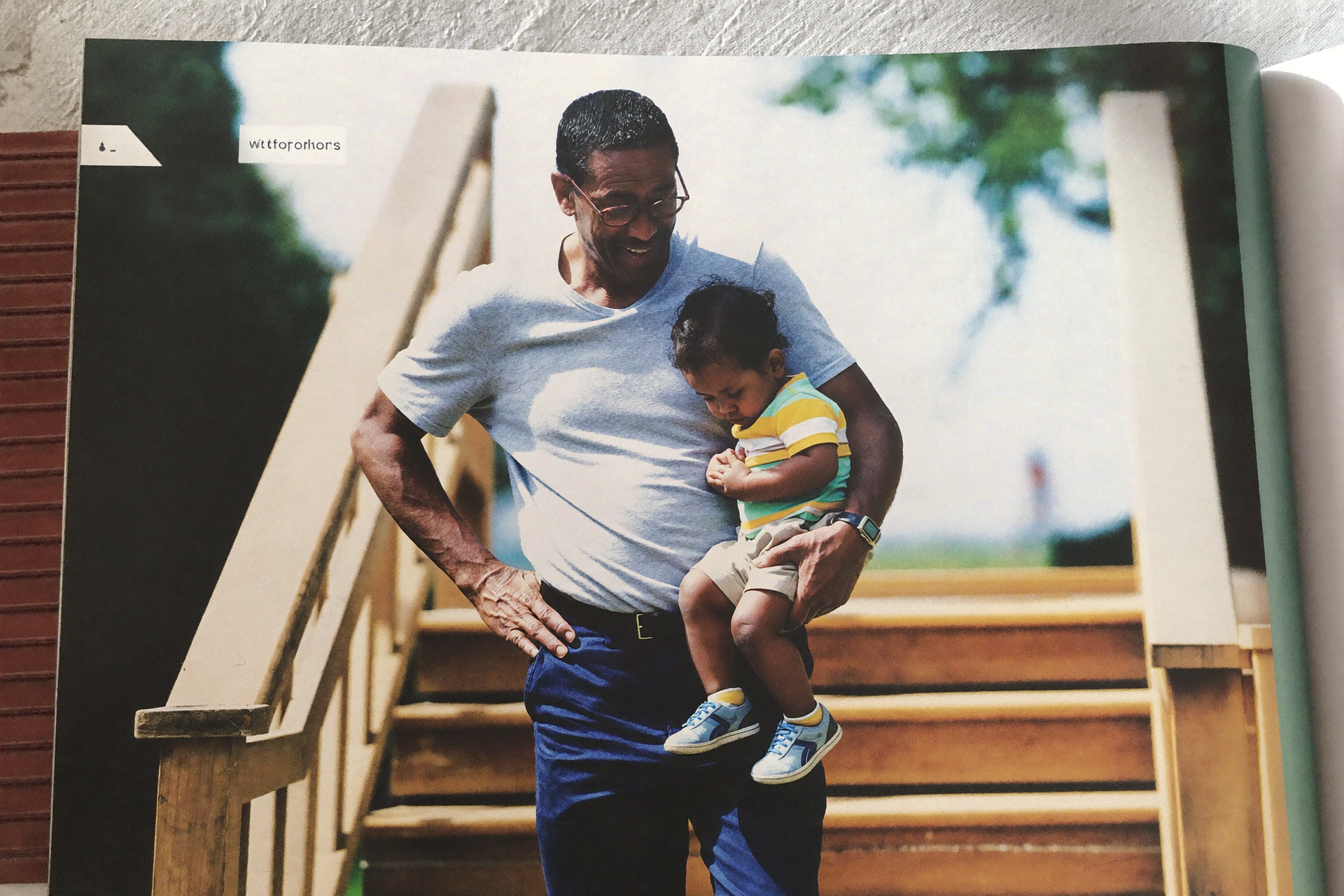
A runner whose knee flares in July, for instance, often keeps all the cardiovascular work by moving it to a bike or the pool, and only then discovers the effort was never the problem. Catching your balance on a curb, lifting an awkward box, carrying a child on one hip: those are the unscripted demands a functional emphasis rehearses directly, and they rarely show up on a machine that quietly did the stabilizing for you.
Measurement and progression
Traditional training wins on clean measurement. A barbell weight is a precise, honest number, and watching it climb is motivating.
Functional progress is just as real but sometimes fuzzier: more reps, longer carries, steadier balance, easier daily tasks. If clear numbers keep you consistent, track a couple of functional benchmarks too, like how long you can carry a given weight or how easily you get off the floor.
Match the approach to where you are now
Rather than crowning a winner, match the approach to where you are right now.
Choose functional-first if: your main goal is everyday capability; you are returning after a long break; you want training to protect your independence and your hobbies; or machine routines leave you strong in the gym but not in your life. Real-life movement and confidence also fit the kind of activity the CDC recommends for adults, which is part of why the style suits mature adults who care more about staying capable than about peak numbers.
Choose traditional-first if: you have a specific strength or physique goal; you enjoy progressing measurable lifts; you are new and want very controlled movements while you build a base; or you want the clearest possible way to see yourself getting stronger over months.
In our experience, the people who thrive functional-first are usually the ones returning after time away or training around an achy joint. We start them lighter than they expect on purpose, because clean movement patterns built now save months of setbacks later.
Most people should blend both
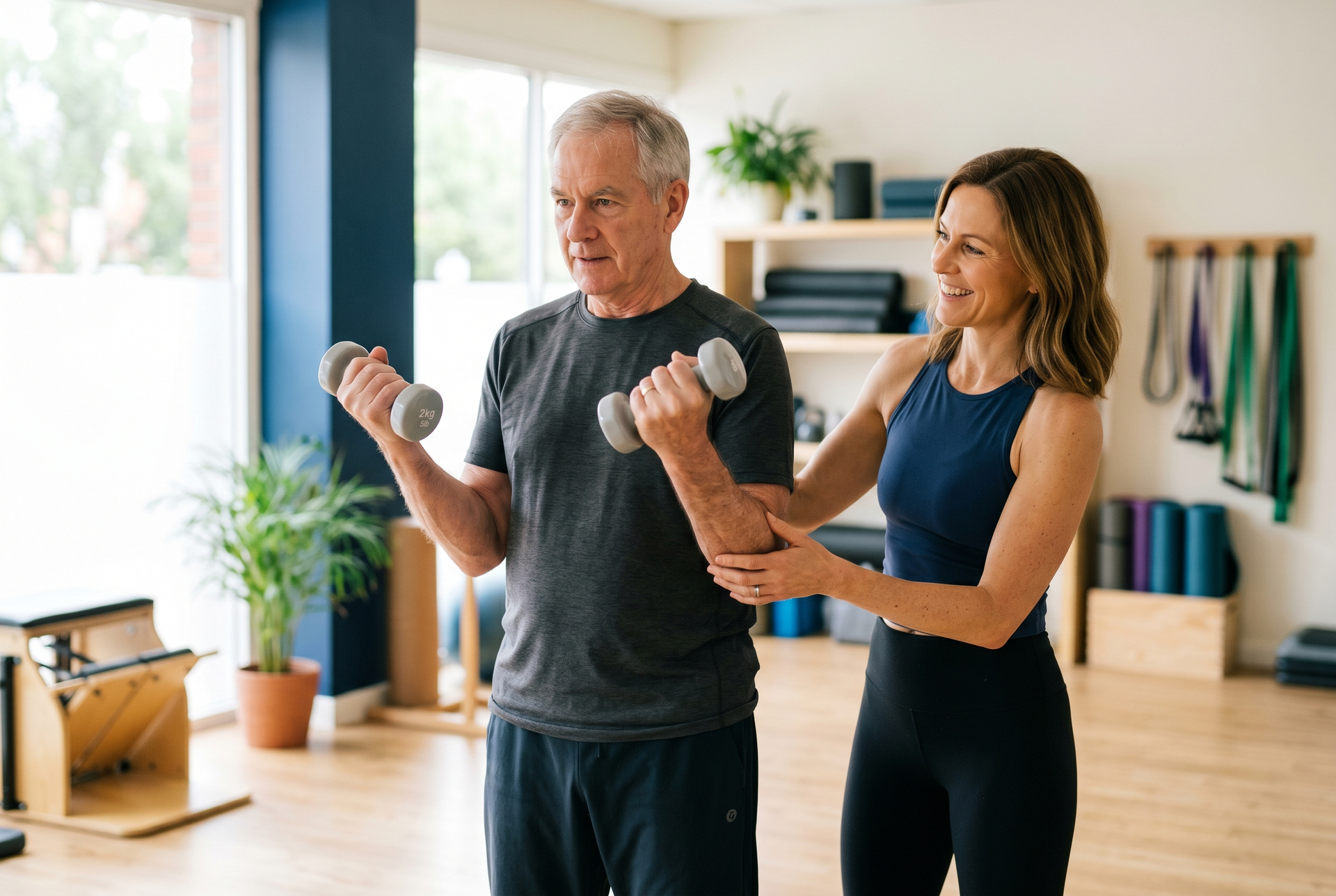
For most adults, the smartest answer is not either-or. A well-built program uses a small core of progressed strength lifts to build a reliable base, then spends most of its energy on movement patterns that carry into daily life.
How we set the ratio. In our programs at Royal Blue Fitness, we usually anchor the week with two progressed strength lifts, then build the rest around movement-pattern work.
We set that ratio from what the Strength and Range of Motion Assessment shows about a person's control, history, and goals, not from a fixed template. From there, you adjust based on what your body and your schedule tell you.
What shapes the ratio. It depends on your goals, your history with pain or injury, your confidence in the gym, and what your weeks actually demand of your body. A reasonable starting blend for many adults is a couple of core strength lifts surrounded by movement-pattern work that keeps daily life easy, then honest adjustments from there.
A simple way to decide
If you want a shortcut, ask three questions:
- What do I most want six months from now: a bigger, specific lift, or an easier daily life? That sets your emphasis.
- What is my history: building on a solid base, or rebuilding after time away or an injury? That sets how cautiously you start.
- What keeps me consistent: clear numbers, or feeling better in real life? That tells you how to keep score.
Your answers rarely point to one extreme. They usually point to a blend with a clear lean, and that lean is your starting plan. Revisit the three questions every few months, because the right answer changes as your goals, your body, and your life change.
Build your mix with a starting point that fits you
The functional-versus-traditional debate makes a blurry choice sound like a battle. In reality, both build strength, they overlap heavily, and the best plan borrows from each based on what you are trying to do. The best program is rarely the one that wins an online argument; it is the one you will actually do.
If you would rather not guess at that mix on your own, a Strength and Range of Motion Assessment is a straightforward way to map your strength, your mobility, and any pain history, so your training is built around your answer instead of someone else's trend.
Choosing a training style: common questions
Is functional training better than traditional strength training?
Neither is universally better. Functional training is usually better for everyday capability and transfer; traditional training is usually better for maximal strength and muscle on specific lifts. "Better" only means something once you name your goal, so start there rather than with the label.
Can I do both functional and traditional training?
Yes, and most well-built programs do. A common, sustainable approach is a small core of progressed strength lifts plus movement-pattern work that carries into daily life. Blending the two often keeps training more interesting, which makes it easier to stick with, and consistency is what actually drives results over time.
Which is better for building muscle versus everyday strength?
For maximizing muscle in a specific area, traditional structured training has the edge because it precisely isolates and overloads the target. For strength you can actually use while carrying, climbing, and lifting, functional patterns transfer more directly. Many people want some of both, in which case a blend is the answer.
Is functional training safer for adults 50 and over?
It is not automatically safer, but its focus on balance and real-life movement fits the priorities of many mature adults well. The safest training for anyone is the one matched to their current strength, movement history, and goals, which is exactly what an assessment is designed to identify.
Sharp or persistent joint pain is the exception, and that is worth a conversation with a physician or physical therapist before you push on.
Do I have to use a barbell to get strong?
No. Barbells are an efficient way to load certain lifts, but kettlebells, dumbbells, bands, and even bodyweight can build meaningful strength when load and effort progress over time.
The tool matters far less than consistency and sensible progression. If you only ever have a pair of dumbbells and a doorway band, you can still build and keep meaningful strength for years.
Here are our latest articles! Click to read more.