Farmer Carries Explained: Why Grip, Core Control, and Loaded Walking Matter in Real Life
Picture walking from the car to the front door with both arms full: a heavy grocery bag in each hand, keys pinched in your fingers, refusing to make two trips. Your forearms burn, your core braces, and you walk a little more carefully than usual.
You have just done a farmer's carry workout, the most honest, real-life exercise most people have never deliberately trained. This guide explains what a farmer carry actually builds, why loaded walking carries over so well into daily life, and how to add it sensibly without overdoing it.
What a Farmer Carry Actually Trains
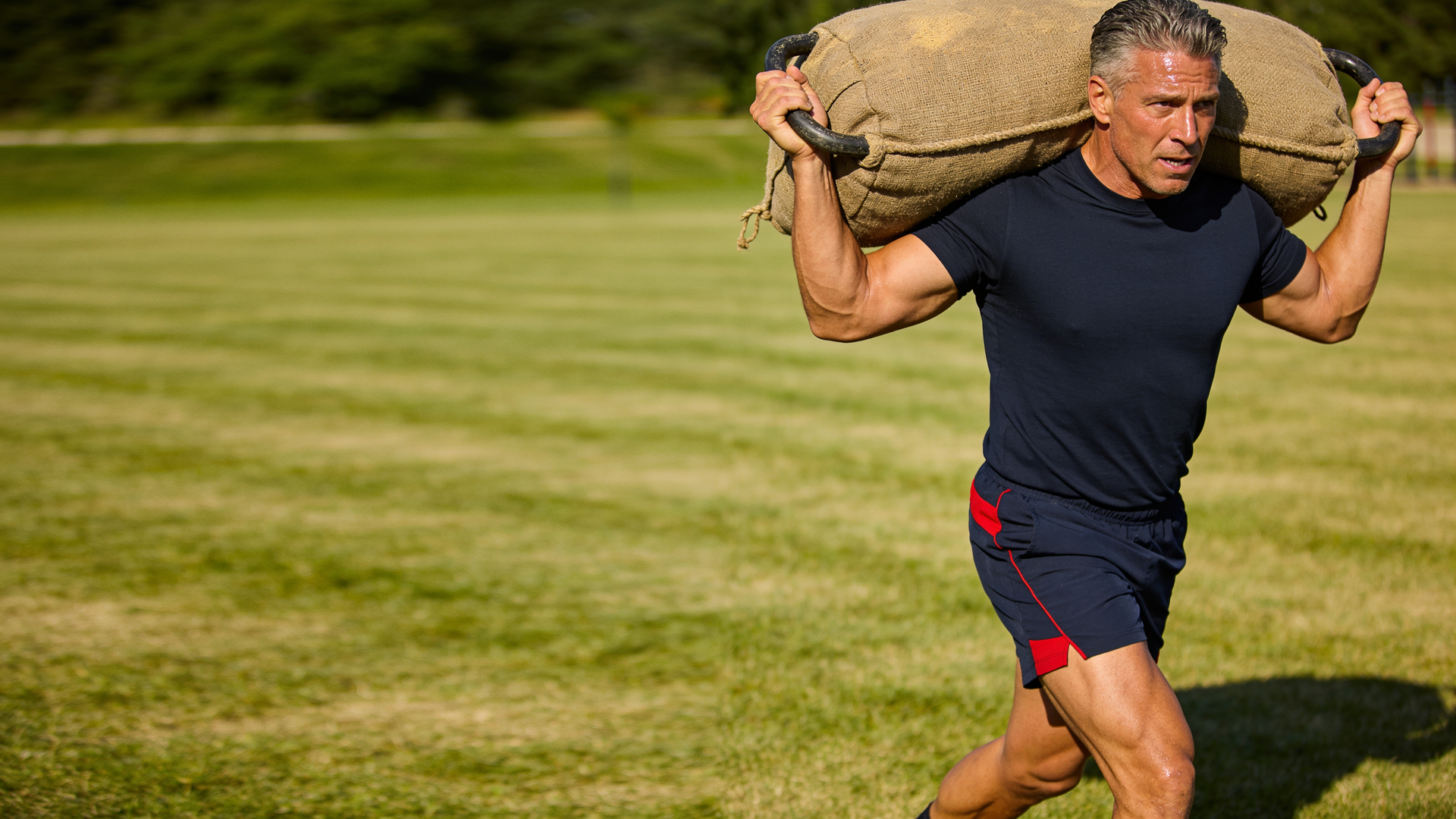
A farmer carry is simple to describe: pick up a weight in each hand, stand tall, and walk. That plainness hides how much is happening.
Carrying a load while you move asks your grip to hold on, your shoulders and upper back to stay stacked, your core to keep your torso from tipping, and your legs to walk under a load they do not usually carry. Strength-and-conditioning resources from groups like the National Strength and Conditioning Association describe loaded carries as a full-body movement that trains the whole system at once, which is exactly why coaches keep coming back to them.
A systematic review of strongman-exercise biomechanics similarly frames the farmer's walk as a loaded carry whose qualities transfer beyond sport to strength and conditioning, rehabilitation, and the everyday loaded carrying of manual work. It is one exercise that quietly rehearses a dozen everyday moments.
What makes the carry so honest is that it cannot be faked. You cannot use momentum, you cannot rest at the top of a repetition, and you cannot cheat the distance.
Either you can hold the load and keep walking with good posture, or you cannot, and that directness is exactly why it transfers so cleanly to real life. The carry also trains your body to stay organized under fatigue, because the last few steps of a hard carry are where posture wants to fall apart, and learning to hold form there is what keeps you safe when a real-world load runs long.
Why Loaded Carries Matter Beyond the Gym
The reason carries earn their place through transfer. Almost nobody needs to carry a barbell across a room, but nearly everyone carries groceries, luggage, water jugs, tools, and children.
Training the carry directly makes all of those feel lighter and builds three qualities that matter well beyond any gym. None of these three is the kind of thing you can see in a mirror, which is part of why they get overlooked, but they are precisely the qualities that decide whether an ordinary day feels easy or exhausting.
Grip Strength as a Real-Life and Health Marker
Grip is the first thing to give out when you carry something heavy, and it is more telling than most people realize. In the international PURE study of nearly 140,000 adults, grip strength was inversely associated with mortality, and even predicted all-cause and cardiovascular death more strongly than blood pressure, though the researchers were careful to call it a marker rather than a cause.
A research review of grip strength in older adults reached a similar conclusion: it reliably reflects a person's overall strength and upper-limb function and predicts outcomes like future physical function, falls, and recovery after a hospital stay, which is why clinicians use it as a quick screening measure. To be clear about what that means: a strong grip does not cause good health, and training your grip is not a treatment for anything.
Grip strength is simply a marker that tends to travel alongside overall capability.
Carries are one of the most practical ways to build it, because holding a real load for a while is exactly what grip is for. There is a difference between the brief, maximal grip you use to open a stuck jar and the enduring grip you need to carry bags from the car without stopping, and carries train the second kind.
That carrying endurance is what most people are actually short on, and it is the most useful version of grip strength for daily life. A few honest carries a week is often enough to hold onto a grip that makes groceries, garden bags, and luggage feel routine instead of daunting.
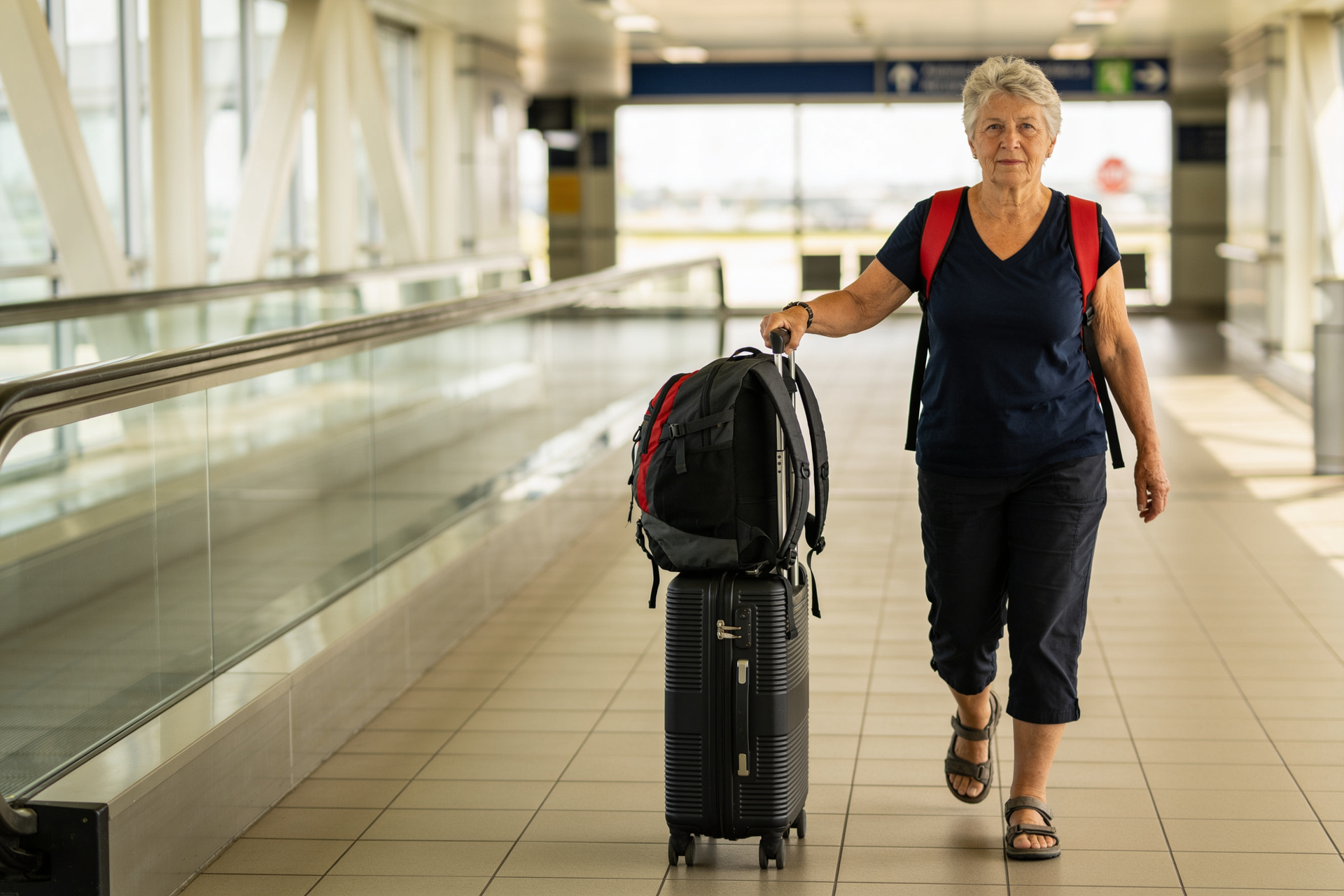
This is the version of strength we care about most, because it is the version that keeps your life yours. One client trained with us from 2022 to 2024 after losing her husband; traveling together had been one of their joys, and once she had grieved, she wanted to keep seeing the world, sometimes with friends and sometimes on her own.
Traveling solo meant managing her own luggage and a loaded backpack through airports and hotels, with nobody to hand a bag to. We did not chase a performance number; we built toward that exact demand, and over her time with us, she worked up to carrying about thirty-five pounds in each hand for several laps of the parking lot.
She kept traveling. What the right load is depends on your age, history, goals, and experience, never a leaderboard; the aim is simply to carry your own belongings, your own distance, with confidence.
Core Control and Posture Under Load
The second quality is trunk control. When you carry weight at your sides, your core has to work to keep you from leaning, swaying, or rounding forward. That is why farmer carries can be useful core training for spinal support, especially when the goal is steadiness rather than endless crunches.
That steady, bracing kind of strength is the same thing that keeps your posture honest when you lift a suitcase or hold a toddler on one hip. It is closely related to the idea of anti-rotation, which is worth understanding on its own if back confidence is a priority for you.
The practical upshot is simple: a trunk that stays steady under a one-sided load is a trunk that complains less about the small, awkward lifts that fill a normal day. Carrying weight evenly in both hands is the gentlest place to start building that steadiness, because the load is balanced and your job is mostly to stay tall.
Balance, Gait, and Carrying Tolerance
The third quality is the simple ability to stay balanced and steady while moving under a load. Walking with weight challenges your balance and your stride in a way that standing still never does.
The National Institute on Aging highlights strength and balance work as a core part of staying active and steady on your feet over the years, and loaded walking trains both at the same time. Standing still and walking are different skills under load, and only one of them shows up when you actually need to move a heavy object across a room.
Carries close that gap by making you practice strength on the move. That moving steadiness is also what helps you adjust when a load shifts unexpectedly, like a bag that settles or a child who leans, because your body has already practiced staying balanced while in motion rather than only while planted in place.
What Farmer Carries Do Well (and What They Don't)
It is worth being honest about the limits, because no single exercise does everything. Farmer's carry workouts are excellent for building grip, trunk stability, posture under load, and real-world carrying capacity.
They are simple, hard to do with poor technique, and they scale easily from light to heavy. That combination makes them unusually beginner-friendly while still being genuinely challenging for stronger people, which is rare in a single exercise.
You can do the same movement in your first week and a year later, simply with more weight or more distance.
What they are not is a complete program. Carries do not replace the squat or the hinge; they do not build large amounts of muscle on their own, and they are not a cure for back pain or any other condition.
If something hurts when you carry, that is a signal to set the weight down and, if it persists, to talk with a qualified professional, not a problem to walk through. Treat carries as one strong tool among several, and they will earn their keep.
The mistake is expecting any single movement to do everything; the fix is to let the carry do the specific job it is excellent at, while other patterns cover the rest.
How to Add Carries Intelligently
You do not need special equipment to start. Two dumbbells, two kettlebells, or even two evenly loaded bags will do. The goal is controlled, tall, steady walking, not a struggle to the finish line. Here is a simple starting framework; let posture, not ego, set the load:
| Variable | Where to start | How to progress |
|---|---|---|
| Load | Light enough to walk tall and calm | Add weight once your grip holds across sets |
| Distance | About 20 to 40 steps per round | Add a few steps each session |
| Rounds | 2 to 3 per session | Add a round before adding load |
| Frequency | Twice a week, at the end of a session | Keep it consistent over time |
How to Hold and Walk
Stand tall with a weight in each hand, shoulders back and down, ribs stacked over your hips. Take smooth, normal steps and breathe steadily rather than holding your breath.
Keep your eyes forward and your torso quiet, resisting the urge to lean toward either side. A good mental cue is to imagine walking tall enough to balance a book on your head, which keeps your spine long and your shoulders set.
Walk with purpose and control rather than rushing, since the goal is steady, high-quality steps, not speed. If your posture starts to break down, that is the end of the set, not a reason to push three more steps.
A clean, slightly shorter carry builds more usable strength than a longer one done while leaning and straining, because you are practicing the posture you actually want to own.
How Heavy and How Far
Start lighter than you think you need to, and walk a comfortable distance, perhaps twenty to forty steps, before setting the weights down. A good early target is feeling worked in your grip and trunk but never wobbly or strained.
Progress by adding a little distance first, then a little weight once your grip holds up comfortably across a few sets. Small, steady increases beat big jumps every time.
A simple way to track progress is to keep the weight the same for a couple of weeks and add a few steps each session, then nudge the weight up once the distance feels easy. Because carries are low-skill, this kind of steady progression tends to be smooth, with fewer of the plateaus and setbacks that show up in more technical lifts.
Common Mistakes
The most common mistakes are shrugging the shoulders up toward the ears, holding the breath, leaning to one side, and grabbing weights so heavy that posture falls apart in the first few steps. Each one is fixed the same way: drop the load slightly, reset your posture, and rebuild from a weight you can carry tall and calm.
Where This Fits in Functional Strength Training in Pleasant Hill
The farmer's carry workout is one of the six core movement patterns that functional training is built on: the carry, alongside the squat, hinge, push, pull, and rotation. Carries pair especially well with a beginner routine, because they are forgiving to learn and immediately useful in daily life.
If you are building a first program, adding a couple of carries to the end of your sessions is one of the highest-value, lowest-risk additions you can make.
Frequently Asked Questions
What muscles do farmer carries work?
Quite a few at once. Your grip and forearms hold the load, your shoulders and upper back keep you stacked, your core stabilizes your torso, and your legs carry you forward.
That whole-body teamwork is the point, and it is why carries feel so much like real-life effort. No machine isolates a single muscle this way, because real carrying never does either.
How heavy should my farmer's carries be?
Heavy enough to challenge your grip and posture, light enough that you stay tall and steady the whole way. For most people starting out, that is lighter than they expect.
Build distance first, then add weight gradually once your grip holds up comfortably. If your grip gives out long before your legs or trunk feel worked, that is normal early on and simply means grip is your current limit, which carries will steadily improve.
Are farmer carries good for beginners?
Yes, they are one of the most beginner-friendly movements there is. They are nearly impossible to do with bad form, they scale easily, and they translate directly to everyday carrying. Start light, walk tall, and rest as needed between rounds.
They can build the trunk stability and posture-under-load that many people find helpful for everyday tasks, but they are not a treatment for any back condition. If you have back pain or a specific concern, talk with a qualified professional before loading up, and stop if a movement hurts.
How often should I do loaded carries?
A couple of times a week is plenty for most people, folded into the end of a strength session. Because they are simple and low-skill, you can do them consistently without much fuss, which is exactly where their value comes from. Consistency, not intensity, is what turns carries into lasting everyday strength.
Building Usable Strength
Farmer carries are proof that the most useful training is often the least flashy. Pick up something heavy, stand tall, and walk well, and you are rehearsing one of the most common physical demands of an ordinary day. Build your grip, your posture, and your steadiness over time, and the groceries, the luggage, and the water jugs all stop feeling like a chore.
If you would like help knowing how much load is right for your body and how carries fit into a bigger plan, a Strength and Range of Motion Assessment is the place to start, and our Strong for Life coaching is built around exactly that kind of real-world strength.
Here are our latest articles! Click to read more.