Custom Fitness Programs for Hybrid Training: How Online and In-Person Coaching Work Together
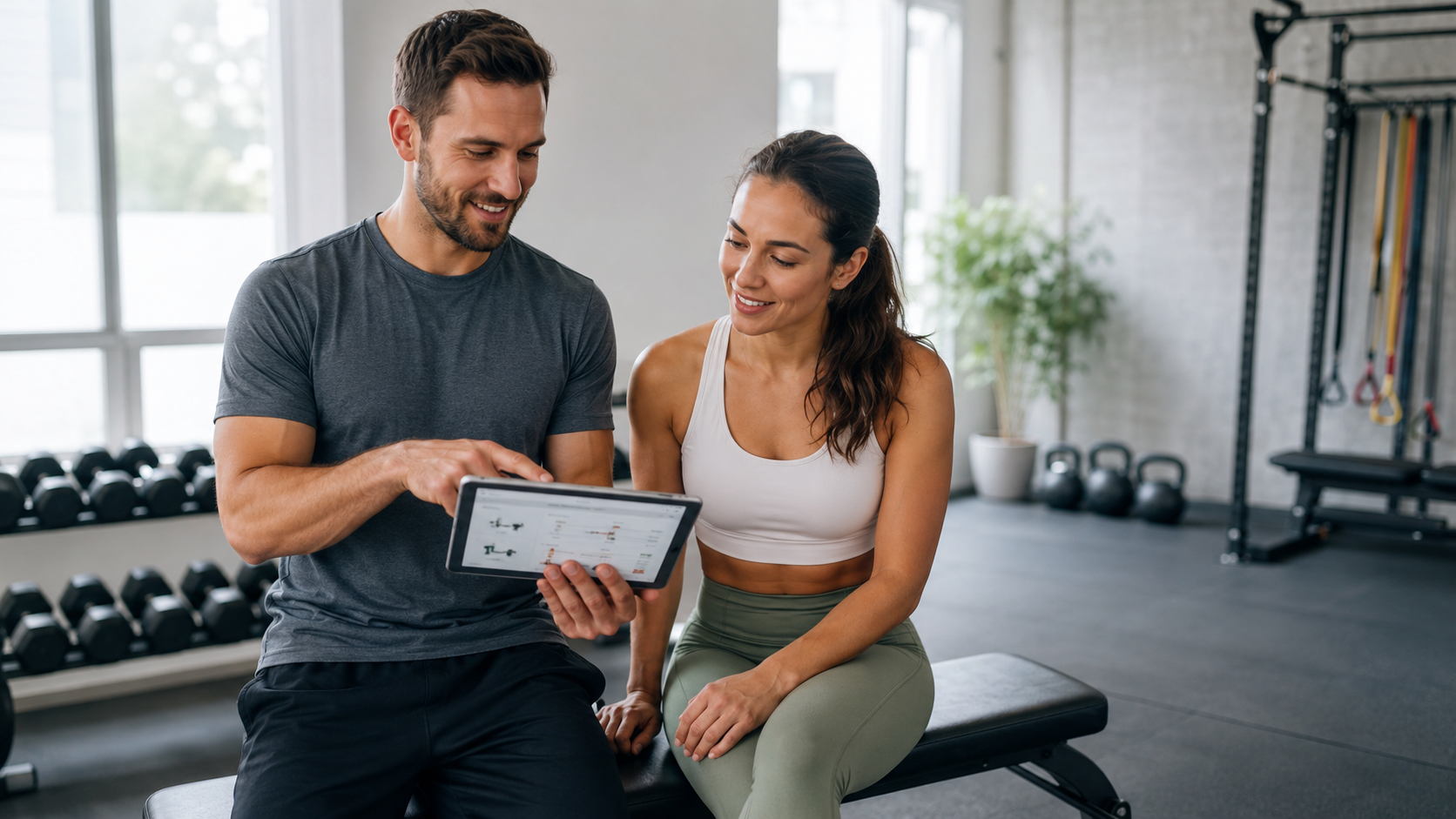
You bought the app. You also kept the gym membership. For a while, you bounced between them, faintly guilty about whichever one you were neglecting that week, never fully committing to either. Here is the reframe that ends the guilt: online training and in-person coaching were never supposed to fight over the same slot in your schedule. They were built to do different jobs.
When you stop forcing one to substitute for the other and start letting them combine, the whole thing clicks. That is hybrid fitness. Done on purpose rather than by accident, it tends to outperform either half on its own, because it finally plays each one to its strength.
The stakes are higher than the word convenient lets on. Most people who quit do not quit because the science failed them. They quit because their two halves never spoke to each other, and the seams between them became the places where good intentions quietly leaked out. Get the pairing right and those seams close. That is the entire difference between owning two gym tools and following one custom fitness program built around how you actually train.
Hybrid Fitness Is a Pairing, Not a Compromise
Hybrid fitness is not a loose mix of whatever feels convenient on a given day. It is a deliberate pairing. A coach who can watch you move in the room owns the parts of training that reward a trained eye, and a remote or app-delivered layer carries the steady volume in between.
The arrangement has staying power for a reason. ACSM’s 2026 fitness trends place wearable technology at the top of the list, mobile exercise apps near the top, and both traditional strength training and functional fitness inside the top ten. Hybrid training simply stops treating technology and coaching as competitors and starts treating them as parts of one coordinated system.
The word that carries the weight here is deliberate. Plenty of people technically train in two places and still collect the worst of both: a coach who has no idea what the app prescribed on Thursday, and an app that has no idea the coach changed the squat cue on Monday. That is not hybrid training. That is two disconnected plans sharing one tired body. Real hybrid training means the channels know about each other and answer to a single strategy, so the work compounds instead of canceling out.
The Two Halves Solve Different Problems
The reason a blended plan beats a single channel comes down to a simple truth. The things that are hard to do online are exactly the things in-person coaching is best at, and the tedious things to schedule in person are exactly what an app handles without complaint. Pair them, and each one covers for the other.
The Coach in the Room
Put a coach in the room, and you get the parts of training that resist a camera. Real-time form correction. Load decisions are made on the spot because the speed of the bar tells a different story than the program does. The small catch when your right hip drifts on the third squat, fixed before it becomes a habit you repeat for a year. A starting assessment that depends on watching how you actually move, not on how you describe it over text.
The research backs the instinct, with some nuance. A review comparing supervised and unsupervised resistance training found that supervision may create a small advantage for performance and function, most clearly in strength. That makes sense in a hybrid model: a coach can adjust load, clean up technique, and catch the moment when effort is productive versus sloppy.
A broader review of the evidence behind personal training points to the same practical levers: supervision, expertise, and accountability. At Royal Blue Fitness, those are the jobs we want the in-person session to own, so the online layer does not have to pretend it can watch your movement in real time.
There is also the simple physics of being watched. You try harder, and you try more honestly, when a knowledgeable person is three feet away counting the same reps you are. That is not a knock on your discipline. It is just how attention works, and it is one of the quiet advantages a coached session buys you that a solo session, however well intentioned, cannot counterfeit.
The App In Your Pocket
Now look at what the screen does better than the room. Frequency. Convenience. The quiet structure that keeps a Tuesday from slipping away. Your plan lives in your pocket, your sets are logged with a tap, and the numbers stack up week over week so you can see a trend instead of guessing at one. A reminder fires whether or not your coach is awake.
There is a ceiling, and it is worth knowing where it sits. A 2026 review of exercise prescription apps found they handle the structural side of a program well, the schedule, the sets, the prompts, but fall short when it comes to individualized fitness plans and the real-time adjustments a body needs as it changes. The reviewers reached a clean verdict: these apps work best as adjuncts inside a coached or hybrid model, not as the entire plan.
Used well, though, the online layer is where consistency actually gets built. It turns a vague intention to move more into a specific plan with a date attached, and it lets you train at six in the morning or ten at night without negotiating anyone else's calendar. For most people, the distance between what they meant to do and what they actually did is precisely the distance an app is designed to close.
Inside a hybrid, good app use is specific rather than vague. You log every set, so your coach can read the whole week at a glance instead of relying on your memory. You let the reminders defend the solo days the way a standing appointment defends the coached ones. You treat the streak as information, not decoration. Done that way, the app stops being a digital nag and becomes the shared record that makes the next coached session sharper, because both of you are finally looking at the same numbers.
Give Each a Job: A Simple Division of Labor
Once you accept that the two channels are good at different things, the planning gets easy. You stop asking which one to use and start asking which job belongs to which. Here is a starting map you can adjust as you go.
| Training job | Primary home | Why it lands there |
|---|---|---|
| Learning a new movement safely | In person | A coach catches the breakdown a camera misses and corrects it before it sets. |
| Progressing load week to week | In person, then online | Set the jumps with a coach, then let the app log and hold the plan. |
| Your starting point and screen | In person | A real read on strength and mobility needs trained eyes in the room, not a self reported guess. |
| Hitting your weekly volume | Online | Convenience wins the frequency battle, and frequency is most of the result. |
| Staying accountable between sessions | Both | The standing appointment anchors the week; the app nudges the days in between. |
| Tracking recovery and mobility | Online | A daily log surfaces the trend a single session would miss, and flags when to back off. |
| Cardio and conditioning | Online | Most aerobic work is low-skill and repeatable, which makes it ideal for a self-guided plan. |
Notice that nothing on the list is assigned by loyalty. Each job goes to the channel that does it best, and a few are shared on purpose. That is the whole philosophy in one table: stop splitting your week by habit, and start splitting it by what each job actually requires.
If you want a default to start from, give the coach the first and last word and let the app own the middle. Open with a coached block that sets the movements and the loads, run the bulk of your weekly volume through the app, then come back to the room periodically to reassess and re-progress. Most people can build a workable mix off that single rule and refine it once they see how their own week actually behaves, rather than how they imagined it would.
Anchor Your Week to the Guidelines
Before you split the week, anchor it to a target worth hitting. The CDC physical activity guidelines set the floor for adults at 150 minutes of moderate aerobic activity a week plus two days of muscle-strengthening work. Treat that as a baseline, not a ceiling, and hybrid makes the baseline more reachable without forcing every session into the gym.
A week that clears the bar without taking over your life might look like this:
- Two in-person strength sessions, scheduled where load and technique matter most.
- Two app-guided cardio days, each long enough to help build toward your weekly aerobic target.
- One mobility or accessory session pulled from your online plan.
That is three solo days and two coached days. If the cardio and movement minutes add up across the week, the plan can satisfy both halves of the guideline without requiring you to live in the gym. Shift the ratio as your needs change. The split is a dial, not a switch.
A busier reader might invert it entirely: one in-person session that anchors the strength work, plus three short app-guided efforts squeezed into lunch breaks and evenings. The point is never the exact template. It is that the coached time gets spent where judgment matters most, and the solo time gets spent where it does not.
The Four Ways Hybrid Breaks Down
For all its strengths, the model fails in predictable ways, and knowing them is half the cure.
The most common failure is quiet attrition. The in-person sessions stay on the calendar because someone is expecting you, but the solo online days slide, one skipped Tuesday at a time. This is not a character flaw. It is a support-design problem. Evidence-based guidance on social support interventions for physical activity shows that buddy systems, group support, progress check-ins, and supportive accountability can help people become more active. A hybrid plan that leaves its solo days completely unsupported is exposing its weakest link on purpose.
The second failure is drift. When the app says one thing and the coach says another, you end up serving two programs that quietly contradict each other. The fix is structural: keep one coach owning the whole plan, the in person work and the online work both, so the two halves stay in conversation instead of competition.
The third is app fatigue. Notifications stop landing after a few weeks; the badge becomes wallpaper. Build a human check in into the rhythm, even a short weekly one, and the technology becomes a tool you reach for again instead of background noise you swipe away.
The fourth is starting blind. Plenty of people pick a ratio before they know a single thing about how their own body moves under load. They guess at the mix, guess wrong, and then blame the model when the results stall. A short starting assessment removes that guesswork, which is exactly why it belongs at the front of a hybrid plan rather than somewhere down the road.
Read the four together and a single thread runs through all of them: each is a failure of connection, not of effort. Attrition, drift, fatigue, and a blind start every one of them shows up when the two halves, or the plan and the person, stop talking to each other. Build those connections in from day one, with one owner holding the whole plan and a real read on your body underneath it, and the model holds together even on the weeks life does its best to derail it.
Choose Your Hybrid Mix
There is no single correct ratio, only the one that fits where you are right now. Find yourself in the paths below and start there.
If You Are Restarting After Time Off
Lean heavily in person at the start.
When you are rebuilding a base, the value of a trained eye is at its highest, because that is when movement habits get set and when it is easiest to do too much too soon. Spend the first stretch mostly coached, then taper toward more solo online days as the movements become second nature and your confidence returns. A practical first phase is often several weeks weighted toward coached sessions, with a single solo day folded in once a movement starts to feel automatic.
If You Are Consistent but Stalled
Keep your online volume and add in person progression audits.
A plateau usually means the plan stopped changing while you kept improving. Hold the convenient app driven volume that got you here, then book periodic coached sessions whose only job is to reassess your loads, your technique, and your next progression. Small expert adjustments break stalls that more solo effort rarely can. Even one focused coached session a month, aimed squarely at progression, is often enough to get the numbers moving again.
If Your Schedule Is the Real Obstacle
Make online the backbone and in person the tune-up. When time is the true constraint, frequency has to come from the channel that bends to your calendar. Run most of the week from your app- driven plan, then protect a monthly or twice monthly in person check in to keep your form clean and your programming honest. A little coaching, placed well, goes a long way. Block that check in on the calendar like any other appointment, or the busy weeks will quietly eat it.
Set Your Hybrid Mix With a Real Starting Point
The fastest way to build a custom fitness program that actually fits you is to start with a clear read of your body instead of a guess. That is what the Strength and Range of Motion Assessment is for. It gives us an honest picture of where your strength and mobility stand today, so we can decide together which jobs belong in the room and which can run on your own time. Book the assessment, and we will set your hybrid custom fitness program in Pleasant Hill from there.
Is hybrid training worth it if I already pay for a gym?
Usually, yes, because the membership and the coaching solve different problems. The gym gives you a place and equipment. The hybrid plan gives you a reason to use them well, with a coach owning the high skill work and an app keeping your frequency up. If your membership has been quietly renewing while you stall, adding the coached layer is often what finally makes it pay off.
Can a good app replace a coach completely?
For a stretch, sometimes. A well built app can carry a motivated, experienced trainee a long way. The limits show up around individual adjustment, technique under fatigue, and accountability on the days you would rather skip. Most people get more from pairing the app with periodic human eyes than from leaning on either one alone.
How often do I really need to train in person?
It depends on the job you are asking the in person sessions to do. Someone relearning the basics might want most sessions coached at first. Someone consistent and busy might need only a monthly progression check. The honest answer comes from your starting assessment, not from a fixed number that applies to everyone.
What if my app program and my coach say different things?
That contradiction is a planning problem, not a you problem, and it is the clearest sign the plan needs one owner. The cleanest hybrid setups have a single coach who shapes both the in person and the online work, so the two never pull in opposite directions. If you are getting conflicting instructions, consolidate before you continue.
Is a hybrid setup a good fit for mature adults getting back into training?
It can be an especially good fit. Adults 50+ returning to structured exercise often benefit most from the in person layer early, where movement quality and sensible progression get the closest attention, while the online layer keeps the week consistent between visits. The right balance still comes from an individual assessment rather than an assumption about age.
How do I keep the solo online days from slipping?
Treat them like appointments, not suggestions. Put each solo session on the calendar with an actual time, not a vague plan to train later, and tie it to a cue you already have, the lunch break or the gap after the morning drop off. Then ask your coach to glance at your logged week, so the solo days carry the same quiet accountability as the coached ones. The sessions that get protected are almost always the ones someone else can see.
Here are our latest articles! Click to read more.

Strength for Independence After 50: Training for Stairs, Carrying, Travel, and Getting Off the Floor