Winter Outdoor Workouts: A Tale Of Two Brothers And Why The Cold Is Where Strength Is Built
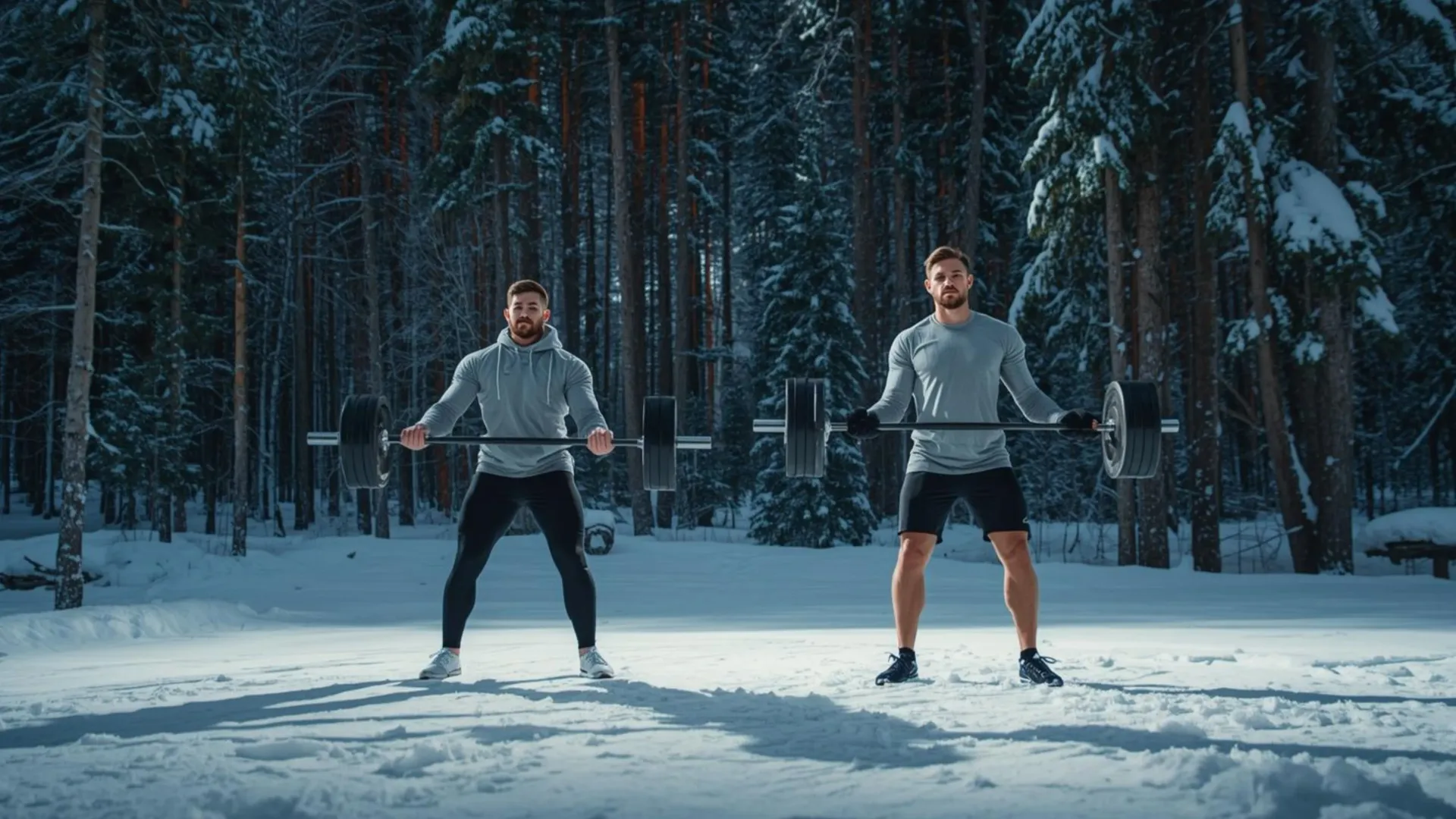
The first snow came in quietly.
By late afternoon, the great uncle’s cabin was wrapped in white, that muffled kind of silence where even thoughts seem to land softer. Pine branches bowed. Smoke pressed low from the chimney. Inside, two brothers watched the weather from opposite sides of the same window.
They had come up together that fall to help their great uncle close out the property, to stack wood and clear the path, to fix a stubborn door and patch the roof where the rain liked to sneak in. It was their version of a reset, a season away from traffic and inboxes and the endless scroll.
They planned well.
They divided chores, filled the pantry, and stacked cords of wood like sturdy paragraphs along the cabin wall. One brother, Daniel, made a list in a small notebook: daily tasks, a loose budget, a few big projects. The other, Eli, laughed at the lists and said, “We are in the woods. The schedule is: wake up when the light shows up and sleep when it leaves.”
Then winter arrived, and with it, the quiet.
A tale of two winters
The first week felt like a vacation.
They cooked long breakfasts and stayed in slippers longer than anyone needed to. They read old books that smelled like dry leaves. They sat by the big picture window and watched snow rearrange the landscape, a slow, careful painter.
Then the days narrowed.
The sun slid away earlier. The cold sharpened. That cabin, which had seemed charmingly small in October, started to feel close and heavy in December. Both brothers felt it: the drag in the body, the slower mornings, the creeping stiffness when they stood up from the couch.
This is where they split.
Eli leaned into the comfort. “It is cold,” he said. “My knees hate this weather. I will rest more now and get moving again when spring hits.” His winter became thick socks and long sits, one more episode, one more scroll, one more nap by the fire.
Daniel felt the same weight, the same whisper to stay still. His hips ached when he woke up. His hands felt slow when he tried to split wood. But something in the stiffness reminded him of a different season and a different voice.
He could almost hear his trainer back home in Pleasant Hill, that handsome jerk who never accepted “it is cold” as a complete sentence.
“Winter is not the off-season,” his trainer liked to say. “Winter is where you win. You just have to respect the conditions and train smart.”
So on the first truly bitter morning, when the thermometer outside the window sulked below freezing, Daniel did something that felt almost rude to the weather.
He went outside to train.
The cabin routine: winter outdoor workouts in real life
Daniel pulled on layers like armor. Wool socks, thermal base, fleece, shell, hat low. Gloves are snug but not tight. He stepped onto the cabin porch and felt the cold bite the air between his collar and his neck.
His body wanted to turn back in.
He remembered the plan he had scribbled on the back page of his notebook in October, the one his trainer had helped him design in a final session at Royal Blue Fitness before the cabin trip: a simple, joint-smart winter outdoor workout he could run three or four days a week with no equipment and no excuses.
He took a breath that felt like biting into an apple and began.
Warm up: wake the joints before the work
The first rule in the cold: do not ask cold tissue to do hot work.
Step 1: Five-minute brisk walk
He started with a loop around the clearing, walking briskly, arms swinging, breathing in through the nose and out through the mouth. The snow squeaked under his boots, a small metronome for his pace.
Step 2: Whole body “defrost”
Back at the porch, he moved through a quick head-to-toe sequence, slow and deliberate.
- Neck and shoulders
- Gentle nods yes and no, like he was agreeing and disagreeing with the winter sky.
- Shoulder rolls, forward and back, as if tucking and untucking his shoulders into a warm coat.
- Spine and ribs
- Standing with feet under hips, he reached both arms overhead, then side-bent right and left, like drawing half moons in the air.
- Hands on thighs, he slid them down toward his knees and back up, a mini standing cat-cow to let his spine move like a slow wave.
- Hips, knees, and ankles
- High-knee marching in place, driving one knee up at a time, feeling his hip flexors wake up.
- Gentle hip circles, like he was tracing the rim of a big invisible bowl with his belt buckle.
- Ankle circles and calf rocks at the porch step, rolling each ankle slowly, then rocking forward and back like a small bow.
By the time he finished, his breath was warmer, his hands less stiff, his body more awake.
This was his insurance: built-in injury prevention exercises that taught his joints the movement pattern before loading them.
Strength and stability circuit: 20 to 25 minutes
On most days, Daniel ran three rounds of this circuit outside the cabin. You can do the same circuit in a backyard, driveway, or quiet park.
Perform each exercise for 8 to 12 controlled reps per side (or 30 to 40 seconds of work), resting 20 to 30 seconds between moves and 1 to 2 minutes between rounds.
1. Porch sit to stand
What it trains: Legs, hips, balance, and real-world strength for getting up and down comfortably.
- Sit on a sturdy bench, cooler, or cabin step with feet planted under your knees.
- Lean slightly forward, like you are about to whisper a secret to the ground.
- Drive through your feet and stand up tall, imagining a string lifting the top of your head to the sky.
- Slowly lower back down, like you are trying not to wake a sleeping cat on the bench.
If standing without using your hands feels tough, you can lightly push off your thighs for the first few reps, then aim to use your legs more as you warm up.
2. Elevated pushup on railing or wall
What it trains: Chest, shoulders, arms, and trunk stability without harsh wrist or shoulder strain.
- Place your hands on a sturdy surface at about hip to chest height: a porch railing, wall, or the back of a picnic bench.
- Walk your feet back until your body is a straight line from head to heels, like a strong plank leaning into the cabin.
- Bend your elbows and let your chest travel toward the support, keeping your ribs zipped in, as if you are lowering your heart toward a friendly dog.
- Push the surface away and return to tall, feeling your shoulder blades slide around your ribs instead of shrugging up into your ears.
Adjust your foot position to make it easier (closer in) or harder (farther back).
3. Hinge to backpack deadlift
What it trains: Hamstrings, glutes, back strength, and safe lifting mechanics.
- Stand with feet under hips and a loaded backpack, log, or water jug in front of you.
- Soften your knees, then send your hips backward, like you are trying to close a car door with your backside, while you tip your torso forward.
- Keep your spine long and your chest proud, then grip the backpack straps.
- Drive your feet into the ground and stand up tall, squeezing your glutes at the top as if you are trying to crack a peanut between them.
- Reverse the motion, sliding the weight back toward the ground close to your shins with control.
If weights are not available, keep the same hinge pattern and simply reach toward the ground with straight arms.
4. Step up and balance
What it trains: Single-leg strength, balance, ankle stability, and fall prevention.
- Stand in front of a stable step or low bench.
- Place your right foot fully on the step, pressing through the whole foot.
- Drive through that leg to step up, bringing your left knee up to hip height and pausing for a moment, like you are trying to stand on a slow-moving elevator.
- Gently step back down and reset. Repeat all reps on one side, then switch.
Use a railing or wall for light support if your balance feels wobbly, and focus on slow control rather than speed.
5. Tall plank on bench
What it trains: Core, shoulders, and bracing you can actually use in daily life.
- Place your forearms or hands on a bench or sturdy surface, elbows under your shoulders.
- Walk your feet back until your body forms a straight line from ears to ankles.
- Imagine you are trying to pull your elbows toward your toes while your toes push toward your elbows, without actually moving. This turns your core on like a dimmer switch sliding up.
- Breathe slowly, keeping your head in line with your spine, like you are holding a long, fragile glass of water along your back.
Hold for 20 to 40 seconds, rest, then repeat.
Built-in injury prevention exercises for winter
Daniel did not think of his routine as “injury prevention exercises.” He thought of it as doing the work now so spring would feel better later.
But his trainer had been intentional.
Each session ended with five to ten minutes of targeted work, the kind of small, focused movements that keep joints honest and connective tissue happy, especially in winter when the cold encourages stiffness.
You can add the same finisher after your circuit.
Ankle and calf resilience
1. Calf raises on a step
- Stand on a step with heels hanging slightly off the edge, holding a rail or wall.
- Rise onto the balls of your feet, like you are trying to peek over a fence.
- Lower slowly below the step line, feeling a stretch through the calf.
- Perform 10 to 15 reps.
2. Single leg balance with gentle reach
- Stand tall on one foot, with a wall or tree nearby for support.
- Slowly reach the free foot forward, to the side, and behind you, like tracing a small triangle in the snow.
- Keep your standing knee soft and your core lightly engaged.
- Perform 5 triangles per leg.
These small drills train the ankles and calves to manage uneven ground and surprise slips, a key part of functional fitness in cold and wet weather.
Hip and spine mobility
1. Standing figure-four hip opener
- Stand near a wall or railing for support.
- Cross one ankle over the opposite knee and sit your hips back as if you are lowering into a tall chair.
- Keep your chest lifted, as if you're showing off a logo on your shirt.
- Hold for 20 to 30 seconds per side.
2. Standing thoracic rotations
- Stand with feet under hips, hands together at chest height, elbows lifted.
- Rotate your upper body to the right, letting your eyes follow your hands, then back to center, then to the left.
- Imagine you are gently wringing tension out of your mid back like water from a cloth.
- Perform 8 to 10 rotations per side.
These finishers keep your hips and spine moving like a chain instead of a series of locked boxes, which pays off when you shovel snow, carry bags, or navigate slick sidewalks.
The payoff: spring arrives, and the difference shows
Winter at the cabin did what winter always does. It stretched and sagged and felt longer than either brother expected.
There were good days: blue sky, crisp air, the satisfying sting of hot soup after being outside. There were heavy days: low clouds, damp cold, the sense that your body was made of wet concrete.
Eli leaned further into comfort as the months went by. The couch molded to his shape. His jeans felt tighter. His knees complained when he walked down the cabin steps, and his low back chimed in every time he picked up a log.
He told himself, “It is just winter. I will get back into shape when it is easier to be outside.”
Daniel did not train perfectly. Some days, he shortened the circuit. Some day,s the wind was so sharp he chose a brisk walk and extended warmup instead of a full session. But he kept a promise to himself: three winter outdoor workouts a week, every week, plus some kind of small movement on the in-between days.
He learned how to work with the cold, not fight it.
He took longer to warm up. He layered clothing so he could peel things off as his body heated. He swapped out jumps and sprints for controlled, joint-friendly patterns that built strength without punishing his knees or back.
By the time the snow started to melt and the road into town turned from white to wet to dusty, the difference between the brothers showed up in small, unmistakable ways.
- When they went to restack the last of the wood, Eli’s grip failed first. Daniel’s hands felt sure.
- When they hiked up the hill behind the cabin to check the old water tank, Eli’s breath hitched and burned. Daniel’s lungs worked, but he could keep a conversation.
- When it was time to clean, pack, and close the cabin, Eli’s body protested every bend and lift. Daniel felt tired but capable. He moved like someone who had been training for exactly this kind of work.
On their last night, they sat by the fire, mugs in hand, watching the last real snow settle on the porch.
“You are in pretty good shape,” Eli said, half impressed, half annoyed.
Daniel shrugged. “I just did what I promised myself when we came up. Three sessions outside. Some extra walks. The basics.”
“I do not know how you had the discipline,” Eli said. “This winter killed my motivation.”
Daniel thought about it. He thought about his trainer’s voice back at Royal Blue Fitness, the one that had repeated the same message in Pleasant Hill and in his ears up at the cabin.
“Honestly,” he said, “I did not wait on motivation. I followed the plan we laid out. Once I started, it felt worse to break the promise than to do the work.”
He did not gloat. He was not better than his brother. He had simply been prepared in a way his brother was not.
And he was grateful. Grateful for his body, for the routine, and for the kind of coaching that treated winter not as a pause, but as a chance to build resilience.
What this story has to do with you
You may not be spending months at a cabin. Your winter might be Pleasant Hill rain, gray mornings, and chilly evenings after work.
But the pattern is the same.
Every cold season, there is a fork in the road.
One fork is full of understandable excuses. It is dark. It is cold. You are tired. Work ramps up. Holidays happen. Your joints complain. Your steps drop. Your strength sessions get “pushed to next week.” By the time spring shows up, everything feels harder, heavier, and more fragile.
The other fork is less glamorous. It is not a 90-day shred or a heroic ski program. It is exactly what Daniel did at the cabin: simple, consistent winter outdoor workouts, built around joint-smart movement patterns and a few key injury prevention exercises that keep you ready for real life.
If you are reading this, you probably care more about how you move, feel, and function than about having a perfect gym selfie.
You want to:
- Keep your knees and hips happier when the temperature drops.
- Avoid feeling like you have to start from zero every spring.
- Stay strong enough to shovel, hike, travel, and keep up with the people you care about.
- Build discipline that survives dark mornings and long workweeks.
You do not need a complicated winter plan to get there. You need a structured, realistic one.
How to keep winter outdoor workouts safe and sustainable
Cold weather is not the villain. Ignoring the conditions is.
A few basic rules will help you stay safe while you build strength and resilience outside.
1. Extend your warmup
When it is cold, your muscles and connective tissue take longer to reach a comfortable working temperature. That is why Daniel’s routine starts with a 5 to 10-minute warmup that gradually nudges heart rate and joint motion up.
For you:
- Aim for at least 5 minutes of low-intensity walking before you load anything.
- Add dynamic mobility for shoulders, hips, knees, and ankles before you squat, hinge, push, or step.
- If you feel “creaky,” give yourself permission to double the warmup and shorten the working sets. Staying consistent matters more than hitting a particular rep count.
2. Respect footing and surfaces
Ice, wet leaves, and uneven ground add a sneaky skill demand. You want joint strength and balance that can handle that demand, but you do not need to prove anything to the pavement.
- Choose routes and spots with good traction. If the ground is icy, trade jumps and sprints for walking and controlled strength work.
- Use elevated surfaces for push-ups and planks to reduce the risk of slipping.
- Keep step-ups low and stable. Think sturdy stairs, not wobbly chairs.
3. Dress for the “15 minutes from now” temperature
If you dress for how you feel when you first step out the door, you will either freeze in the beginning or overheat ten minutes later. Layers solve a lot of problems.
- Start slightly cool, knowing you will warm up.
- Wear a base layer that wicks sweat, a mid layer for insulation, and an outer layer that blocks wind and moisture.
Cover fingers, toes, and ears. When those stay warm, your whole body feels safer being outside.
4. Breathe, do not brace everything
Cold air can make you instinctively pull your shoulders up and breathe shallow. Over time, that posture and breathing pattern can irritate your neck and upper back.
- Keep your jaw unclenched and your shoulders relaxed away from your ears.
- Inhale through your nose when possible, exhale steadily through your mouth.
- During strength sets, think “brace, then breathe,” not “hold everything including your breath.”
5. Adjust volume, not identity
If your plan calls for three rounds and you only have the energy or time for two, do two with focus instead of skipping the day. You are not “off plan” if you adjust responsibly. You are reinforcing the identity of someone who trains, even on imperfect days.
Bringing the cabin mindset home to Pleasant Hill
At Royal Blue Fitness, we work with adults who want their strength to mean something outside of the gym walls. Functional fitness in Pleasant Hill, CA, is not about chasing extreme winter heroics. It is about training in a way that lets you carry groceries on wet sidewalks, climb hills on cold mornings, and feel capable at the end of a long week.
The cabin story is a neat little metaphor, but the gap it shows is very real:
- Two people face the same winter.
- One waits for spring to feel ready.
- One trains through winter and arrives in spring already moving well.
The difference is not luck or willpower. The difference is preparation, structure, and support.
You deserve a plan that fits your body, your history, and your real life, not a random string of workouts from social media.
You deserve someone in your corner who will remind you, in a friendly but firm way, that winter is when your future spring is built.
If you read this and saw a bit of yourself in Eli, that is not a failure. It is a data point.
You are not stuck repeating the same winter story.
With the right plan, your own “cabin routine” might look like:
- Two or three simple winter outdoor workouts each week, tuned to your joints and your schedule.
- Short, targeted injury prevention exercises that act like armor for your knees, hips, and back.
- Accountability that does not disappear when your motivation dips or the weather turns.
If you are in Pleasant Hill, CA, and want functional fitness that keeps you strong through the cold months and beyond, a Royal Blue Fitness coach can help you map out that plan and walk it with you.
Ready to turn this winter into a season of quiet progress instead of lost ground?
You can start with a focused, low-pressure step. Book an Independence Screen to check your balance, stability, and movement, then leave with a winter training plan that fits your history and your goals. Or, if you already know you want a structured start, begin a one-month Foundations Plan and let us help you build the habits and confidence that carry you well past the thaw.
Spring is coming either way.
You get to choose which brother you feel like when it arrives.
Here are our latest articles! Click to read more.