Rehabilitation After Physical Therapy: How Post-Physical Therapy Training Bridges the Gap
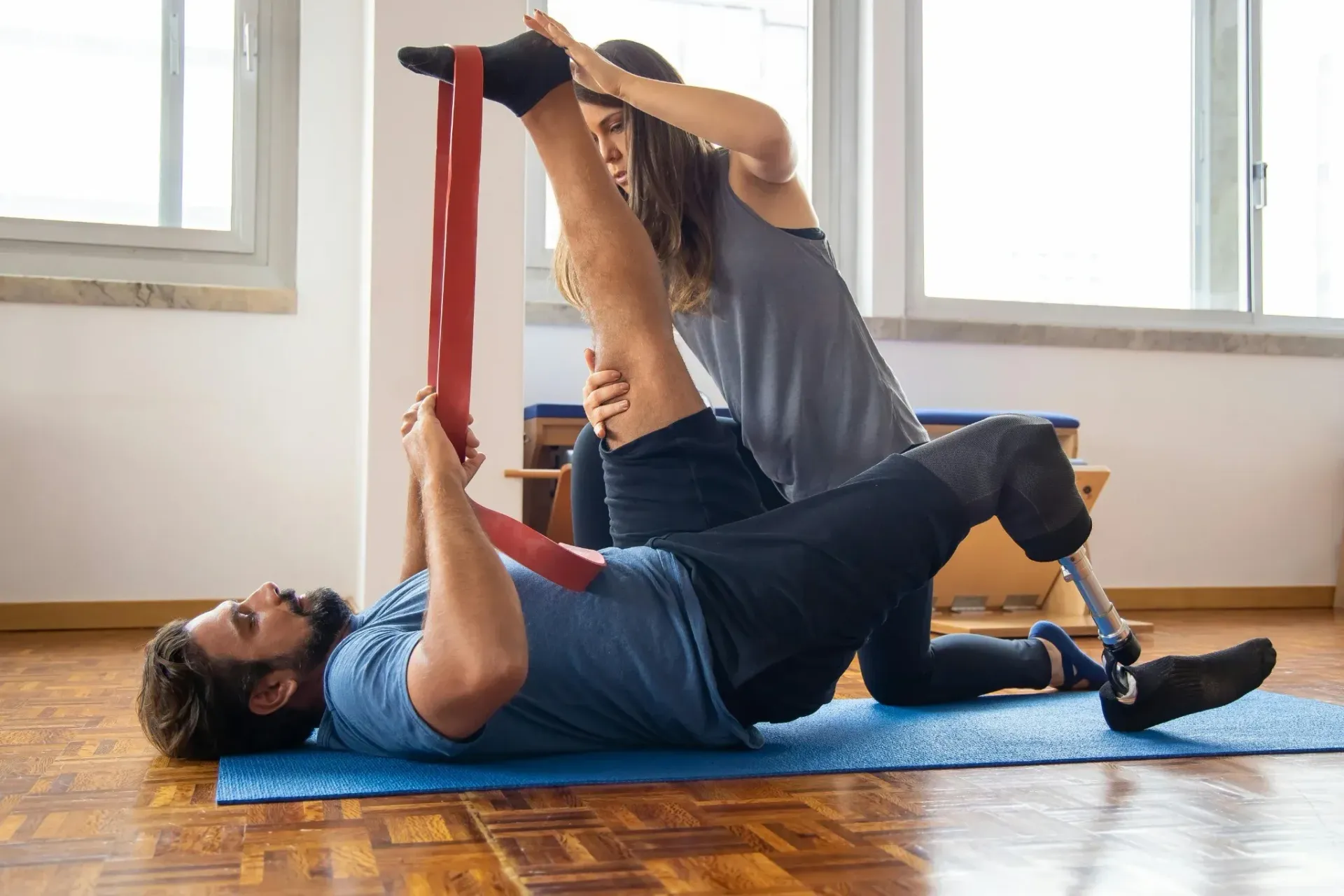
You did what you were supposed to do.
You got hurt, followed the medical advice, went through surgery, and showed up for every physical therapy appointment.
At first, the progress felt clear. You went from barely moving to walking without help. The worst pain eased. Friends and family said, “You look so much better.”
But outside the clinic, the story feels different.
That fall on the stairs changed everything. The hip fracture. The surgery. The first round of physical therapy. Then another round when the pain and stiffness did not really improve. Eventually, the insurance visits ran out. Your therapist did what they could in the time allowed, but your day still has limits:
- You move slowly and cautiously on the stairs
- Your back tightens when you stand too long
- Your “good leg” now has its own aches from taking the extra workload
- You think about your injury every time you sit, stand, or lie down
On paper, you are “done.” In real life, you are not done at all.
Post-physical therapy training is about that gap.
It is about more than just healing tissue. It is about regaining confidence in your body, restoring your quality of life, and returning to the activities you enjoy without constantly wondering, “What if this makes it worse?”
At Royal Blue Fitness, that is where we step in. Our role is simple: your physical therapy may be complete, but your recovery is not. We help you move from “medically stable” to truly capable in the real world.
What Is Post-Physical Therapy Training?
Post-physical therapy training is the phase that comes after your prescribed rehab is finished, when you are cleared from formal physical therapy but still feel limited, guarded, or unsure.
It is not a replacement for medical care, and it is not about ignoring pain. Instead, it is a structured, strength and movement-based approach that helps you:
- Rebuild strength and resiliency around the injured area
- Address stiffness and compensation patterns that developed during recovery
- Restore confidence so you can trust your body again in daily life
In a typical rehab timeline, you might go from:
- Injury and acute medical care
- Surgery or medical intervention, if needed
- Formal physical therapy
- Discharge from physical therapy
Most people assume step 4 is “the end.” In reality, it is the halfway point.
Post-physical therapy training is step 5: the plan that carries you from “safe for daily tasks in a clinic setting” to “strong, mobile, and confident in your actual day-to-day life.”
At Royal Blue Fitness, we specialize in that transition. We work with adults 40 plus who are finished with physical therapy but still dealing with pain, stiffness, or fear of re-injury. Our approach combines pain-smart strength training, mobility work, and real-world movement practice so your body is prepared for how you actually live.
Signs You Need Post-Physical Therapy Training
How do you know it is time for support after physical therapy, not just “wait and see”?
Here are common signs that your body is asking for more focused post-rehab training.
Ongoing Pain That Comes and Goes
Your pain may not be severe enough to send you back to the doctor, but it lingers.
Maybe your hip aches after sitting too long, your back tightens after a short walk, or your knee throbs at night after a busier day. You might think, “This is probably just my new normal.”
Persistent or recurring pain is often a sign that the area is not yet strong, coordinated, or supported enough for what you are asking it to do. Post-physical therapy training helps gradually rebuild capacity, so your system does not have to “shout” at you every time you move a little more.
Swelling That Flares with Activity
You may notice that your ankle, knee, or hip swells more on days when you are busy.
This can show up as a puffy joint, a tight feeling in your skin, or a sense that the area feels “full” and uncomfortable. Swelling that increases with basic activity and takes a long time to settle is often a sign that your body is still working harder than it should for simple tasks.
Targeted strength, circulation, and movement programming can reduce those flare-ups over time, so you are not punished with swelling every time you walk a bit farther or stand a bit longer.
Limited Range of Motion That Affects Daily Life
Maybe your hip does not bend enough for you to tie your shoes comfortably.
Maybe your back does not rotate well enough for you to check your blind spot without twisting your whole torso.
You may be technically “cleared” on paper, but you are still making workarounds in daily life.
Post-physical therapy training focuses on regaining usable range of motion, not just numbers on a chart. The goal is to help you reach, twist, bend, and walk in ways that match your real life needs: getting off the floor, navigating stairs, loading the dishwasher, or sitting in a car for an hour without feeling wrecked.
Weakness or Fatigue on One Side
You might notice one side of your body tires out quickly, feels shaky, or gives up earlier than the other, especially when you climb stairs, stand up from a chair, or carry groceries.
That imbalance often leads to extra strain in other areas because your body will find some way to get the job done, even if it is not efficient or comfortable.
Post-rehab strength work helps rebuild balanced strength, so the previously injured side can pull its fair share again, instead of leaving your “good side” to carry all the load.
Instability or Feeling “Wobbly”
One of the most unsettling sensations after an injury is feeling that something might “give out.”
Your knee feels wobbly on stairs.
Your hip feels unsteady on uneven ground.
Your ankle feels uncertain when you step off a curb.
Even if your therapist says the joint is stable, your nervous system may not fully trust it yet. That lack of trust can keep you moving cautiously and holding back in ways that affect your whole body.
Post-physical therapy training builds stability through controlled strength work, balance challenges, and progressive loading, so your body and your brain can agree that the joint is truly ready.
Compensating Movement Patterns
Compensation is your body’s survival strategy. When one area is painful or weak, other parts jump in to help.
Some examples:
- Leaning away from the injured hip when you stand
- Shifting more weight onto one leg when you walk
- Twisting your spine differently to avoid certain ranges
- Standing or sitting in awkward positions that feel “protective,” even if they are not comfortable
These patterns may not be obvious, but over time they create a cascade of new problems: tight low back, cranky knees, stiff neck, or sore shoulders.
Post-physical therapy training is where we zoom out and ask, “How is your whole body moving now, after everything you have been through?” Then we rebuild your movement patterns so your entire system works together again instead of fighting itself.
How Royal Blue Fitness Helps You Finish the Recovery You Started
At Royal Blue Fitness, we are not a clinic, and we are not just a traditional gym.
We sit in the space of rehabilitation after physical therapy: where your rehab left off and where your real-life goals begin.
Our specialty is seeing the whole map of what is going on in your body after injury, surgery, and physical therapy, then building a step-by-step plan that moves you toward strength, confidence, and freedom of movement.
From One Hip Injury to a Whole-Body Pattern
Let us go back to the client example from earlier.
After the fall and hip surgery, the hip on one side is the original problem. To protect it, the body started guarding: the muscles around the hip and low back tightened up and stayed tight. Standing and walking changed without you even thinking about it.
You lean away from the injured hip, so more of your weight lives on the other leg. Over time:
- The “good” knee and ankle become swollen and tight from the extra load
- The low back muscles stay clenched and sore from constant guarding
- Sitting feels uncomfortable, so you perch or twist into awkward positions
- Sleeping positions change to avoid pressure, which leaves your whole body tight and unrested
Now you are no longer dealing with just “a hip problem.” You are living in a full body pattern that touches your back, knees, ankles, sleep, and energy.
This is exactly the kind of scenario we work with every week.
What We Actually Do in Post-Physical Therapy Training
When you work with us, we start by listening to your story and looking at how you move today, not how you moved before the injury.
Then we:
- Identify the primary drivers
Where is the original injury still limiting you? Which movements still feel guarded, weak, or painful? - Map the secondary issues
How is the rest of your body compensating? Are you leaning, twisting, limping, or bracing without realizing it? - Test strength and control
We look at how each side of your body is sharing load, how your hips, knees, back, and ankles cooperate, and what happens when we add a light challenge in safe ways. - Build a pain-smart strength plan
We design a program that blends mobility, stability, and functional strength, starting from where you are. The goal is not punishment. It is consistent, thoughtful loading that helps tissue get stronger and your nervous system feels safe. - Translate gains into real life
As you get stronger and more coordinated, we practice the things that matter to you: getting down to the floor and back up, carrying groceries, traveling, hiking, playing with grandkids, or returning to your favorite hobbies without fear.
Throughout the process, we pay attention to both the physical and the emotional side of recovery. Fear of re-injury is real, especially after a serious fall or surgery. We move at a pace that respects your nervous system, while still challenging you enough to change.
Our mission is to help you feel like your body belongs to you again, not to your injury history.
Ready to Take the Next Step After Physical Therapy?
If you have finished physical therapy but still feel tight, limited, or unsure of your body, you are not broken, and you are not alone. You are simply in the gap that most standard rehab systems do not fully address.
That gap is exactly where Royal Blue Fitness does its best work.
If you are ready to explore post-physical therapy in Pleasant Hill CA, fill out the form below and tell us:
- What happened
- Where are you now
- What you want your body to be able to do again
From there, we will help you chart a path from “I am done with therapy on paper” to “I am genuinely back to living my life.”
Here are our latest articles! Click to read more.