Winter Mobility Reset: Stay Loose and Pain-Free in Cold Weather

You know that first cold morning when you swing your legs out of bed and everything feels a little stuck. Your back is tight, your hips protest the first few steps, and your knees do not really wake up until you have been moving for a while. By the time you finish your workday, the couch is calling louder than any workout, and “I will get back to it in spring” starts to sound reasonable. This is where a winter mobility reset can change everything.
If you are in your 40s, 50s, or beyond, winter can feel like someone quietly turned up the stiffness dial on your body. It is not your imagination. Cold, damp conditions slow you down, reduce how much you move, and can make existing joint issues feel louder. The good news is that you have more control than it feels like you do. With the right winter mobility training and a realistic stretching plan for cold-weather stiffness, you can stay comfortable, strong, and confident all season, instead of just waiting it out.
At Royal Blue Fitness in Pleasant Hill, we see the same winter pattern every year. Clients feel tighter, move less, and get nervous about “tweaking something” when it is chilly and dark outside. Our job is to help you stay ahead of that curve with joint-friendly strength work and mobility training that Pleasant Hill residents can actually stick with, even when motivation dips.
In this guide, you will learn why your body feels stiffer in winter, what common problems to watch for, and how to use winter mobility training to stay loose, strong, ready for real life, and reduce stiffness in winter.
Quick Index
- Why Your Body Feels Stiffer In Winter
- Common Winter Stiffness Problems We See
- Winter Mobility Training Principles That Actually Work
- Stretching For Cold Weather Stiffness: A Simple Daily Routine
- What It Feels Like To Change Your Winter Routine
- Beyond Exercise: Other Winter Factors That Affect Stiffness
- How Royal Blue Fitness Supports Winter Mobility Training In Pleasant Hill
- Your Next Steps This Winter
Why Your Body Feels Stiffer In Winter
If your joints feel ten years older the minute the temperature drops, there are a few things happening at the same time.
1. Cooler temperatures change how your tissues behave
Muscles, tendons, and ligaments are a bit like rubber bands. When they are warm, they stretch and recoil easily. When they are cold, they resist movement and feel tight. Cold air and cooler indoor temperatures can mean:
- Slower blood flow to muscles at rest
- Less elasticity in connective tissue
- A longer “warm-up” is needed before things feel smooth
That is why walking to your car feels stiff, but your body loosens up after a few minutes of real movement.
2. You move less without realizing it
In winter, you often:
- Take fewer walks
- Shorten dog walks or errands
- Avoid outdoor activities you do easily in spring and summer
Those tiny choices add up. Less total movement means joints are not being taken through their full range of motion as often, which leads to more stiffness, not just sore muscles.
3. Your nervous system gets more protective
If you already have a history of back pain, cranky knees, or a sensitive shoulder, your nervous system is always tracking risk in the background. Cold, slippery, or dark conditions can make your body “guard” more. That can show up as:
- Muscles are gripping a bit harder
- You're bracing more around joints
- Hesitation or fear of certain movements
This protective response is not “all in your head.” It is your body trying to keep you safe. The right winter mobility training respects that and works with it, rather than forcing you through movements that feel sketchy.
Common Winter Stiffness Problems We See
Everyone describes stiffness a little differently, but the winter patterns are very consistent. See if any of these sound familiar.
Morning back and hip stiffness
You get out of bed and feel like you have aged a decade overnight. It takes several minutes of shuffling around before your back, hips, and hamstrings feel somewhat normal. If you sit to drink coffee and scroll your phone, it all tightens right back up.
What is happening: long periods of stillness plus cool temperatures give your joints and muscles time to “settle” into stiffness. Without a gentle morning movement routine, your first real movement of the day might be bending to pick something up, which your back does not appreciate.
Knees that complain on cold, damp days
On warmer days, stairs are fine. On cold, damp winter days, your knees feel achy, creaky, or unstable, especially when walking down hills or stairs.
What is happening: existing cartilage changes, past injuries, or simple wear over time can become more noticeable when you are not as active and when the surrounding muscles are not warm and strong.
Neck and shoulder tightness from huddling indoors
When it is chilly, and you are working at a desk or watching TV more, your body tends to fold forward.
- Shoulders creep up toward your ears
- Neck pokes forward toward screens
- Upper back gets rounded
By the end of the day, your neck and shoulders feel like concrete, and simple movements like turning to check your blind spot feel restricted.
Feeling “rusty” at the start of workouts
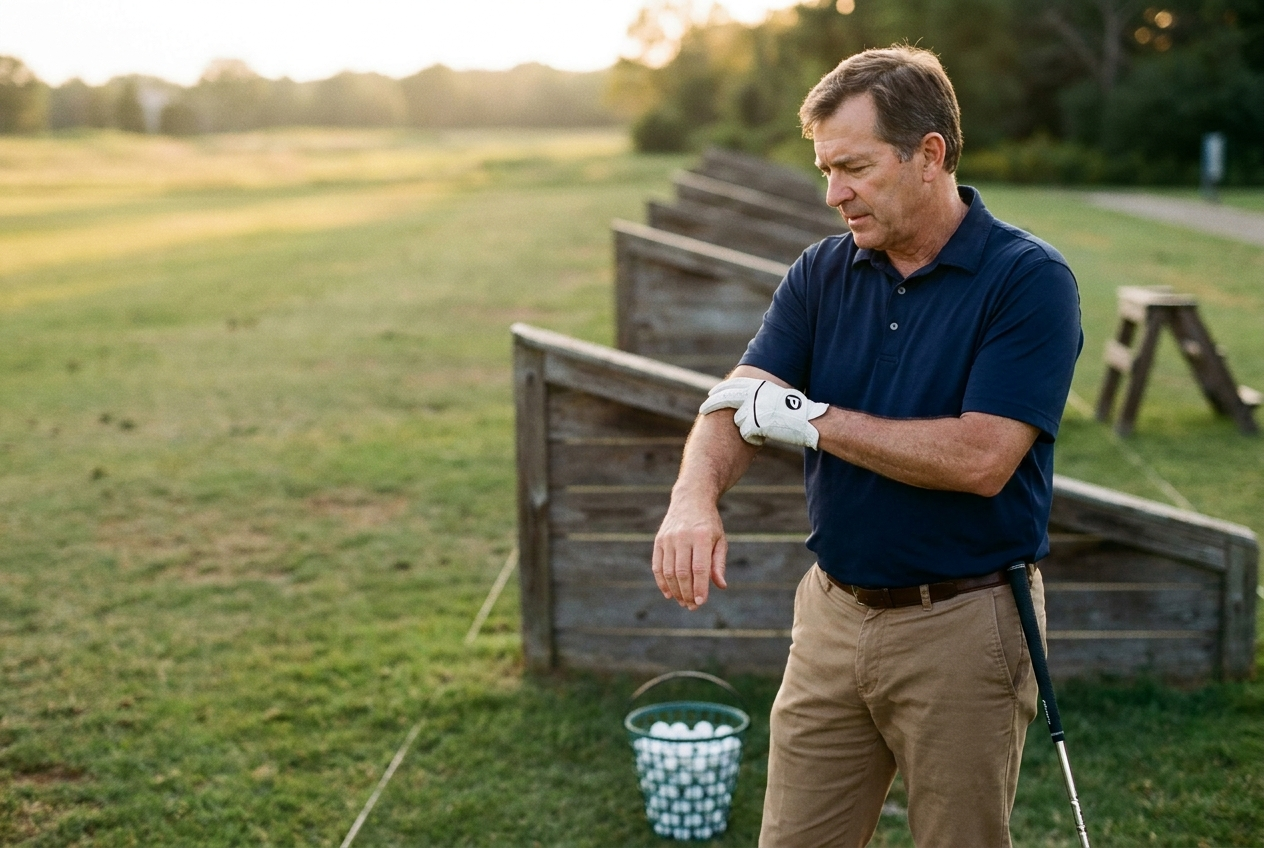
Maybe you're consistent with exercise, but winter sessions feel different. The first 10 minutes are rough; you do not trust your joints, and you are more worried about “tweaking” something if you move too fast.
What is happening: your body needs a more thoughtful ramp-up than it did at 25. A generic warm-up or quick stretch is no longer enough. Winter mobility reset needs to be specific, progressive, and joint-friendly.
Confidence drop and fear of hurting yourself
Stiffness is not just physical. When your body repeatedly feels tight, hesitant, or painful at the start of movement, it chips away at confidence. You may think:
- “Maybe I am too old for this.”
- “What if I hurt myself again?”
- “It is safer if I just do less.”
That fear is understandable, especially if you have a history of pain or injury. The goal is not to ignore those signals. The goal is to give your body and brain enough evidence, through smart training, that movement can feel safe again, even in winter.
Winter Mobility Training Principles That Actually Work
When it is cold, your body does not need tougher workouts. It needs smarter ones. Here are the principles we use with clients when we design winter mobility training that supports long-term joint health.
1. Warm from the inside out
Your first job is not to stretch. It is to increase circulation and body temperature. That might look like:
- 3 to 5 minutes of easy marching in place
- Gentle swings of your arms while you walk around your house
- Light step-ups on a low step or bottom stair
Once you feel a little warmer and your breathing has picked up slightly, stretching and mobility work become much more effective.
2. Focus on dynamic motion first, longer holds later
In cold conditions, it is usually better to start with movement-based stretches instead of forcing long, deep holds right away. For example:
- Gentle cat cow instead of forcing a deep forward fold
- Slow leg swings instead of yanking your hamstring into a static stretch
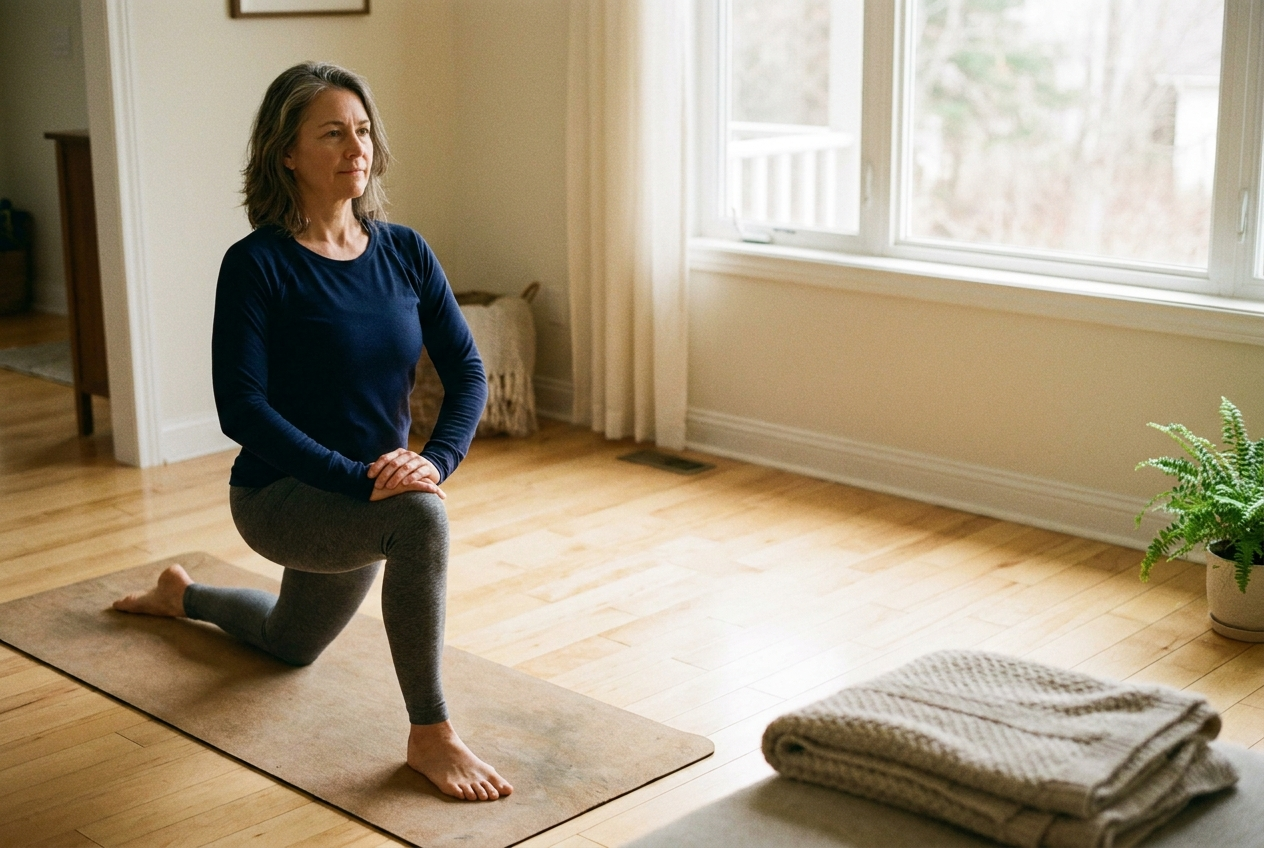
- Controlled hip circles instead of dropping into a deep lunge immediately
Longer, relaxing holds are great near the end of the session or in the evening, when you are already warm.
3. Target the joints that winter punishes most
For most adults 40-plus, winter stiffness shows up in the same “usual suspects”:
- Ankles and calves
- Hips and low back
- Upper back, chest, and shoulders
Winter mobility training should prioritize these areas instead of random stretching. You want movements that open, rotate, and lightly load these joints so they remember their full range of motion.
4. Pair mobility with light strength
Stretching alone rarely solves cold-weather stiffness. The real win comes when you teach your muscles to support those new ranges of motion. That means pairing mobility with:
- Bodyweight squats or sit-to-stands
- Hip hinges or bridges
- Wall push-ups or light rows
Strength work does not need to be heavy to help. It just needs to be deliberate and joint-friendly.
5. Think “little and often,” not occasional marathons
Your body responds better to shorter, consistent sessions than to the occasional long, heroic workout. Ten to fifteen minutes of winter mobility training most days of the week will beat a single 60-minute class that leaves you exhausted and anxious.
Stretching For Cold Weather Stiffness: A Simple Daily Routine
Here is a practical winter mobility routine you can use at home. It is designed for adults 40-plus who want to reduce stiffness in winter without aggravating sensitive joints. It should take about 10 to 15 minutes.
If anything causes sharp pain, stop that movement and stay in your comfortable range.
Step 1: Warm up your circulation (3 minutes)
Pick one:
1. March in place
- Stand tall, swing your arms gently, and march in place.
- Aim for 2 minutes at a comfortable pace.
2. Low step-ups
- Stand tall, swing your arms gently, and march in place.
- Aim for 2 minutes at a comfortable pace.
You should feel a little warmer and slightly out of breath, but still able to talk.
Step 2: Loosen stiff joints with gentle mobility (6 to 8 minutes)
Move slowly, breathe steadily, and do not push into sharp discomfort.
1. Cat cow for your spine
- Hands under shoulders, knees under hips.
- Inhale, gently arch your back, lifting your chest.
- Exhale, round your spine softly, tucking your tail.
- Repeat 8 to 10 times.
2. Hip circles from all fours
- From the same position, lift one knee slightly and draw small circles with it, keeping your spine quiet.
- Do 8 circles in each direction, each leg.
3. Thoracic rotations (open books)
- Lie on your side with knees bent, arms straight out in front.
- Slowly open the top arm, rotating your chest toward the ceiling without forcing your shoulder to the floor.
- Move with your breath for 8 to 10 repetitions per side.
4. Ankle rocks
- Stand facing a wall, one foot forward, one back.
- Keeping your heel down, gently drive your front knee toward the wall and back.
- You should feel a mild stretch in the calf and ankle, not pain.
- Do 10 reps on each leg.
5. Shoulder rolls and chest opening
- Standing or sitting tall, roll your shoulders backward in slow circles 10 times.
- Then clasp your hands gently behind your back or at your lower back and lift your chest, keeping your neck relaxed, for 3 easy breaths.
Step 3: Add light strength to “lock in” mobility (4 to 6 minutes)
1. Sit to stand
- Sit near the front of a sturdy chair, feet under your knees.
- Lean slightly forward, press through your heels, and stand up.
- Sit back down with control.
- Do 2 sets of 8 to 10 repetitions. Rest 30 to 45 seconds between sets.
2. Wall push-ups
- Stand facing a wall, hands on the wall at chest height, slightly wider than shoulders.
- Walk your feet back until your body is in a straight line from head to heel.
- Lower your chest toward the wall and press back.
- Do 2 sets of 8 to 10 repetitions.
3. Standing hip hinges
- Stand with feet about hip width apart.
- Place your hands on your hip bones.
- Gently push your hips back as if closing a car door with your backside, keeping your spine long.
- Return to standing by squeezing your glutes.
- Do 2 sets of 8 to 10 repetitions in a small, comfortable range.
This routine can serve as:
- A standalone winter mobility training session on busy days
- A warm-up before strength training or walking
- An evening winter mobility reset after work to ease stiffness before bed
If you repeat it consistently, your body learns that movement is safe and satisfying, even when the weather is not cooperating.
What It Feels Like To Change Your Winter Routine
Instead of talking about exercises in the abstract, imagine two versions of your winter.
Version 1: “I just slow down and hope for spring.”
You skip short walks when it is chilly, work long hours at a desk, and collapse onto the couch at night. Your first big movement of the day might be lifting a heavy grocery bag or bending quickly to pick something up. Your back and knees complain more often, and every time they do, your confidence drops a bit.
By March, you feel deconditioned and frustrated. Getting back to your usual activity level feels like starting over.
Version 2: “I invest 10 to 20 minutes in winter mobility training most days.”
Your mornings start with a short routine instead of a mad dash. You take a few minutes to warm up circulation, move your joints, and do some simple strength work. On training days, that blends into a fuller session. On busy days, that is enough.
You still notice the cold. You still have stiff moments. But they pass more quickly. Your body trusts movement again, and your brain has repeated experiences of “I can do this without making things worse.”
Those two winters feel completely different in your body, even if your calendar and responsibilities are the same.
Beyond Exercise: Other Winter Factors That Affect Stiffness
Exercise is the main driver of change, but a few supporting details make a real difference in how your joints feel.
Dress like you are taking your joints seriously
If you are always a little chilled, your muscles stay tighter. Layer up so you are slightly warm, not shivering. Warm socks and comfortable shoes with good traction are especially important if you are worried about slipping.
Keep your water intake steady
It is easy to under-hydrate in winter because you do not feel as thirsty. Dehydration does not just affect energy. It can also make muscles and connective tissue feel less resilient. Warm herbal tea and plain water still count.
Take short “movement snacks” during your day
If you sit for long stretches, stiffness will win, even with a good workout routine. Every 45 to 60 minutes, stand up, walk around, and do one or two of the mobility drills from the routine above. Think of it as brushing your joints, not a full shower.
Respect sleep and stress
Poor sleep and chronic stress make your nervous system more sensitive. That can turn small aches into big pain stories. You do not need perfect stress management to feel better, but even small improvements help. A simple wind-down routine, gentler screen habits at night, or five quiet breaths before bed can support the work you are doing with your winter mobility training.
How Royal Blue Fitness Supports Winter Mobility Training In Pleasant Hill
At Royal Blue Fitness, winter is not a “hold your breath and wait it out” season. It is a chance to build the kind of strength and mobility that will serve you all year. Here is how we approach it with clients in Pleasant Hill and the surrounding area.
1. We listen to your history, not just your goals
If you tell us, “My back stiffens in the cold,” or “My knees hate damp weather,” we believe you. Your program will reflect your lived experience, not a generic winter workout pulled from the internet.
2. We assess how you move right now
Instead of guessing, we look at how your joints move, where you feel limited, and how confident you are in basic patterns like squatting, hinging, and reaching. That lets us design mobility training that is specific to you, not just “good for people your age.”
3. We build a realistic plan that fits your life
Some clients train in person, some work virtually through the Royal Blue Fitness app, and some do a hybrid. The common thread is that your plan is designed to be doable in winter. That might mean:
- Shorter, more frequent sessions
- At-home mobility routines for cold, dark evenings
- Clear guidance on when to push and when to back off
4. We adjust as your body responds
If a certain stretch feels sketchy for your knee or a strength move aggravates your back, we do not force it. We adjust, regress, or swap until your joints and your nervous system are on board. The goal is progress, not perfection.
If you want guided winter mobility training in Pleasant Hill, along with accountability and a plan that respects your history, that is exactly what we do.
Your Next Steps This Winter
You do not need to love cold weather to move well through it. You just need a plan that respects how your body works now.
Here is a simple way to start:
1. Pick a time of day you can realistically protect
Morning before the day takes over, lunch breaks, or early evening are all fair game.
2. Do the 10 to 15 minute winter mobility routine from this guide at least 4 days per week
Treat it like brushing your teeth: not dramatic, but non-negotiable.
3. Pay attention to what improves first
Maybe your mornings feel less brutal. Maybe stairs feel easier. Maybe your confidence returns before your stiffness is fully gone. All of that counts as progress.
4. If you want help, get a plan built for you
If you are tired of guessing, or if you have a history of pain and surgery that makes winter especially stressful, consider working with a professional who understands joint-friendly, real-world training for adults 40-plus.
At Royal Blue Fitness, we specialize in helping people move through winter with less stiffness, more strength, and a lot more confidence. If you are ready to learn mobility training in Pleasant Hill, CA, and feel that difference in your own body, reach out, and we can map out your next step together.
Here are our latest articles! Click to read more.