Postpartum Strength Training: A Realistic Timeline for Returning to Lifting
If you trained consistently before pregnancy and stayed active during it, postpartum training has a predictable problem: your fitness can return faster than your body's load tolerance.
Your engine still works. Your habits are intact. You can probably make it through a workout. The risk is that you can out-train your healing timeline and create symptoms that slow you down for weeks.
This guide is built for active moms who want a clear postpartum strength-training progression without being talked to like a beginner. It is educational, not medical advice. If you have concerning symptoms or complications, coordinate with your OB-GYN and consider pelvic-floor physical therapy.
What changes postpartum, even if you stayed fit
Your cardiovascular base and overall strength often return quickly if you trained through pregnancy. The limiter is usually not conditioning. It is more commonly:
Pressure management: how well your pelvic floor and abdominal wall handle bracing and exertion- Connective-tissue tolerance: tendons and ligaments re-adapting to progressive load
- Impact readiness: single-leg forces from running and jumping
- Recovery bandwidth: sleep disruption plus daily lifting, carrying, and feeding posture
UT Southwestern emphasizes that even after an uncomplicated delivery, healing continues well beyond the early postpartum window, and recommends most people wait at least 12 weeks before returning to running or heavier lifting.
"Cleared at 6 weeks" is not a performance clearance
Many active women hear "cleared" and read it as "resume training." In practice, clearance usually means you can begin a gradual return based on symptoms and tolerance, not that you should jump back to heavy sets or impact. Mayo Clinic makes the same point: after an uncomplicated vaginal delivery, light exercise can often start within days if you feel ready, but C-section or complicated deliveries warrant individualized guidance. The Office on Women's Health frames the roughly six-week visit as the moment to ask your provider about resuming activity and a fitness plan, not as a signal to load heavily. Use that visit to set direction, then progress on symptoms and tolerance.
The rules of progression for athletic postpartum training
If you are used to smart programming, these will feel familiar, and they prevent the most common postpartum setbacks.
Change one variable at a time. Pick load, volume, density, or impact, progress that one, and hold the others steady.- Train submaximal early: build tolerance, not ego. Start most strength work with 2 to 3 reps in reserve.
- Treat symptoms as guardrails, not something to push through. UT Southwestern cautions against breath-holding and excessive pelvic pressure during lifting; if your strategy becomes "brace harder," the dose is too high right now.
- Use the 24-hour rule. How you feel during the workout matters; how you feel later that day and the next morning matters more. Symptoms that show up later mean the session exceeded current capacity even if it felt fine.
Timeline: a postpartum routine by phase
This timeline mirrors the return-to-exercise progression described by UT Southwestern. It also aligns with ACOG guidance, which encourages gradually resuming activity, supports pelvic-floor work, and notes that women who trained at a high level before pregnancy can return to activity but should individualize the process with their care team.
Phase 1, days 3-14: restore and reconnect
Goal: movement, circulation, and re-establishing coordination. For an active person that looks like:
Walking, starting short and building gradually (UT Southwestern notes many women can build toward about 30 minutes at an easy pace, using the talk test)- Gentle mobility for hips and the thoracic spine (feeding posture is real)
- Breathing mechanics that reduce unnecessary gripping and bracing
The athletic trap here is turning walks into workouts. If you come back sweaty, breathless, and tight in the core, you are not restoring; you are stacking stress.
Phase 2, weeks 2-6: strength foundations, still athletic but smart
Goal: rebuild patterns without high-pressure demand. Focus on strong basics:
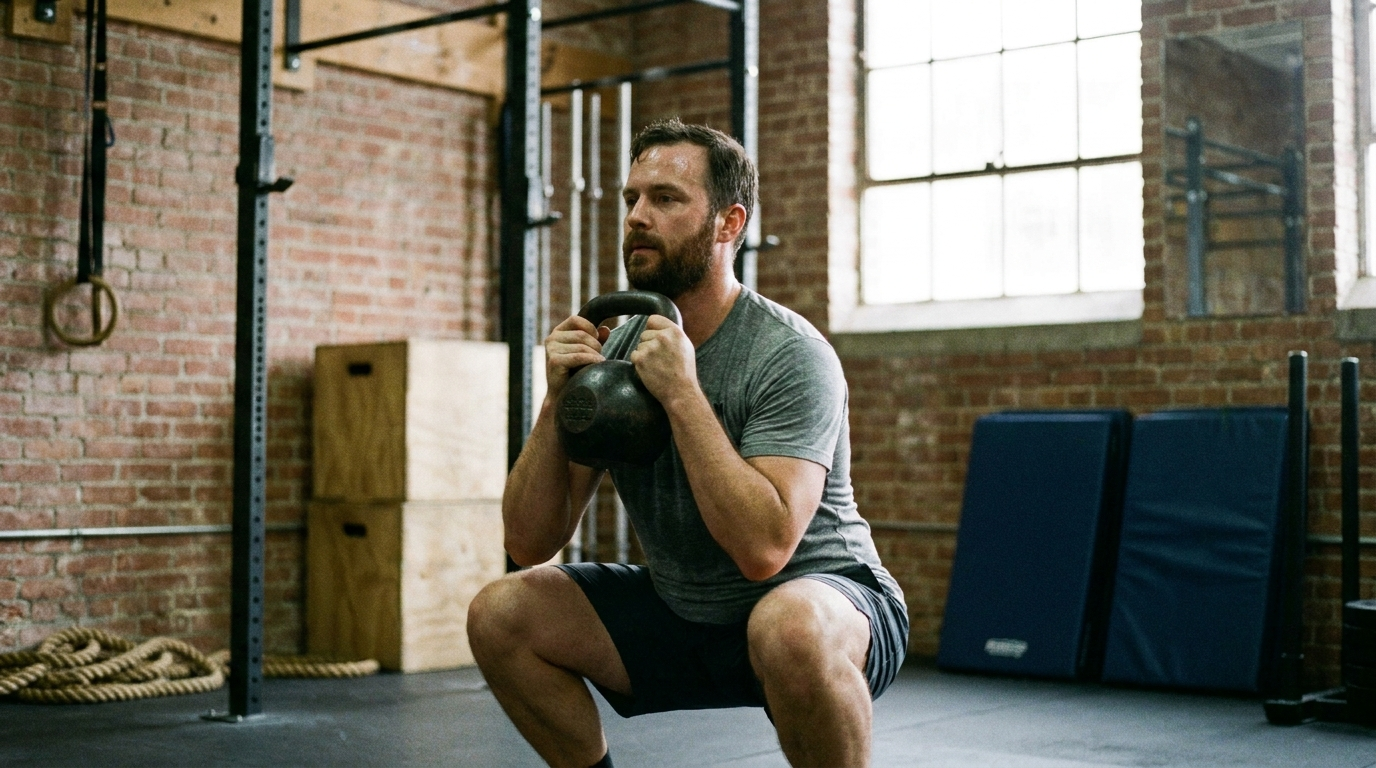
Squat pattern: sit-to-stand, box squat, goblet squat later- Hinge pattern: hinge drills, light RDL patterning
- Pulling: rows and supported pulls (posture support matters when you are carrying a baby)
- Pushing: incline push-ups, light dumbbell presses as tolerated
- Carries: light farmer or suitcase carries
- Single-leg stability: step-ups and split-stance work before aggressive lunges
Both UT Southwestern and ACOG encourage pelvic-floor strengthening early, which matters directly for lifting tolerance later. You should finish sessions feeling better, not wrecked.
Phase 3, weeks 6-12: build capacity and consistency
Goal: move from movement practice to real training volume. This is where active women often feel "normal enough" and ramp too fast. Instead:
Increase weekly volume gradually before chasing heavier load- Progress single-leg control and trunk stability
- Keep conditioning low-impact while symptoms are quiet (walking intervals, incline walking, cycling)
The
CDC notes that postpartum activity supports overall health and can reduce symptoms of postpartum depression.
Phase 4, 12+ weeks: return to heavier lifting, then impact
UT Southwestern's baseline guidance is to wait at least 12 weeks before returning to running or heavier lifting. That does not mean you did nothing for 12 weeks; it means you used them to build enough tolerance that heavier work is a progression, not a shock. For many athletic moms the order is: return to heavier strength first, then add impact. Impact adds repeated single-leg forces with less control over pressure spikes, and even if your cardio is ready, your pelvic floor might not be.
Readiness checks for heavier lifting
Before you ramp up load, you want objective markers that your system handles exertion well. You should be able to:
Perform basic pelvic-floor and core coordination work without symptoms- Complete bodyweight squats and hinge reps with calm breathing and solid form
- Lift with exhale-on-effort, without repeated breath-holding
Signs you should not increase load yet:
Pelvic heaviness, pressure, or dragging- Urine leakage during sets
- Doming or coning at the midline with exertion
- Pain that changes your movement strategy
- Symptoms that show up later the same day or the next morning
Readiness checks for running and jumping
UT Southwestern recommends waiting until at least 12 weeks for running, then using functional tests: jogging in place, single-leg balance, hopping, and endurance-based single-leg work (calf raises, single-leg sit-to-stand variations, single-leg bridge). If you are returning to higher-level sport or higher weekly mileage, Stanford's FASTR program highlights that postpartum return to sport benefits from individualized planning and pelvic-floor support, especially for impact goals.
The overdoing-it trap: how athletic moms get set back
You are not struggling to get motivated. You are trying not to outpace recovery with intensity and volume. Fit women overdo it postpartum because work capacity returns before tissue tolerance, because they are good at suffering (a strength most seasons, a liability here), and because training is their stress outlet while their stress load is already high.
It usually shows up three ways:
Intensity too early: you feel decent, so you chase numbers, brace hard on most reps, and "test" rather than train. Fix: keep loads submaximal, use controlled reps, prioritize breathing and symptom-free tolerance.- Impact too early: a short, easy run can be a big spike in forces, especially with sleep loss and daily lifting. Fix: earn impact with the readiness checks first, then start with conservative run-walk intervals.
- Volume creep: "only 30 minutes," but five days a week; "just accessories," but dense and high-fatigue; "just walking," but also stairs, hours of carrying, and barely sleeping. Fix: program for total load, not just gym time.
Red flags active moms should not ignore
These are dosage feedback, not moral failures: heaviness, pressure, or dragging; urine leakage during effort; doming or coning at the midline; pain that changes your movement; symptoms that worsen later that day or the next morning.
If you crossed the line, reset then rebuild
- Drop intensity first: reduce load, avoid high-pressure bracing, keep quality movement
- Reduce density: more rest between sets, shorter sessions
- Reduce frequency temporarily: five days down to three, or three down to two
Once symptoms stay quiet across several sessions, progress one variable again.
Patience is a performance skill
For athletic women, patience is not passive; it is the skill that protects consistency. Your win condition is not getting back fast, it is stacking symptom-free weeks, which is what gets you back to real training sooner with fewer setbacks. Useful mindset swaps: "I'm earning tolerance, not proving toughness." "Intensity is a tool, not an identity." "Today's goal is stability, not fatigue." "The best plan is the one I can repeat next week."
Special considerations that can change pacing
UT Southwestern lists factors that may require waiting longer before higher-intensity training. This is context, not a treatment guide:
C-section: a cesarean is major abdominal surgery; deeper tissues still need time, and bracing-heavy lifting can feel very different early on.- Obesity prior to pregnancy: higher baseline weight can increase joint loading and fatigue while you rebuild, which can slow volume and impact progression.
- Postpartum depression: activity can support mood, but if training becomes another performance test, simplify and get support.
- Diastasis recti: a widening along the midline; repeated high-pressure strategies (aggressive bracing, poorly controlled flexion) can worsen symptoms in some people. The NHS provides general guidance that includes abdominal-separation education.
- Excess pelvic scar tissue: can contribute to discomfort or altered muscle function, changing how you tolerate impact and higher-pressure lifting.
- Perineal tearing: varies widely; even after initial healing, pain, sensitivity, and pelvic-floor dysfunction can influence load and impact tolerance.
How Royal Blue Fitness helps athletic moms come back
If you were active through pregnancy, you already built a foundation. Postpartum is where you apply athlete-level discipline to progression: symptom-free progress, training you can repeat, and patience that protects the comeback.
In our
Women's Health Private Coaching, the limiter we most often see in athletic moms is not conditioning; it is pressure management. The brace-and-hold habit that served them under a heavy barbell before baby now spikes pelvic-floor load, and the fix is coordination and graded exposure, not more grit. We start with a Strength and Range of Motion Assessment, then build a return-to-lifting progression that prioritizes symptom-free loading, smart core and pelvic-floor integration, and a realistic timeline back to heavier strength and impact.
Ready for a comeback plan that fits your training history?
Start with a Strength and Range of Motion Assessment, and we will build a return-to-lifting progression around symptom-free loading, your real recovery bandwidth, and a realistic timeline back to heavier strength and impact.
FAQ: postpartum strength training
When can I start lifting again after birth?
Most women returning to heavier lifting are guided to wait about 12 weeks after an uncomplicated delivery, while gentle walking and pelvic-floor work can begin much earlier. C-section or complicated deliveries need individualized timing from your provider.
Does being cleared at six weeks mean I can train normally?
Usually not. Clearance means you can begin a gradual, symptom-guided return, not resume heavy sets or impact. Use the six-week visit to set direction.
How do I know I'm pushing too hard?
Watch for pelvic heaviness or pressure, leakage during effort, midline doming, pain that changes your movement, or symptoms that appear later that day or the next morning. Those are signs to reduce the dose.
Should I return to running or lifting first?
For most athletic moms, heavier strength first, then impact. Running adds repeated single-leg force and pressure spikes that the pelvic floor may not be ready for even when your cardio is.
What if I have diastasis recti or had a C-section?
You can still get strong, but the path is more gradual and lower-pressure to start. Begin with breath-led core work, avoid aggressive bracing, and get individualized guidance.
Here are our latest articles! Click to read more.